No. 10928
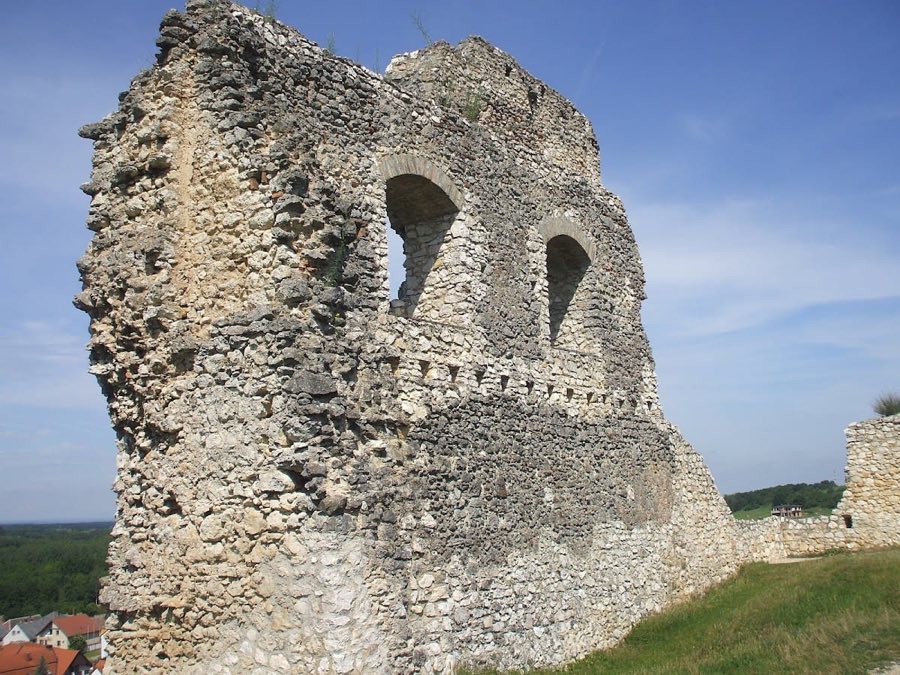
Castle of Döbrönte
Hungary
CastleRuin14th century
No. 85317
No. 85317 · 47.121 N, 17.781 E
Quick summary
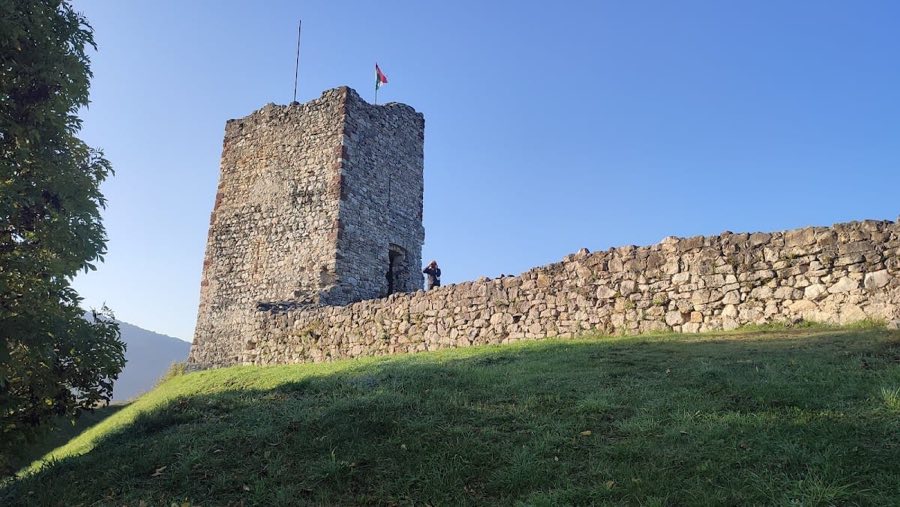
Esseg Castle is a castle in Hungary with origins associated with the 14th century.
See all castles in HungaryEsseg Castle is situated near the village of Bánd in Hungary and was established by medieval Hungarian builders. Its origins trace back to around 1270 when it was initially constructed with wooden residential and service buildings arranged around an irregular courtyard measuring approximately 60 by 70 meters.
The fortress first appears in written records in 1309 under the name Castrum Scegh. At that time, Lorinc Igmandi sold the castle to a nobleman named Lorinte, whose family later took the name Essegvári after the castle itself. During the early 14th century, the castle’s wooden structures were gradually replaced with stone buildings, including the addition of the Saint George chapel to the north, which was first documented in 1332.
In the following decades, the castle became a focal point in regional power struggles. The oligarch Ivan Kőszegi captured it, executing its then owner, but after four years, royal forces reclaimed it and returned control to the Essegvári family. Throughout the 15th century, the castle was expanded with outer towers projecting beyond the main walls, larger buildings along the eastern and western sides, and possibly a knights’ hall. A cistern was also located in the northern courtyard to collect and store water.
The Essegvári family supported Ladislaus of Naples during disputes over the Hungarian throne, prompting King Sigismund to confiscate the castle and assign its oversight to the forestry official, or ispán, of Bakony. Later, during civil wars following King Albert’s death in the 1440s, Bishop Thomas Himfy’s forces briefly occupied the castle. The Essegvári family regained it after their victory at the Battle of Bátaszék. Ownership was later confirmed to both the Rozgonyi and Essegvári families by King Vladislaus II, leading to legal contests until George Essegvári definitively secured the castle in 1472.
By the end of the 15th century, marriage united the Essegvári family with the Himfy estate of Döbrönte, prompting Francis Essegvári to move to that residence in 1499. As a result, the castle gradually fell into neglect. Its destruction is believed to have occurred during a Turkish raid in 1552. Following this event, Esseg Castle was abandoned, and local inhabitants repurposed its stones. Although ruined, the castle was still referenced in a 1641 dispute regarding the use of its remains. Archaeological investigations and conservation efforts aimed at preserving the site began in 2003.
Esseg Castle occupies a natural limestone rise at the western end of a ridge overlooking the Séd stream. The castle’s layout encloses an irregularly shaped area roughly 60 meters wide and 70 meters deep, featuring a central open courtyard. Within this courtyard, a cistern is located on the northern side, used to collect and store water for the inhabitants.
The surviving stone constructions primarily date to the 14th and 15th centuries, reflecting the castle’s transition from wooden to stone architecture. Among the most prominent surviving elements is the rectangular eastern tower, often referred to as the “old tower.” Its interior spaces and entrance have been preserved to a degree that reveals defensive features such as arrow slits, narrow vertical openings designed for archers.
In the 15th century, additional outer towers were built to extend beyond the original walls, strengthening the defensive perimeter. Along the eastern and western curtain walls, larger residential buildings were constructed to accommodate the castle’s occupants. Although many foundations of former buildings remain buried and are not visible above ground, sections of the eastern and southern walls have been exposed through excavation.
Since the early 2000s, archaeological excavations and conservation work have focused on revealing and stabilizing these ruins. The southeastern tower received particular attention, followed by uncovering parts of the castle’s eastern and southern walls. Today, the visible remains offer a glimpse into the castle’s medieval layout and defensive structures. The site is recognized as a Gothic monument dating from the 14th and 15th centuries, registered under identifier 9788 in Veszprém County.
No. 10928
No. 49101
No. 67409
No. 63215
Comments
Comments for Esseg Castle will require a verified account before posting.
We'll send a verification link before your first comment is published.