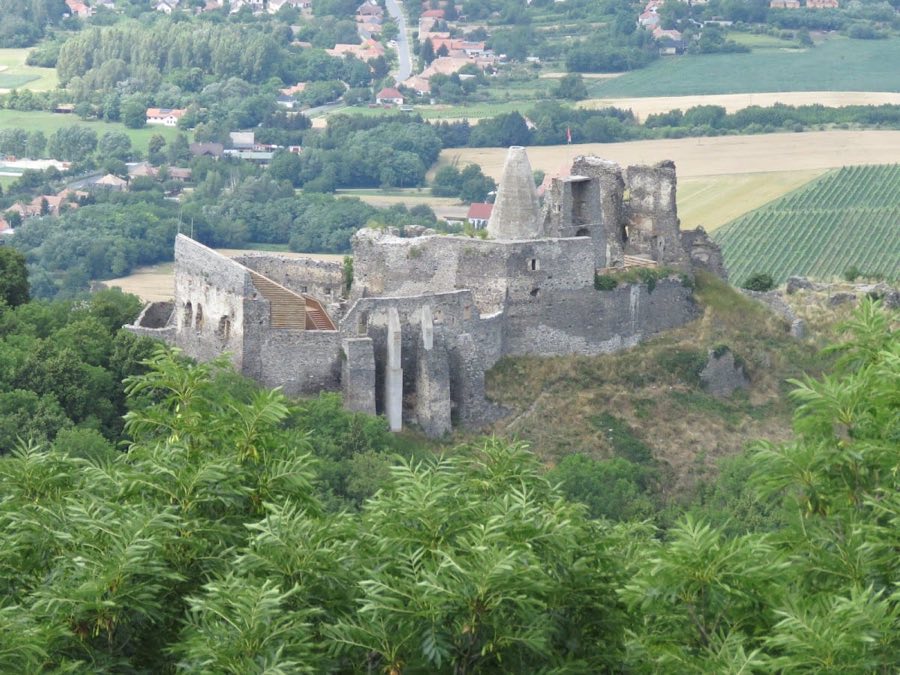
No. 34417
Castle of Somló
Hungary
CastleRuin14th century
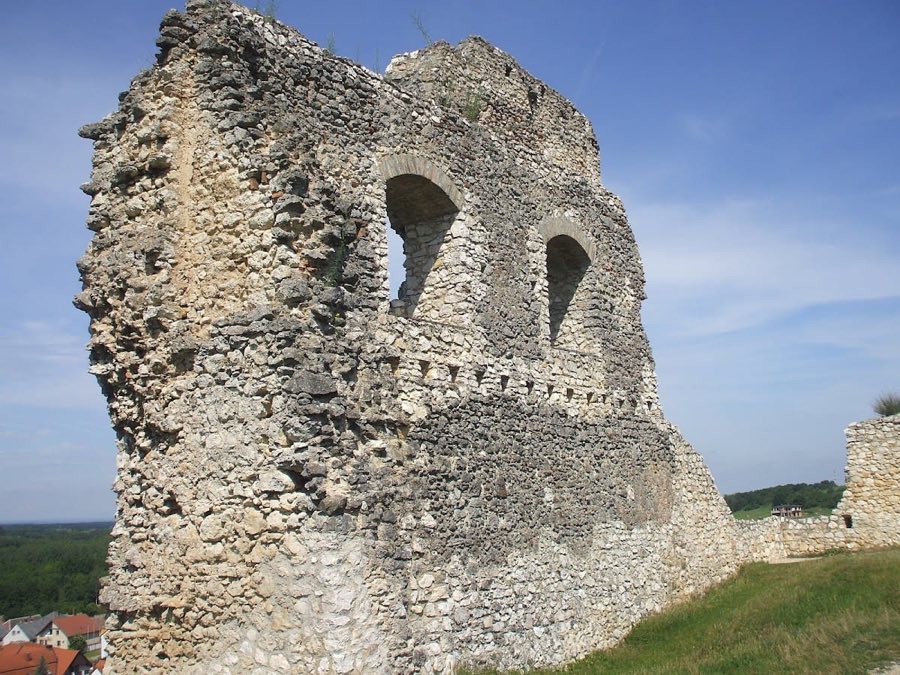
No. 10928
Castle · Hungary
No. 10928 · 47.230 N, 17.548 E
Quick summary
Castle of Döbrönte is a castle in Hungary with origins associated with the 14th century.
See all castles in HungaryThe Castle of Döbrönte, situated on the western slopes of the Bakony hills in the municipality of Döbrönte, Hungary, was built in the 14th century by the medieval Hungarian kingdom. It served as a fortified stone residence and defensive site within the region’s noble estates.
The initial phase began in 1367 when King Louis I of Hungary authorized Benedek Himfy, the head (ispán) of Pozsony county and a favored member of the royal court, to erect a stone castle on his property in Döbrönte. This construction marked the establishment of a noble stronghold meant to secure the Himfy family’s local influence and territorial claims. Over the following decades, the castle remained under Himfy ownership but witnessed the family’s waning political power.
By the early 15th century, the Himfy lineage faced territorial losses and frequent assaults. Notably, in 1401, troops associated with the Gyulaffy family, lords of nearby Rátót, attacked and plundered the castle. The Himfy family’s decline continued through the mid-15th century, with some members resorting to outlawed activities. A notorious episode occurred in 1464 when they raided the Pannonhalma Abbey, stealing precious religious objects. In response, King Matthias Corvinus confiscated the Himfy estates and awarded them to Baron László Kanizsai as punishment for their transgressions.
Despite this confiscation, the Himfy family eventually regained possession but became embroiled in internal disputes and external conflicts. In 1469, forces loyal to a noble named Lord Lőrinc attacked Döbrönte, further destabilizing the family’s hold.
At the close of the 15th century, a marriage alliance in 1499 between Imre Himfy’s daughter Orsolya and Ferenc Essegvári led to the castle estate being given as a pledge under the Essegvári name, indicating changes in property management and noble connections during a period of shifting loyalties.
The 16th century brought significant military developments following the critical Battle of Mohács in 1526, which exposed Hungary to Ottoman threats. In this turbulent period, the castle was modernized with the addition of a large rounded bastion known as a rondella, built with thick walls and openings for artillery fire to improve defense against cannon attacks. By 1547, the local governing body, the Pozsony Diet, hired mounted soldiers to strengthen a modest garrison, reflecting continued strategic use despite its relatively minor status.
Palatine Tamás Nádasdy’s 1555 report confirms the castle was still intact at that time, but soon after, a Turkish raiding force likely caused its destruction. Following its ruin, the local people removed stones for other uses, leaving the castle in a state of abandonment.
In the modern era, efforts to preserve the ruins began in the 21st century. The castle walls were partially restored as part of a nationwide heritage initiative. In 2018, a formal partnership was established linking the Castle of Döbrönte with Szarvaskő Castle through a twinning agreement, creating Hungary’s first sister castle relationship and commemorating their shared historical legacy.
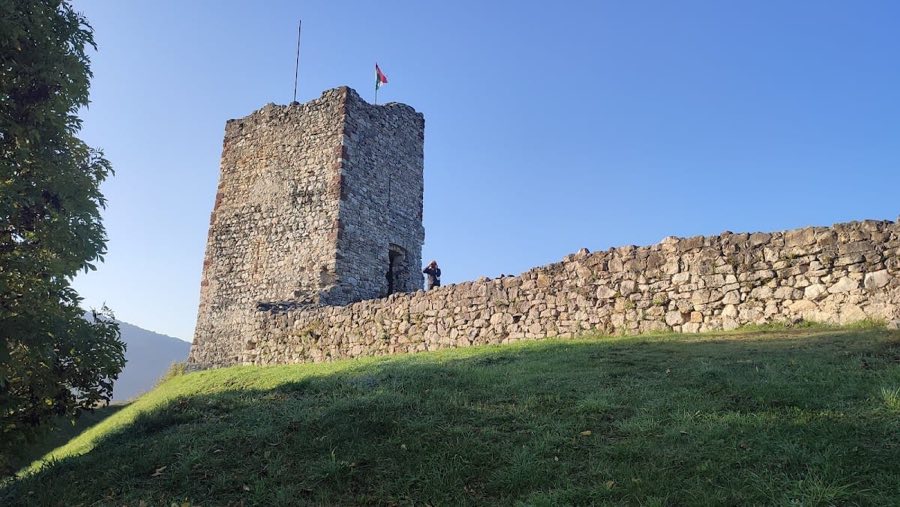
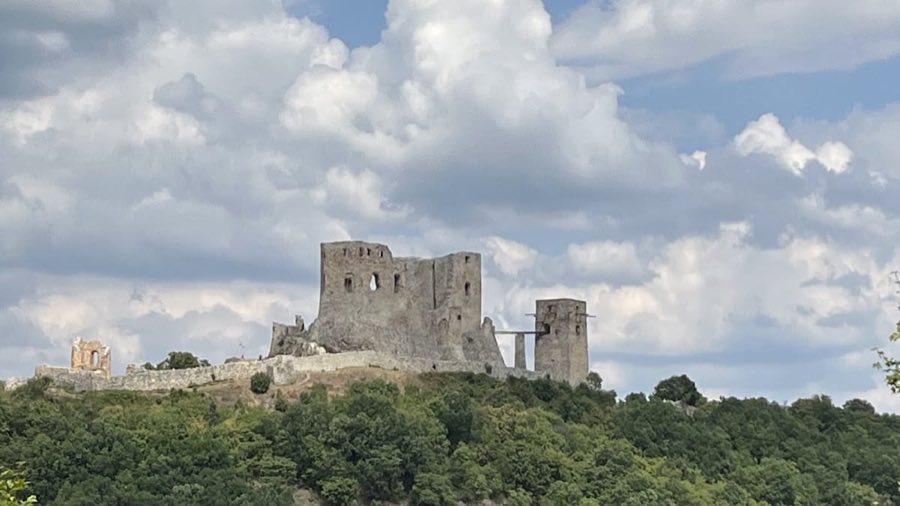
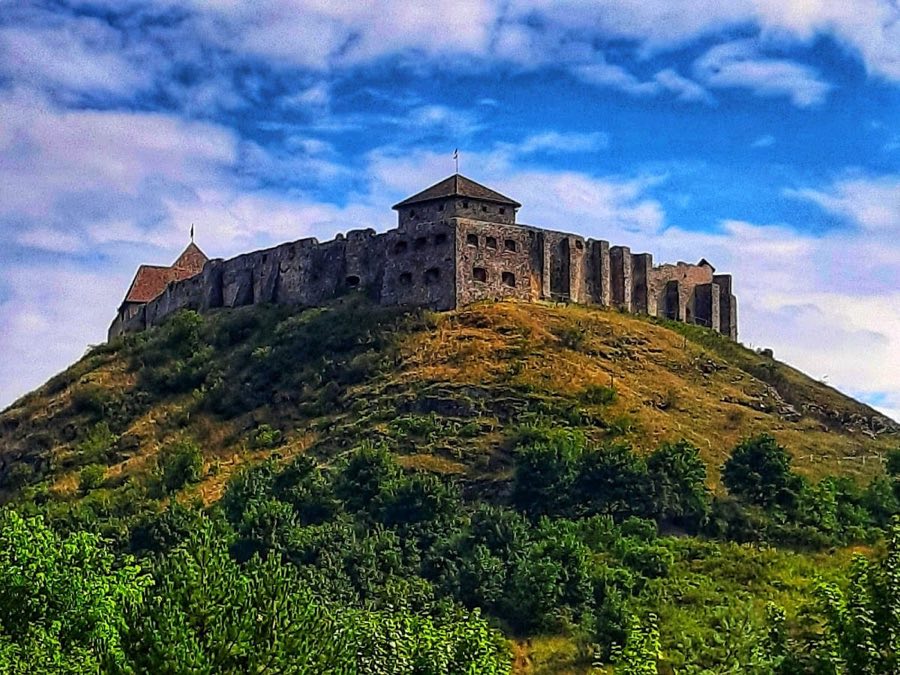
The remains of the Castle of Döbrönte occupy a hilltop location overlooking the surrounding landscape. The ruins reveal the layout of the outer courtyard, which once served as a defensive enclosure and working space within the castle complex. This area is bordered by vestiges of a bastion—a projecting fortified wall section built to provide protection and vantage points against attackers.
Constructed primarily from stone, the castle’s walls demonstrate common medieval building techniques aimed at durability and defense. A defining feature of the site is the large rondella added during the 16th century. This rounded bastion was built with notably thick walls and incorporated gunports, which are narrow openings through which cannons could be fired. These adaptations reflected the evolving military technology of the time and efforts to resist artillery assault.
Today, the ruins exist in a partially preserved state. While some of the walls have undergone restoration in recent years to stabilize the structure, much of the castle remains fragmentary, with many building portions subsisting as low foundations or collapsed debris. Portions of the castle’s footprint lie buried beneath the earth, awaiting further archaeological exploration.
The ruins’ prominence on the hilltop continues to relate closely to the village of Döbrönte below and the wider Bakony hills region. Scale models representing the castle’s appearance are exhibited at Dinnyés Castle Park, helping to visualize its historic form.
Overall, the surviving elements convey a blend of medieval defensive architecture and later Renaissance-era modifications, illustrating the castle’s long history of occupation, adaptation, and eventual decline.
No. 34417
No. 85317
No. 67409
No. 97921
Comments
Comments for Castle of Döbrönte will require a verified account before posting.
We'll send a verification link before your first comment is published.