No. 40370
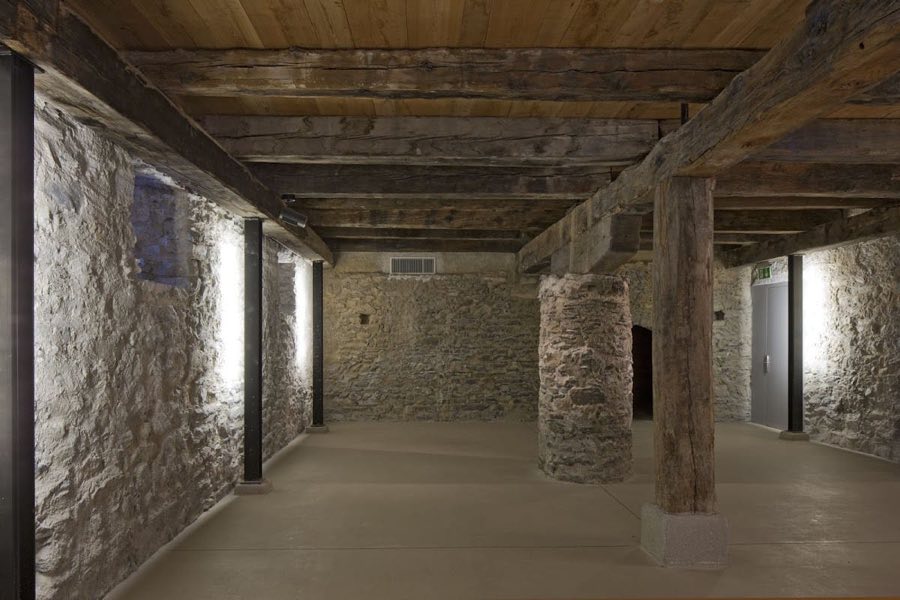
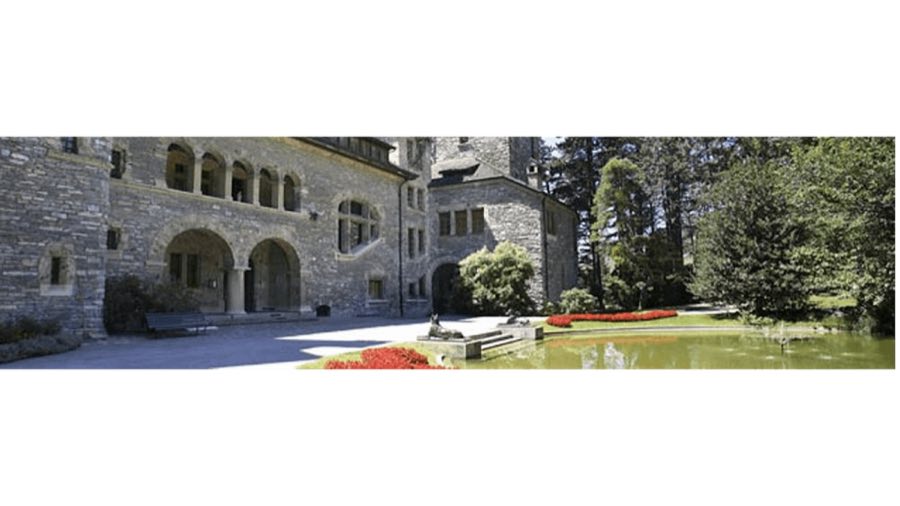
Leuk Castle
Switzerland
CastleIntact13th century
No. 41903
Château · Switzerland
No. 41903 · 46.313 N, 7.783 E
Quick summary
Gestelnburg (Château de Châtillon) is a château in Switzerland with origins associated with the 12th century.
See all castles in SwitzerlandGestelnburg stands above the village of Niedergesteln in Switzerland, and it was constructed by the Barons de la Tour. The fortress was established on the rocky Feschti ridge in the medieval period, with construction attributed to the 11th or 12th century and a recorded de la Tour ownership by 1235.
For centuries the castle served as the home and power base of the Barons de la Tour, also written as Herrn vom Turn or Freiherren de la Tour. Members of the family included Amédée de la Tour, who held the office of bishop of Sion. In the later 1300s the de la Tour family became involved in a violent struggle with the bishopric of Sion. Major confrontations in that period involved Bishop Guichard Tavelli, also called Witschard Tavel, and Antoine de la Tour. In 1362 Antoine led an attack on Granges, and in 1375 mercenaries in Antoine’s service killed Bishop Tavelli at nearby Seta Castle.
The fighting escalated across the region. Forces from Upper Valais destroyed the village of Niedergesteln and laid siege to Gestelnburg; the castle resisted at first but fell in 1384 and was destroyed during the campaign. Antoine suffered defeat at the Battle of Saint-Léonard, was seriously wounded there, and fled to Savoy. After the 1384 destruction the castle ceased to function as a seat of the family in its former form.
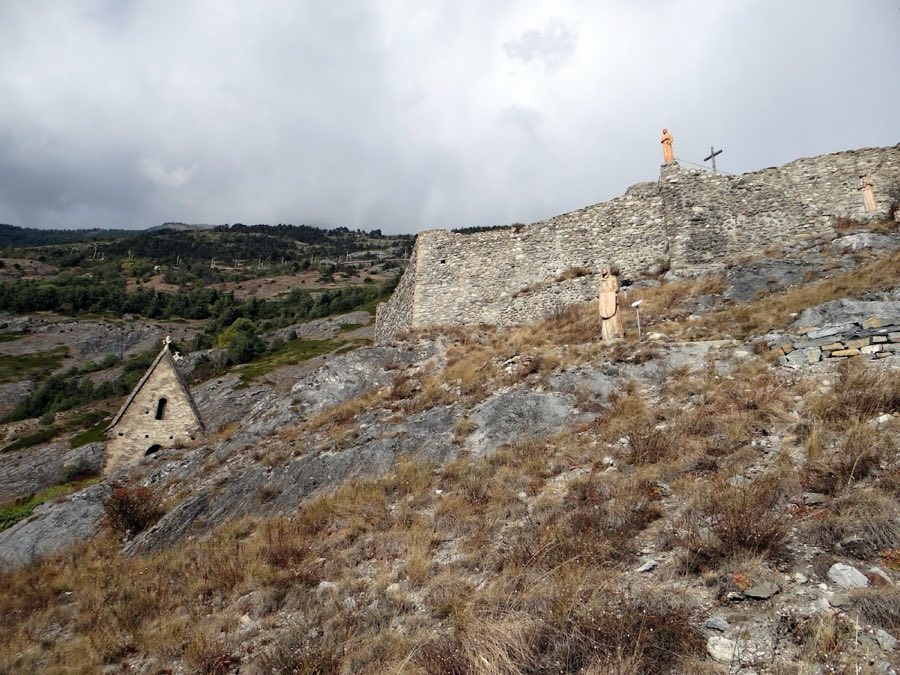
Centuries later the remains attracted archaeological attention. The Pro Castellione Foundation was established in 1984 to carry out excavations and stabilisation work, and restoration and access improvements were completed in 1993. Excavations recovered fragments of a tiled stove dated to the early 1300s, and these fragments are preserved at the Valais history museum in Sion. The foundation also placed life-size wooden sculptures along the approach and on the site. Gestelnburg, sometimes called Château de Châtillon, is listed as a cultural property of national significance in Switzerland. Local tradition links the castle with the Feschtiloch cave below the ridge, a formation from the last Ice Age that is the subject of a legend about three corridors, three cauldrons and three guardians visible only during the consecration at Mass on Christmas Eve.
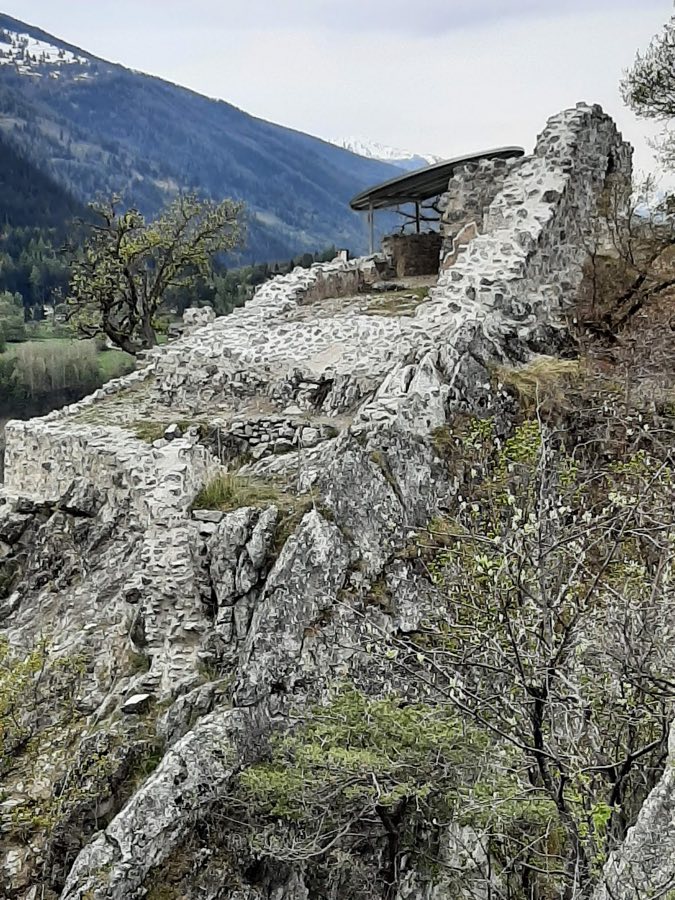
The castle occupies the full width of the Feschti ridge about one hundred metres above Niedergesteln, reached today by a broad path that leads up from the village. The main building covers an area approximately forty by thirteen metres and was constructed to fit the narrow crest of the rock. Surviving stretches of the main walls are substantial, with wall bases preserved to a thickness of about three metres, and these remnants form the essential outline of the medieval hall and service range.
On the right side of the approach lie the lower defensive works and economic areas. Archaeologists identified the remains of the lowest defensive walls alongside the approach, a rock-cut water cistern that supplied the castle, and foundations of auxiliary buildings that served household or service needs. These elements are visible in situ as fragmentary stone footings and cuttings in the bedrock.
Above the main building the defenders relied on vertical protection. A ditch excavated into the slope created an obstacle to any attacker coming from uphill and separated the main house from the uppermost platform. That highest plateau was dominated by a round tower, which once stood within its own ring of walls and another upper ditch. Today only sections of the tower walls survive and a cross marks the tower position; the ruined masonry preserves the tower’s footprint and the evidence that it occupied the summit of the fortress.
Excavation recovered movable items that speak to life inside the castle, most notably broken tiles from a tiled stove decorated with reliefs of patterns, plants, animals and human figures. Those stove fragments date to the early 1300s and are conserved at the Valais history museum in Sion. The ruin itself has been stabilised and made accessible as a restored ruin following the 1984–1993 campaign by the Pro Castellione Foundation, which also added life-size wooden figures along the ascent and at the site to represent members of the de la Tour family. Below and behind the castle the Feschtiloch cave, formed during the last Ice Age, remains part of the site’s landscape and local storytelling, carrying a legend of three corridors and three cauldrons guarded by a snake, a toad and a lion that are said to appear only at the consecration during Mass on Christmas Eve.
No. 40370
No. 66045
No. 74807
No. 27366
Comments
Comments for Gestelnburg (Château de Châtillon) will require a verified account before posting.
We'll send a verification link before your first comment is published.