No. 41506
Ryn Castle
Poland
CastleRestoredFor rent14th century

No. 30514
Castle · Poland
No. 30514 · 54.035 N, 21.759 E
For rent
Giżycko Castle is marked for bookable castle accommodation. Nightly pricing, sleeps count, stay rules, and amenities are displayed only when public operator data is available.
Rental type: Hotel / bookable stay, Short-stay rental
Short-term availability: Bookable accommodation signal
Quick summary
Giżycko Castle is a castle in Poland with origins associated with the 14th century.
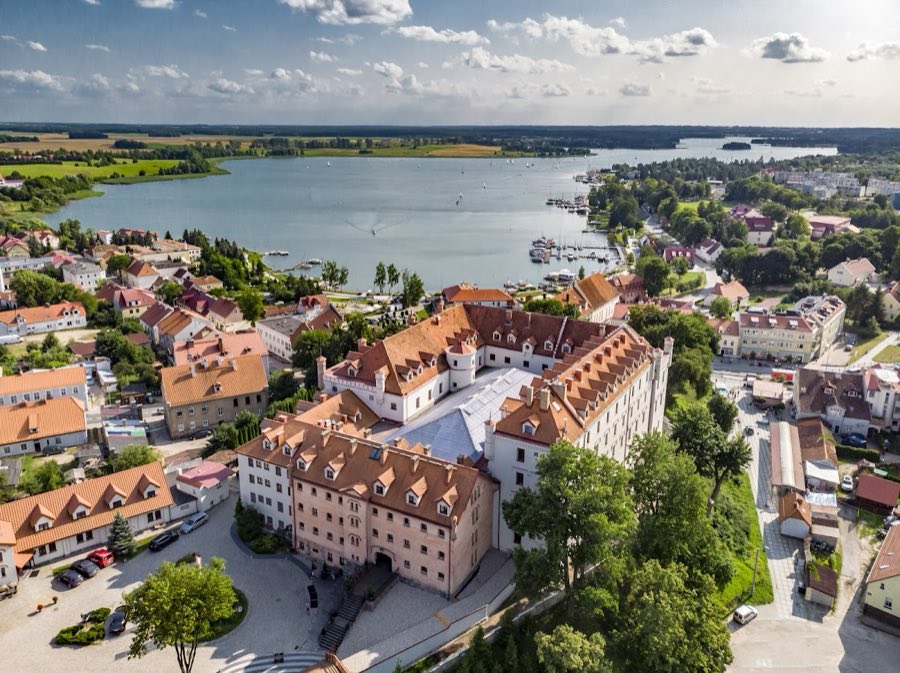
See all castles in PolandGiżycko Castle is situated in the town of Giżycko, Poland, and was originally built by the Teutonic Order during the late 14th century. Its location on a narrow strip of land between Lakes Niegocin and Kisajno made it a strategic point near the Giżycko Canal.
Before the stone castle’s construction, a wooden fortress operated in the area under the Teutonic Order, with the earliest record dating back to 1340. At that time, a Teutonic procurator, an official wielding judicial, military, and administrative powers over northern Galindia, resided there. It remains unclear whether this early stronghold stood precisely where the current castle is or on a nearby hill known in later centuries as Stary Lec (Old Castle) or Alt-Lötzischen Schanze. In 1361, Lithuanian forces led by Kiejstut burned a Teutonic fortification in Giżycko, though whether this was the wooden fortress at the later castle site or another nearby location is unknown.
By around 1400, a stone Gothic building was established on the present site, functioning as a modest commandery subordinate to the nearby Pokarmin. However, this stone castle was relatively small and offered only limited defensive capabilities, bearing resemblance to a comparable Teutonic castle in Bezławki.
During the Thirteen Years’ War between Poland and the Teutonic Order (1454–1466), local inhabitants set fire to the castle in 1455, causing significant damage. Following this event, official Teutonic administration disappeared from records until a procurator reappeared in 1497. Meanwhile, a nearby settlement renewed its village privileges in 1475 under the name Nowa Wieś Leczen, reflecting local administrative developments.
In the early 16th century, the castle’s garrison was made up of about fifteen individuals, including brothers and servants as recorded in 1507–1508. Starting in 1513, the castle was under the control of secular administrators rather than religious or military officials. Again caught up in conflict during 1520, the Teutonic garrison chose to burn the castle and abandon it amid renewed hostilities with Poland.
In 1560, starost Lehndorff ordered the castle’s reconstruction under the supervision of Christoph Römer from Königsberg. This restoration likely included adding the current Renaissance-style gable. Later, in 1614, an inscription above the entrance marks the castle’s conversion into a ducal hunting lodge. During the Baroque period, two small side wings were added; however, these were destroyed by fire in 1749 and subsequently dismantled.
By the mid-19th century, the castle came under military jurisdiction and was adapted in 1852 to provide housing for commanders of the nearby Boyen Fortress. After the Second World War, the castle was left abandoned until archaeological excavations began in 1969. Renovations in the 1960s allowed for new use as a hotel, and the site was officially registered as a historic monument in 1979. Further archaeological research took place in 2000 under the direction of Dr. Marek Gula. Despite some damage to a wall in 2007, restoration work funded by the European Union between 2009 and 2011 helped preserve the castle and maintain its function as a hotel.
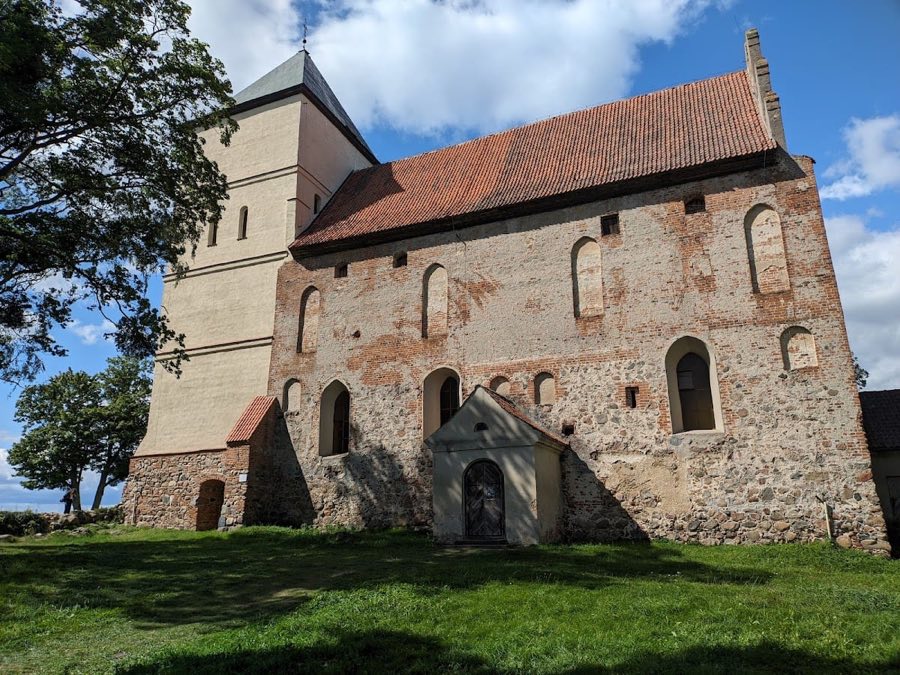
The surviving structure of Giżycko Castle is a two-story stone building measuring roughly 14.5 by 22 meters. Its scale and design suggest it was intended as a small administrative center rather than a heavily fortified fortress. The castle’s architecture reflects a late Renaissance influence visible in its prominent gables, added during the 16th-century rebuilding.
Beneath the main building lie three cellars, two of which feature barrel vaulting—a type of continuous arched ceiling common in medieval construction. These cellars likely served storage purposes and are important aspects of the castle’s preserved underground spaces. To enhance its structural stability, the building’s corners were reinforced with buttresses, which are external supports projecting from walls to counteract pressure and prevent collapse.
On the northern side, facing Lake Niegocin, the castle once included a bailey, or outer ward—an enclosed courtyard typical in medieval castles. While few visible traces remain, this area served as an additional defensive and functional space adjacent to the main living quarters.
Modern periods have introduced new constructions near the castle. In 2011, several brick buildings designed to look historic were erected nearby, but these are recent additions unrelated to the original medieval fabric and do not form part of the castle’s authentic remains.
Overall, the Renaissance gable and stone buttresses stand out as key elements preserved from the castle’s 16th-century renovation. The modest size and features of the complex reflect its historic role as a minor command post and administrative center rather than a major military fortress. The structure retains much of its stonework and foundational layout, offering a tangible connection to the site’s layered history.
No. 41506
No. 29132

No. 95792
No. 32081
Comments
Comments for Giżycko Castle will require a verified account before posting.
We'll send a verification link before your first comment is published.