No. 79488
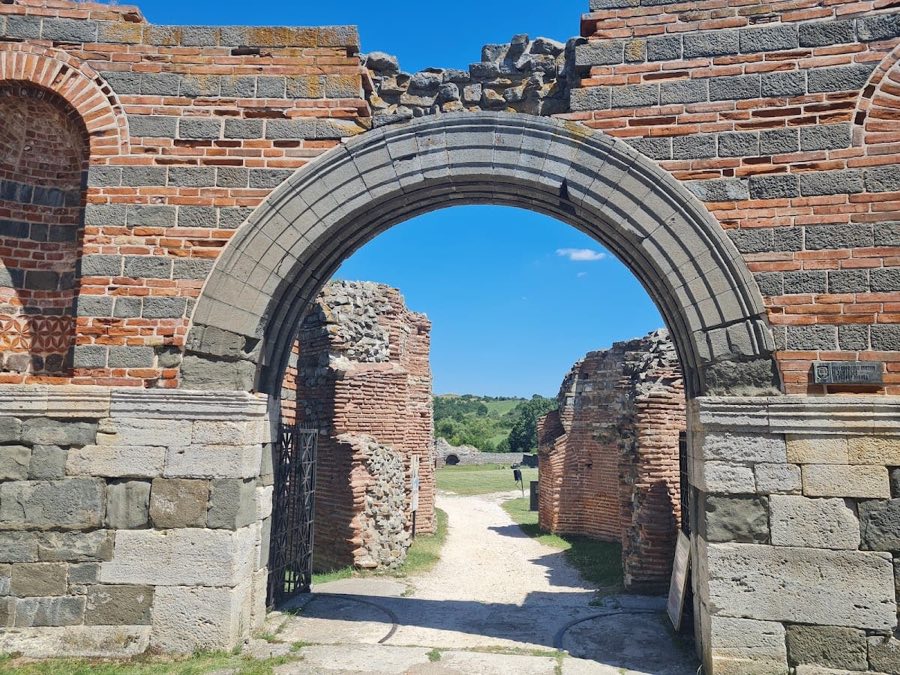
Felix Romuliana
Serbia
PalaceRuinFor events3rd century
No. 24629
Castle · Serbia
No. 24629 · 44.661 N, 21.678 E
Quick summary
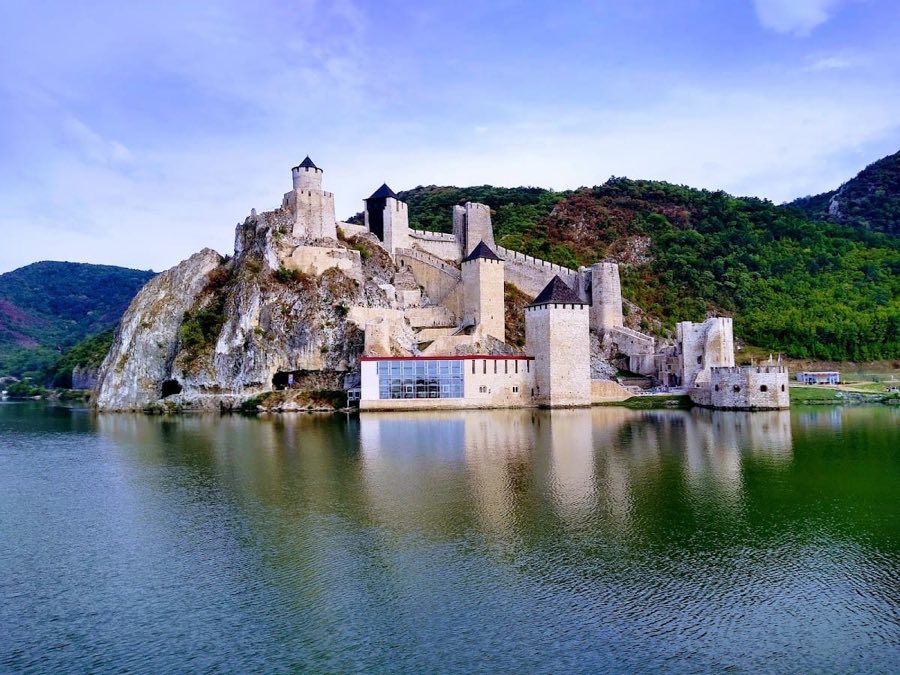
Golubac Fortress is a castle in Serbia with origins associated with the 14th century.
See all castles in SerbiaGolubac Fortress is situated near the town of Golubac, within the municipality of Golubac in modern Serbia. It was primarily established in the 14th century by the medieval Serbian state, positioned strategically on the south bank of the Danube River. The site itself has a deep history, built upon remains of earlier Roman and Byzantine settlements.
Before the fortress took its present form, the area was controlled by several empires over the centuries. From the early 9th century until the early 11th century, it fell under the rule of the First Bulgarian Empire. Afterwards, the Byzantine Empire held the region until the late 12th century. The Second Bulgarian Empire then assumed control until the mid-13th century, when the Serbian state gained dominance that would last until the Ottoman conquest in the 15th century. While it is not definitively known which group originally constructed the fortress, the presence of an Orthodox Christian chapel within one of its towers points to Serbian noble influence, particularly during the rule of Despot Stefan Lazarević in the early 15th century.
Golubac first appears in written records from Hungarian sources dating back to 1335, described as a stone watchtower guarding the critical Iron Gate gorge on the Danube. Throughout its existence, the fortress changed hands numerous times, being contested by Hungarians, Serbs, Ottomans, Bulgarians, and the Habsburg Empire. In 1403, it was granted as a fief to Stefan Lazarević by the Hungarians, though following his death in 1427, the fortress commander Jeremija surrendered Golubac to the Ottomans.
The fortress gained fame as a battleground during the 1428 Battle of Golubac, where King Sigismund of Hungary faced off against Sultan Murad II of the Ottoman Empire. Over the centuries, Golubac successfully withstood more than 120 assaults, reflecting its formidable defensive capabilities. Ottoman rule over the fortress remained largely unbroken, although there were brief intervals during the late 17th and 18th centuries when Habsburg and Serbian rebel forces occupied it. In 1867, the fortress returned to Serbian control when it was handed over to Prince Mihailo Obrenović III.
During the 20th century, infrastructure developments affected the fortress. A road was built passing through its gates, and the construction of the Iron Gate hydroelectric dam between 1964 and 1972 raised the Danube’s water level, leading to flooding of the fortress’s lower sections. Preservation and restoration of Golubac began in 2005, with significant reconstruction funded by European Union IPA funds starting in 2011. This modernization project was led by architect Marina Jovin, alongside archaeological guidance by Dr. Miomir Korać. The fortress underwent a thorough restoration and was reopened to the public in April 2019. Since 1979, Golubac Fortress has been designated a Monument of Culture of Exceptional Importance and is managed by a dedicated state organization alongside only one other fortress in Serbia.
Golubac Fortress is laid out in a broad fan shape stretching across approximately 23 hectares within the Đerdap National Park. Its construction consists of three principal sections: the upper or oldest compound, the rear compound, and the forward compound. These sections are linked by strong stone walls, which range from two to three meters thick, demonstrating the fortress’s defensive purpose. Within the walls, ten towers rise prominently, accompanied by two large fortified gates known as portcullises, and a palace complex.
The outermost defense is the forward wall, which acted as the boundary for a moat likely filled with water and directly connected to the Danube River. In front of this outer wall lay a civilian settlement area. Initially, the complex had five square towers forming the primary defense, but four additional towers were built later as military needs evolved. Early towers were mostly square or rectangular, reflecting medieval warfare tactics that relied on cold steel weapons. To adapt to the introduction of artillery, Ottoman builders reinforced many of these towers by adding polygonal or cylindrical bastions with walls up to two meters thick.
Most of the first nine towers stand between 20 and 25 meters high. Some of these, including towers numbered 1, 2, 4, 5, and 10, are constructed fully of stone on all sides, while others leave the side facing the interior courtyard open or less fortified. Wooden floors and internal staircases originally connected tower levels, though these had deteriorated over time before restoration work began. Exterior stairways were made of stone for durability.
Tower 1, also known as the Hat Tower or Šešir-kula, serves as the fortress’s central keep or citadel. It has an unusual octagonal base topped by a circular spire and contains a square interior layout. Tower 2 is fully circular, a rare form in medieval fortresses. Tower 3 stands out with its square foundation and an open northern side facing a dungeon tower, offering a terrace that overlooks the Danube and the Iron Gate gorge, a vital river passage. Tower 4 is notable for housing an Orthodox chapel embedded within its walls; this chapel includes altar niches oriented to the east, adhering to traditional Christian liturgical directions. Tower 5 remains one of the few that retains a complete square structure untouched by later modifications.
Towers 6 and 7 combine square bases reinforced with additional hexagonal and circular foundations, respectively, suggesting adaptations to reinforce defenses against cannon fire. Tower 8 is the smallest among the first nine, irregularly square and outfitted with a cannon port. Tower 9 maintains its square base while featuring an octagonal reinforcement, indicating continued upgrading to resist artillery.
A tenth tower, added by the Ottomans after 1481, is a low, single-story artillery tower with an octagonal base known as the White Tower. Positioned between what used to be towers 5 and 10, it features cannon openings to control river traffic and protect the harbor entrance. Due to water level changes caused by the dam, this tower now extends into the Danube itself.
The fortress gates include two significant portcullises. The main entrance stands in the lower section of the forward compound and is guarded by towers 7 and 8. Another gate provides access to the rear compound opposite the main entrance. Approaching the gates, there is a shallow ditch along the path before a steep slope, forming part of the defensive landscape.
Within the fortress, the rear compound is physically separated from the upper compound by a wall linking towers 2 and 4 and a steep rock face three to four meters high. Near tower 5 lies a building once likely used as a barracks and ammunition depot for soldiers stationed at the fortress. The oldest, upper compound includes the citadel and chapel. The forward compound is subdivided by a wall joining towers 4 and 7, with its upper section containing an elevated path leading to an additional gate about two meters above ground level near tower 3.
Throughout the site, stone walls, towers, and external staircases remain well preserved, although wooden floors and internal stairs had rotted prior to recent restoration. Modern efforts to conserve the fortress emphasized traditional stone materials and manual construction techniques. In 2017, a 152-meter-long tunnel was constructed to redirect traffic that had been routed through the fortress gates since the 1930s, relieving the structure from damage.
Today, Golubac Fortress stands as a well-preserved complex reflecting centuries of military architecture, occupation, and adaptation, surrounded by natural beauty and protected within a national park. Archaeological and architectural features clearly demonstrate its long history from Roman times through medieval Serbian and Ottoman periods.
No. 79488
No. 26439
No. 86381
No. 14908
Comments
Comments for Golubac Fortress will require a verified account before posting.
We'll send a verification link before your first comment is published.