No. 17449
Corvin Castle
Romania
CastleRestored14th century
No. 14908
Castle · Romania
No. 14908 · 45.478 N, 22.874 E
Quick summary
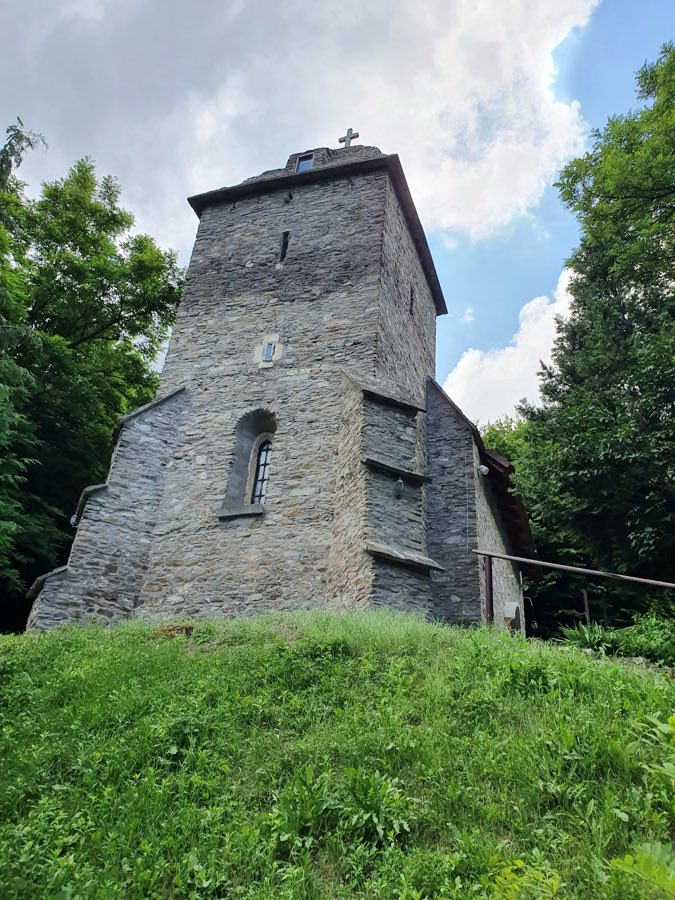
Colț Fortress is a castle in Romania with origins associated with the 14th century.
See all castles in RomaniaColț Fortress, located in the commune of Râu-de-Mori, Romania, was built by the Transylvanian noble family Cândea.
The fortress began in the mid-14th century, with a foundation recorded in 1359 when the Cândea family constructed the site as a place of personal protection. By the later decades of that century a residential tower stood as the strongpoint of the site. Documentary records show that by 1519 the place was spoken of as a castrum, indicating that the living tower had been enlarged and the complex had acquired the character of a castle.
During the 1500s and 1600s the castle’s core was encircled by a much stronger line of defenses. A powerful curtain wall, arranged roughly on a triangular plan, was built around the central tower. Two polygonal flanking towers were added on the south side, and small bastions and a north‑west wing were attached to the wall in this period. The fortress served for defensive use, but it was acknowledged as too small to withstand large field armies and functioned chiefly as a refuge during internal struggles between local princes.
Ottoman forces occupied the castle at an unspecified time, and Ilona Kendeffy’s husband was carried off into Ottoman captivity and died there. The traveller Evliya Çelebi recorded a visit to the fortress in 1661. By the late 17th century the Kendeffy family had regained control of the castle and its estates, and a guard remained posted there in 1671. From the 18th century the site fell into decay and has been described as effectively ruined since that era. Local tradition holds that Ilona Kendeffy sat at a window spinning flax until the stream returned her husband from captivity. Researchers have proposed that this castle inspired Jules Verne’s novel The Castle in the Carpathians. Representatives of the Râu‑de‑Mori commune have sought to raise funds for conservation of the deteriorated monument.
The plan of Colț Fortress centers on a square residential tower around which later fortifications were adapted to the rocky hilltop. The layout follows the natural unevenness of the promontory and sits at the approach to a narrow defile, so the overall arrangement is irregular rather than geometric. The surviving fabric shows a sequence of building phases from a medieval keep outward to later enclosing walls and added defensive elements.
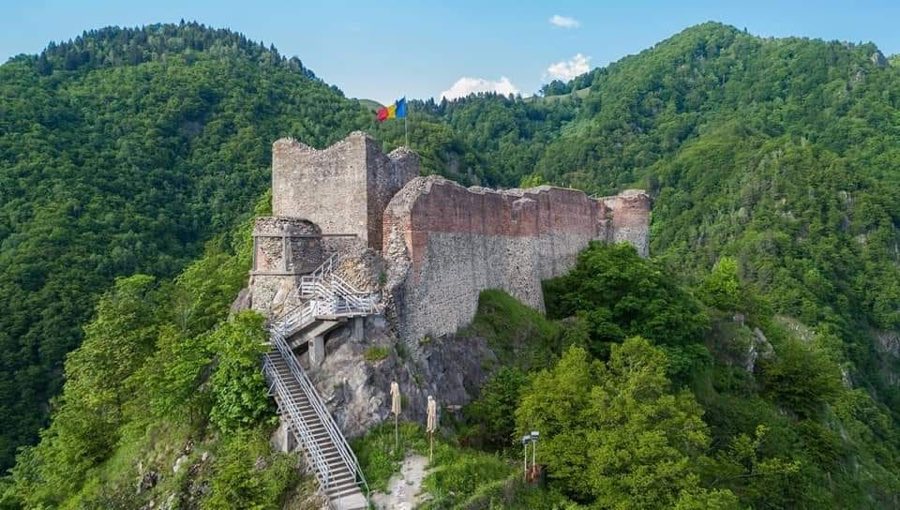
The principal surviving element is the central square tower, the medieval keep that gave the complex its origin. The tower existed by the later 14th century and may have been heightened after its first construction; three storeys of this tower remain today. The south side of the tower faced a ravine that formed a natural protection, while the other faces were linked into the later curtain wall. A single access to the castle was provided historically by a drawbridge, and the surviving tower is still recognisable in situ, though parts have been damaged.
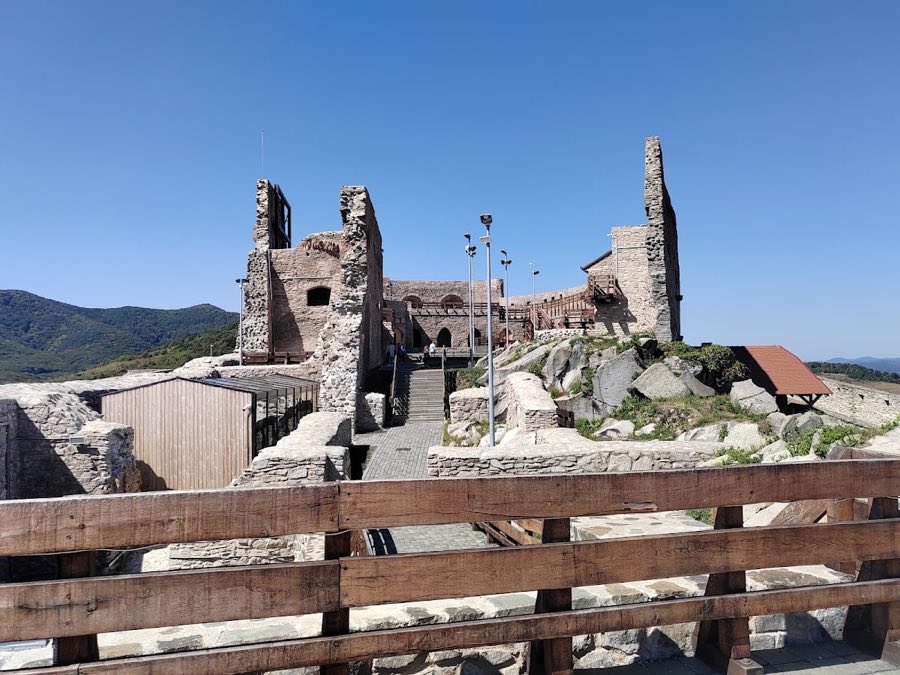
Surrounding the keep, a strong curtain wall built in the 16th–17th centuries enclosed the summit on an approximately triangular plan. On the southern face two polygonal towers were inserted to buttress that approach. Small bastions and a north‑west wing were added to the curtain wall in the same period, and traces of these additions remain visible among the ruins. Several stretches of wall have collapsed down the slope into the valley, and large portions of the defensive circuit survive only as fragmentary masonry.
Beneath the castle lie the ruins of an older religious building, identified as a Greek Orthodox chapel dating to the 13th century. Those remains lie under the castle footprint and are recorded as part of the site’s archaeological stratigraphy. Local oral tradition points to a particular window of the ruin in connection with the story of Ilona Kendeffy, who is said to have sat there spinning flax while awaiting her husband’s return from captivity.
No. 17449
No. 85075
No. 24629
No. 50293
Comments
Comments for Colț Fortress will require a verified account before posting.
We'll send a verification link before your first comment is published.