No. 36289
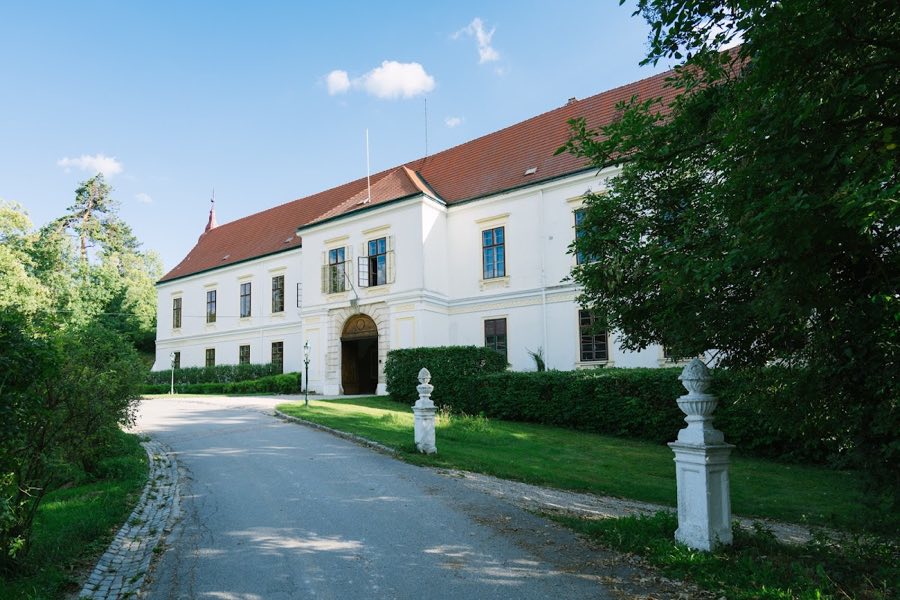
Loosdorf Castle
Austria
CastleRuinFor events11th century
No. 14220
No. 14220 · 48.632 N, 16.450 E
Quick summary
Hagenberg Castle is a castle in Austria with origins associated with the 17th century.
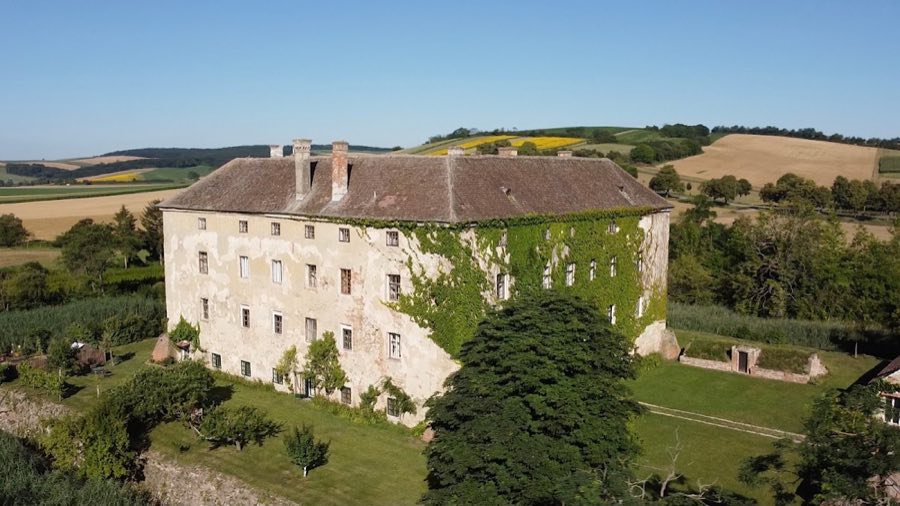
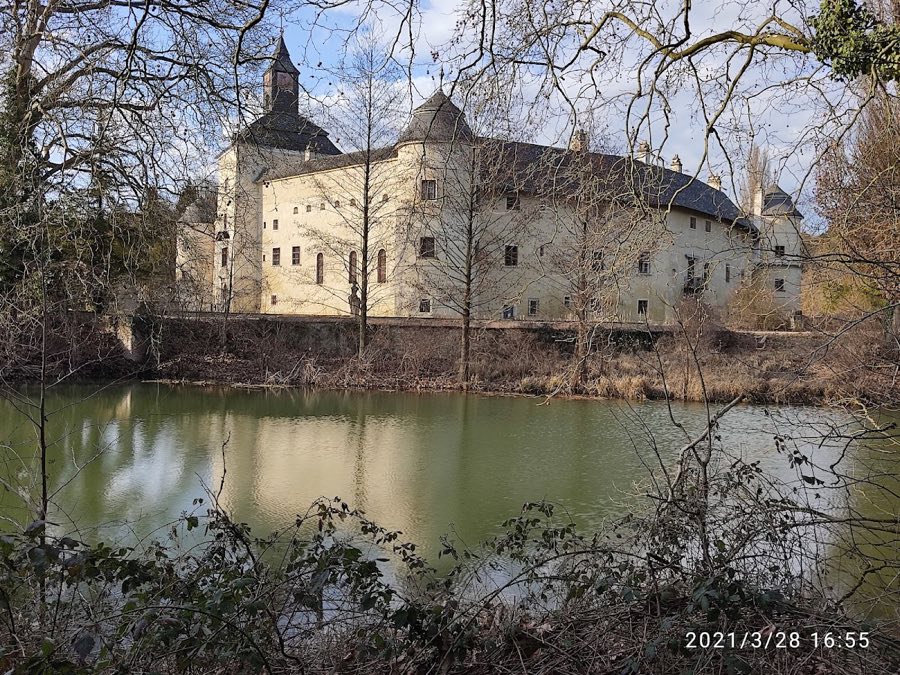
See all castles in AustriaHagenberg Castle, in Hagenberg, Austria, is a medieval four-winged moated residence originally established by the Hackenberg noble family. The site first appears in records in the 1200s, and over the centuries it was reshaped in Renaissance form in the 1500s and again into an ornate Baroque palace in the late 1600s, developments that mark its local architectural and social importance. Control of the estate passed through several notable families and the building took part in the region’s turbulent political life, including violent episodes during early 17th-century conflicts.
The place-name began in forms tied to an axe, appearing as Hakenberg and Hackenberg in early documents. In 1224 a Heinrich von Hackenberg is named, and by 1264 the fortress appears as the seat used for a seal. Ownership changed in 1382 when Alber Stuchs of Trautmannsdorf acquired the property, continuing its role as a noble residence in the medieval landscape.
In 1543 Christoph Kuenritz bought the property and transformed it into a Renaissance castle, reworking the plan and proportions to match contemporary tastes. Military violence reached the site in 1620 when followers of the Transylvanian prince Bethlen Gábor plundered the estate. The castle remained badly affected during the wider fighting of the Thirty Years’ War that followed.
The Sinzendorf family became owners in the 17th century, with Sigmund Friedrich von Sinzendorf purchasing the estate by 1650 and the family active there since 1592. In 1679 Theodor Reichsgraf von Sinzendorf carried out an extensive Baroque remodelling that produced richly ornamented interiors and a garden, and incorporated a deliberately encoded or secret message into the design. During the Baroque period the name Haggenberg became common; the spelling Hagenberg appears in records from the time of Emperor Joseph II, while present-day proprietors prefer the Baroque form Haggenberg.
After the death of Prosper von Sinzendorf in 1822 ownership passed to the Princes Reuß-Köstritz and the estate was used primarily for the manorial farm, a change that led to long-term decline in the building’s upkeep. Following the Second World War the property came under Soviet administration because it was German-owned, and it returned to the Prince Reuss after the 1955 State Treaty. From 1959 artists associated with the Vienna Group, including followers of Friedensreich Hundertwasser and Padhi Frieberger, took up residence in the complex. Later private owners included Josef Steiger, who purchased the property in 1974, Horst Wächter, who acquired it in 1986 and remains there while pursuing research into his father Otto Wächter, and the Osmann family, who took over in 2020. The castle is protected as a listed monument and an association called Initiative Hagenberg organises cultural activity at the site.
The castle stands as a four-winged moated complex surrounding a rectangular inner courtyard. The present geometry and balanced proportions reflect the Renaissance rebuilding of the 1500s, while the lowest masonry belongs to the medieval phase. Each corner of the structure carries a wing set to the cardinal points, and internal rooms line up in an enfilade sequence around the central court, giving a clear, ordered circulation that dates to the post-medieval reorganisation.
Approach to the house is from the northeast along a short avenue that crosses a stone bridge and aligns with a designed Baroque sightline. This visual axis runs through an outer gate into a frescoed entrance hall, continues across the courtyard where an octagonal spring fountain sits, and terminates in a three-bay shell grotto on the garden side. The grotto, a ground-floor room finished with shells, statues, painted scenes and stucco work, opens directly into the planted grounds. In the Baroque period the visual axis extended beyond the moat into a shaped landscape featuring an artificial lake with an island, once navigable by Venetian gondoliers.
Surviving fabric includes substantial medieval walling alongside remarkable areas of Baroque interior finishings that remain essentially in their original condition. The southern wing preserves state rooms with colored ceiling frescoes, and other chambers retain stucco ornament linked in the original scheme to a mythological duality. Later agricultural use altered parts of the estate, but key elements of both the Renaissance plan and the 17th-century decorative programme are still in situ and visible within the standing structure.
No. 36289
No. 67086
No. 51151
No. 37797
Comments
Comments for Hagenberg Castle will require a verified account before posting.
We'll send a verification link before your first comment is published.