No. 14220
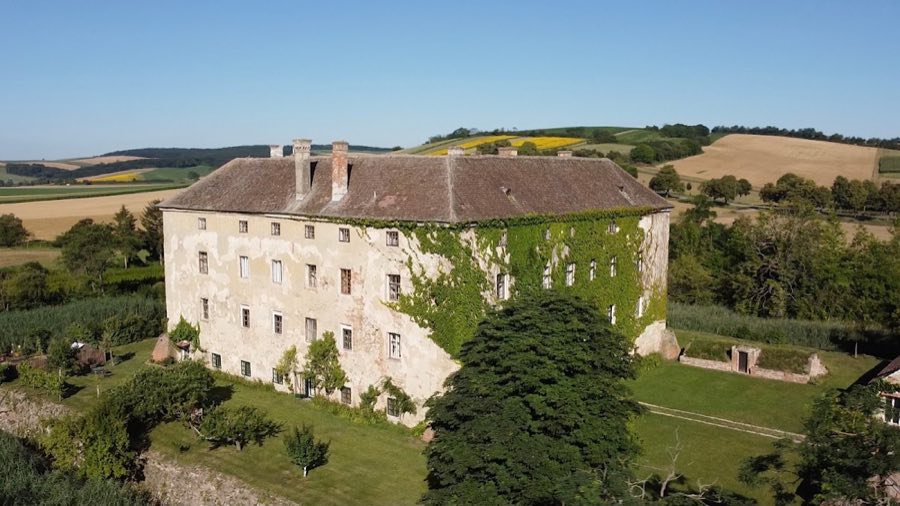
Hagenberg Castle
Austria
CastleIntact17th century
No. 36289
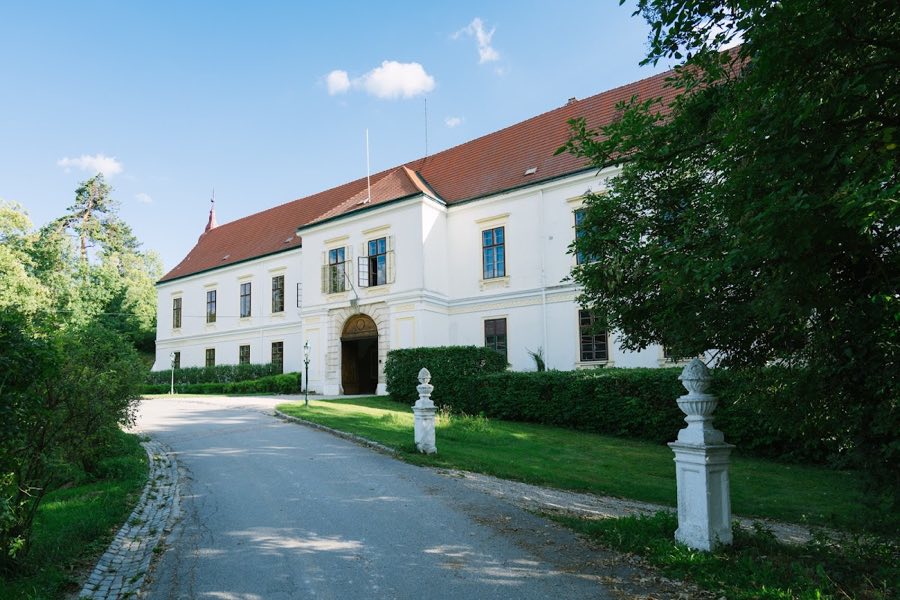
Castle · Austria
No. 36289 · 48.651 N, 16.449 E
For events
Loosdorf Castle is marked as a château or castle venue lead. Capacity, indoor/outdoor spaces, catering rules, and accommodation options are published only after public verification.
Event types: Private events, Cultural gatherings, Filming and photography
Quick summary
Loosdorf Castle is a castle in Austria with origins associated with the 11th century.
See all castles in AustriaLoosdorf Castle in Loosdorf, Austria is a historic fortress-turned-residence that grew from a settlement established during Bavarian colonization of the Weinviertel. Its origins reach back to the medieval period, with the local settlement emerging around the middle of the 11th century; the complex later developed significant Baroque and Classicist (neoclassical) phases that shaped its present appearance. The site figures in regional politics and noble patronage, serving as a fortified manor, a parish church setting, and a seat of successive noble families whose building campaigns and losses reflect wider European conflicts.
The locality that became Loosdorf first expanded under Bavarian colonists in the high Middle Ages. The fortified place is recorded in later medieval documents, with one account naming the fortress as Lostorff in 1416 and another placing an official mention in 1320; some archival material points to an even earlier origin, perhaps as early as the 10th century. Through the late medieval and early modern centuries the castle functioned as a noble stronghold tied to feudal service and rewards.
In 1531 Emperor Ferdinand I granted Loosdorf to the knight Adam von Gall in recognition of his role in the relief of the Hungarian city of Gran from Ottoman forces. A carved monument to Adam von Gall stands in the castle courtyard and a figural marble gravestone dated 1574 is fixed to the west façade, marking this connection to imperial service. In 1606 the estate passed by inheritance from the Gall family to Magdalena Gall von Losdorf and her husband Heinrich Matthias von Thurn. Heinrich Matthias von Thurn lost the estate in 1620 as a consequence of the Bohemian Estates uprising, an early phase of the wider conflicts that fed into the Thirty Years’ War.
During the Thirty Years’ War the castle suffered destructive events in 1645. Some German accounts attribute the damage to Swedish forces; English-language accounts describe a large fire in 1645 that destroyed parts of the complex. Repairs followed the wartime losses, and later in the 17th century the residence was rebuilt, with a reconstruction phase around 1680 producing a single-storey form in one account. In the later 18th century the Liechtenstein family acquired the estate. From 1732 Prince Emanuel of Liechtenstein undertook major rebuilding and provided the present form of the castle together with a church. Other accounts record the family’s acquisition slightly later and describe continued building and decoration from about 1760 into the early 19th century.
At the end of the 18th century Johann I, Prince of Liechtenstein, directed a Classicist remodelling, carried out from 1794, which altered the garden front and remodeled principal reception rooms on the main floor. For Johann I the estate’s economic councillor Bernhard Petri laid out a romantic English landscape garden and added a nearby artificial ruin in the forest, the so-called Hanselburg. The adjacent castle church continued to serve as the parish church.
In 1834 the Piatti family purchased Loosdorf and established their residence there, bringing a substantial porcelain collection into the castle. The property has remained in Piatti family ownership since that purchase. The building sustained severe damage in 1945. After repair and reuse, a museum opened in the castle in 1959, exhibiting, among other holdings, what was described as Austria’s largest private collection of tin figures. The Piatti porcelain collection, which contained East Asian and European pieces, was largely looted and broken in 1945; surviving fragments were retained at the castle. From 2015 onward a Japanese-led research and restoration project examined and repaired many of those fragments, and portions of the restored porcelain were shown at the Tokyo Ōkura Museum of Art in 2020 and at the Aichi Prefectural Ceramic Museum in 2021.
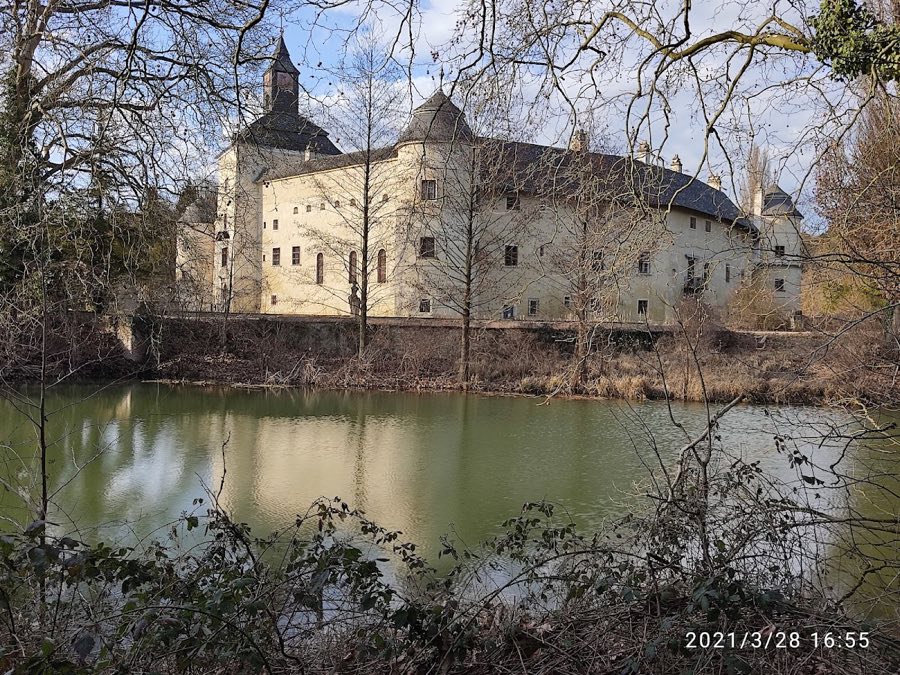
Loosdorf Castle stands on ground that slopes gently to the west northeast of the village and forms an irregular Baroque ensemble arranged around a rectangular courtyard. The principal complex is a four-winged building of two storeys, while the garden-facing west elevation rises to three storeys. The east side links directly to a manor gallery and to the nave of the adjacent parish church, and a broad park extends from the garden front to the west.
The exterior walls are plain in appearance and use classical surface treatments. A continuous horizontal string-course (a projecting band) separates storeys, an ornamental frieze band runs beneath the roofline, and window sills rest on volute consoles (scroll-shaped supports). The north elevation features a central projecting section of two window axes and a rusticated round-arched entrance that provides a clearly articulated main approach. A figural marble gravestone commemorating Adam Gall, dated 1574, is set into the west-facing exterior wall.
The west garden façade was altered around 1820 and presents a banded basement with two-axis projecting corner sections. A prominent freestanding external staircase fronts the central axis of the garden face; this stair rises to a balcony framed by an altana-like superstructure supported on three pairs of Tuscan columns and topped by a balustrade, while a blind attic above the eaves carries the Liechtenstein coat of arms. The courtyard façades at ground level contain arcade walkways in the south, north and west wings that form sheltered circulation around the central court.
The north wing contains a three-bay carriage entrance with vaulted construction combining cross ribs and a Stichkappengewölbe vault, the latter an intersecting segmental vault. The east ground floor shows a rusticated ashlar finish and a single-axis central projection crowned by an attic, reflecting the later classical treatment applied to this face. The castle church, attached to the east side, remains the parish church and retains its physical connection to the main building.
The complex has experienced phases of rebuilding and repair, most notably after the mid-17th-century destruction and the heavy damage of 1945, yet the principal wings, courtyard arcades, stair ensemble and decorated garden façade survive in recognizable and largely restored form. The castle also preserves material traces of past collections, with fragments of the Piatti porcelain held at the site and later subjected to research and restoration before public exhibition.
No. 14220
No. 51151
No. 67086
No. 37797
Comments
Comments for Loosdorf Castle will require a verified account before posting.
We'll send a verification link before your first comment is published.