No. 13163
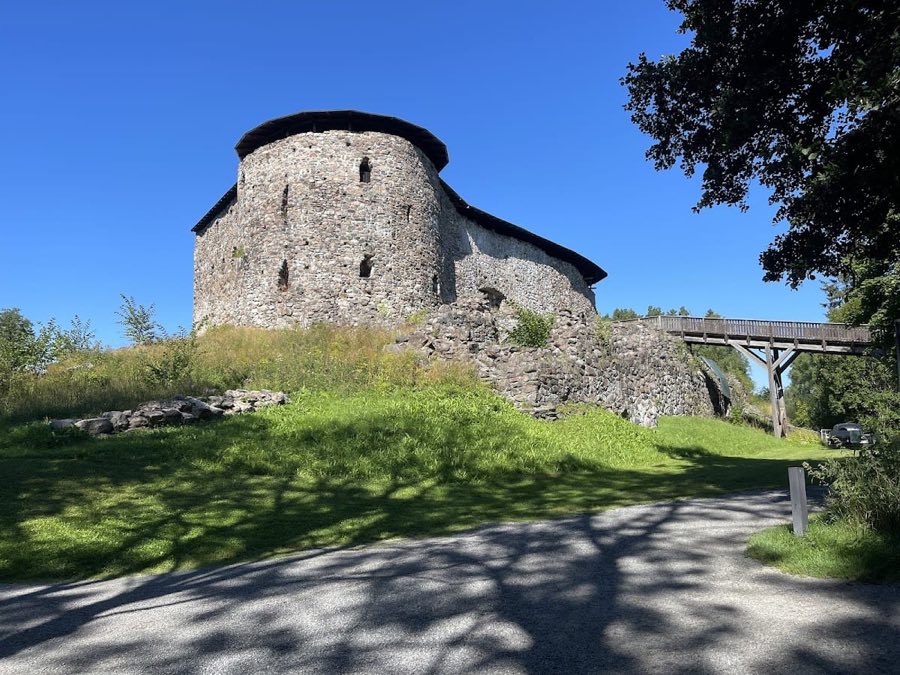
Raseborg Castle
Finland
CastleRuin14th century

No. 54145
Castle · Finland
No. 54145 · 61.004 N, 24.460 E
Quick summary
Häme Castle is a castle in Finland with origins associated with the 13th century.
See all castles in FinlandHäme Castle is a medieval fortress situated in Hämeenlinna, Finland, originally constructed by Swedish forces during the late 13th century. Its early development is closely connected with Sweden’s efforts to extend their control over the Häme region through military campaigns led by jarl Birger, aiming to secure this strategic area with a strong administrative center.
The first written record of the castle dates to 1308. Initially, it served as a military stronghold guarding the border. However, following the Treaty of Nöteborg in 1323, which established peace between Swedish and Novgorodian territories, the fortress lost much of its frontier importance. Despite this shift, Häme Castle remained a significant military base and administrative hub because of its position at key road intersections. Over the 14th and 15th centuries, the castle underwent major expansions, especially through the addition of brick construction that allowed for more advanced defensive and residential buildings.
During the 16th century, under King Gustav I of Sweden, Häme Castle’s function transformed from primarily military to a financial and administrative center overseeing the province. Notable enhancements from this period include two new round artillery towers erected in 1559, reflecting changes in warfare technology. The castle’s prominence began to wane by the late 1500s after damage caused by an explosion in 1599 and fire in 1659 weakened its structure.
By 1634, Häme Castle lost its formal administrative status as Swedish foreign policy moved focus further south. It experienced foreign occupation during major conflicts in the early to mid-18th century: Russian troops took control during the Great Northern War (1713–1721) and again in the Russo-Swedish War (1741–1743). After these wars, the castle was repurposed as a military supply storage and grain depot, with modifications that suited this logistic role.
In the latter half of the 18th century, under King Gustav III, the castle and its surroundings saw fresh fortifications added, including bastions and moats built following Italian-style bastion fortification principles. This renewed defensive posture reflected contemporary military engineering trends.
From the early 19th century onward, the castle increasingly served as a prison. In 1837 it was formally converted for this use under plans by architect Carl Ludvig Engel. The prison held up to 300 inmates and notably contained Finland’s only female penitentiary between 1881 and 1953 in the main castle, with related buildings used until 1972. Conditions in the prison were especially harsh for women during this period.
After prisoners were moved out in the 1950s, comprehensive restoration efforts began to return Häme Castle to its medieval form. These works, led by architect Nils Erik Wickberg, concluded on the main castle by 1979. The castle’s curtain walls and bastions were then restored by 1988. Today, Häme Castle stands as a cultural site preserving its multi-layered history.
The fortress of Häme Castle is a roughly square structure with sides measuring about 33 meters and walls rising to approximately 7 meters in height. Originally built from grey stone, the castle featured three defensive towers positioned at the north, east, and south corners. The interior courtyard held several wooden residential buildings and included a 12-meter deep well, which is no longer functional but remains visible within the castle grounds.
Significant expansion during the 14th and 15th centuries introduced widespread use of brickwork, a material uncommon in medieval Finland at the time. This allowed the castle’s builders to incorporate architecturally advanced features such as barrel vaults (curved ceilings) and Gothic decorative details, which appeared on much of the courtyard walls, replacing earlier, simpler stone surfaces. The castle’s layout was divided between a ground floor open to general use and an upper floor reserved for the governor and his court, following a model similar to that of Turku Castle.
Defensive improvements in the mid-16th century added two rounded artillery towers, or “rondells,” designed to better sustain and deliver cannon fire. In the early 17th century, the castle’s main hall was refurbished and became known as the “King’s Hall.”
By the 18th century, the castle’s surroundings were reshaped with bastions—angular, projecting fortifications—and moats, constructed in line with Italian bastion fortification methods that aimed to withstand modern artillery. Repairs also strengthened the existing curtain walls, and several new buildings were erected outside the main structure to accommodate garrison functions, including barracks, kitchens, and workshops.
In the 19th century, the interior was reshaped extensively for its use as a prison, following Carl Ludvig Engel’s architectural designs. Additional prison buildings were built along the curtain walls, including a correctional facility on the western side completed in 1839 and a provincial prison established in 1871. These changes notably altered the castle’s internal spaces.
Restoration efforts in the 20th century sought to undo many of these prison-era alterations. Enlarged doors and windows were bricked up to approximate the castle’s original medieval appearance, and the main entrance was moved to the former well area, known today as the “Kellari” or “Well House.” The castle, with its bastions and surrounding parkland, now forms a cohesive historic complex, once an island fortress since connected to the mainland. The site includes nearby museums dedicated to its prison history and military past, supporting its role as an important cultural landmark.
No. 13163
No. 22064
No. 54271
No. 62741
Comments
Comments for Häme Castle will require a verified account before posting.
We'll send a verification link before your first comment is published.