No. 98348
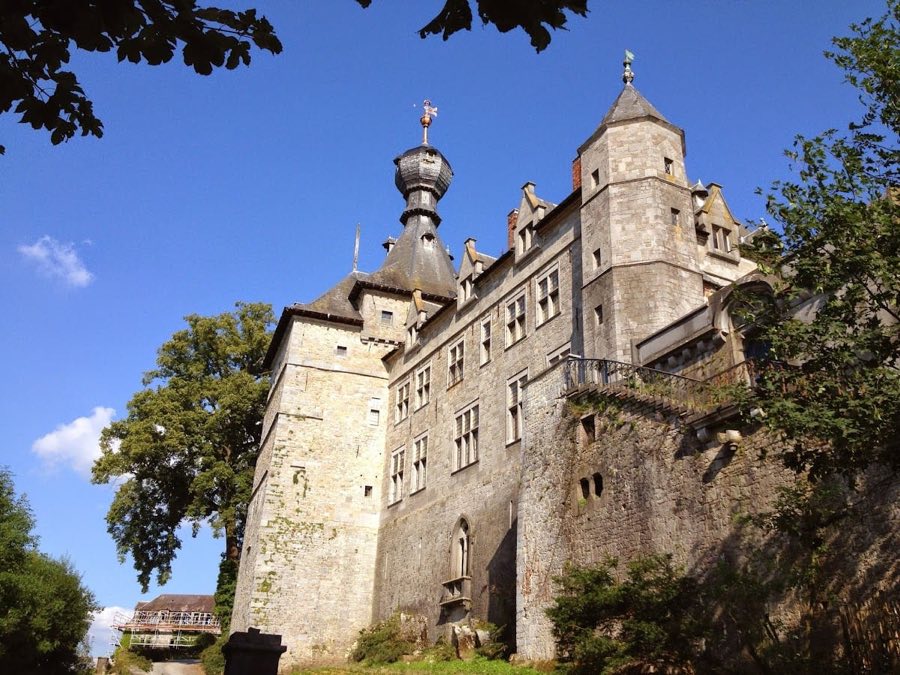
Chimay Castle
Belgium
CastleRestoredFor events17th century
No. 29419
Castle · Belgium
No. 29419 · 50.087 N, 4.599 E
Quick summary
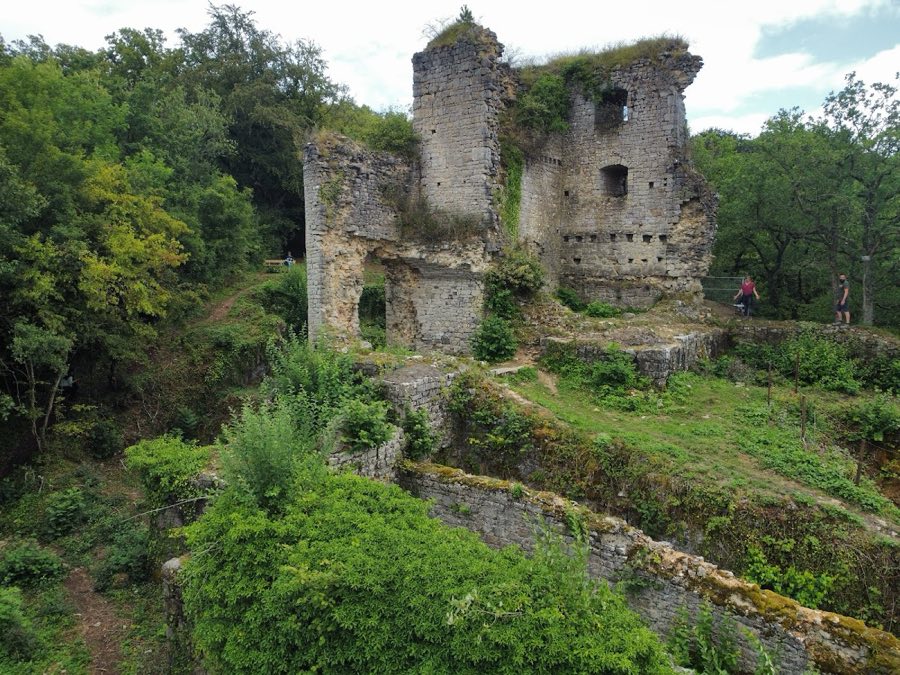
Hauteroche Castle is a castle in Belgium with origins associated with the 14th century.
See all castles in BelgiumHauteroche Castle in Viroinval, Belgium, is a ruined 14th-century feudal stronghold built by medieval local lords. Erected in the high Middle Ages and adapted over time, the castle stood as a local seat of lordship and figured in the region’s military struggles during the sixteenth century.
The lordship that included the castle was held from the last third of the thirteenth century by Gilles de Jauche, nephew of Gilles d’Orbais, and remained in that family until the early fifteenth century. The earliest recorded mention of the castle itself dates to the start of the fifteenth century, as noted by the Count of Villermont. After that period the seigneury passed into the hands of David, the illegitimate son of Aymeries, who claimed rights through his mother Gillette, lady of Berlaymont.
Ownership returned to the Berlaymont family in later years and then moved through a sequence of prominent houses, passing from Egmont to the Pignatelli family and later to the d’Arenberg line. These changes reflect the castle’s role as a landed stronghold tied to the region’s noble families.
In 1554, during the war between the realms of Charles V and Henry II, Hauteroche was destroyed following an assault by the Constable Montmorency. The next year, 1555, William of Orange captured the castles of Fagnolle, Couvin and Boussu and ordered them dismantled; accounts indicate that Dourbes may have been dismantled as well, though that point is not firmly established. No later medieval military occupation is recorded.
Between 1976 and 2002 the ruins were the subject of scientific excavation and conservation. The Archaeological Circle of the Fagnes, working with the National Service of Excavations, carried out excavation, clearance, reconsolidation, restoration and the classification of archaeological material during that campaign. The site is also the setting for the local legend known as “The Lady of Haute-Roche and Sir Roger de Sautour,” a narrative preserved in regional tradition.
The castle occupies a rocky spur approximately fifty metres above the Viroin valley, its plan centred on defensive use of the natural topography. Steep slopes protect most sides of the outcrop, while to the east the position was separated from the surrounding plateau by two successive ditches, creating an artificial barrier that reinforced the natural defence.
Entry to the stronghold was deliberately restricted. The single approach comprised a gateway protected by two small flanking towers, and a drawbridge gave controlled access across the defensive gap. This arrangement made the gate the castle’s only formal entrance.
The principal masonry that survives belongs to an outer enceinte dated to the thirteenth century. These outer walls describe an almost rectangular footprint measuring about 28.70 by 21.90 metres, with the southern wall aligned to follow the shape of the rock spur. The walls today stand in ruinous condition but were stabilised and partially restored during late twentieth-century work.
Excavation and clearance uncovered archaeological material that has been cleaned and catalogued; reconsolidation and restoration measures were also carried out to secure the remaining masonry. The local legend of the Lady of Haute-Roche is attached to the place and continues to be associated with the ruined structure.
No. 98348
No. 27788
No. 84802

No. 49281
Comments
Comments for Hauteroche Castle will require a verified account before posting.
We'll send a verification link before your first comment is published.