No. 86583
Geldrop Castle
Netherlands
Manor houseRestoredFor events14th century
No. 10177
Castle · Netherlands
No. 10177 · 51.381 N, 5.588 E
Quick summary
Heeze Castle is a castle in Netherlands with origins associated with the 17th century.
See all castles in NetherlandsHeeze Castle in Heeze, Netherlands began as the centre of a medieval lordship within the polity of the Duchy of Brabant, and its surviving main house dates to the mid-17th century. The present moated residence was raised around 1660–1665 in the context of post-medieval rebuilding, and the site mattered for centuries as the seat of local seigneurs whose rights and fortunes were tied to wider Brabantine and Low Countries politics.
A fortified holding at Heeze is recorded in the late 12th and early 13th centuries when Herbertus of Heeze held the seigneury and a 1203 charter records competing claims over the house at Heeze between the Duke of Brabant and the Count of Guelders; that dispute followed an armed clash and ended with Guelders relinquishing rights to the Kempen while both parties kept claims on the fortress. From the late 13th century the lordship passed into the orbit of the van Horne family. Members of that family fought in notable campaigns: one lord took part in the crusade under Louis IX and fought at the battles of Worringen and the Golden Spurs, dying in 1304 at Zierikzee. In 1318 an assembly was held at Heeze to resolve a border dispute over the Land of Heusden, and another van Horne died at Stavoren in 1345; several of his successors met violent ends in murder or on battlefields.
In the later 16th century the castle’s ownership reflected the upheavals of the Dutch Revolt. In 1580 a Willem van Horne was executed for his role in resisting Spanish authority; his estates were seized by Philip II and reassigned to Maria van Horne, who was married to Philip van Egmont. By the early 17th century the seigneury had passed to René van Renesse of Elderen, a man involved in conspiracies whose actions led to his lynching by citizens of Liège after he arranged the assassination of a political rival in 1637. Until the Peace of Westphalia in 1648 the seigneury had ties to the ducal administration of Brabant; after 1648 it came under the authority of the States General of the United Provinces.
Alexander van Renesse died without heirs in 1658 and the estate was sold in 1659 to a new, Protestant lord. That owner set out a far-reaching rebuilding programme in the 1660s intended to replace the medieval complex with a much larger square castle with corner towers and a colonnaded courtyard; only the forward service ranges were completed, the work was halted (reports cite rising costs), and the completed forebuilding dates to 1665. The property remained with that family until the early 1730s, was sold to François Adam d’Holbach, and in 1750 passed to Paul Henri Thiry d’Holbach, who furnished the house with fine Gobelins tapestries. In 1760 Jan Maximiliaan van Tuyll van Serooskerken purchased the estate; members of that family have lived at Heeze Castle since then. The older medieval block known as Eymerick had fallen into poor repair by the mid-17th century and was restored in 1912. Over time feudal rights attached to Heeze, Leende and Zesgehuchten lapsed with the end of the feudal order at the close of the 18th century, and an imperial decree of 14 May 1810 established those places as separate municipalities.
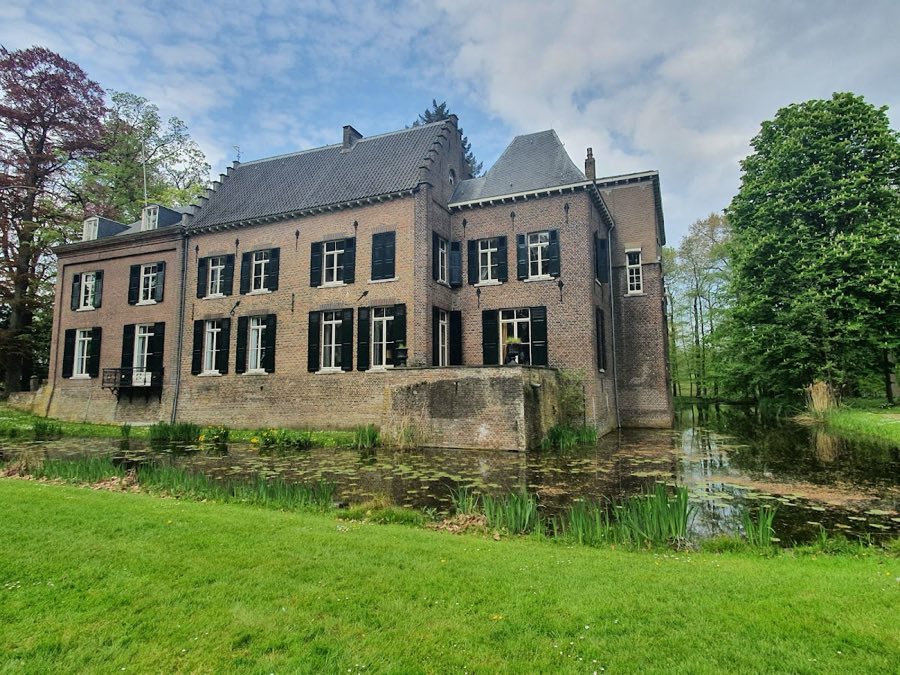
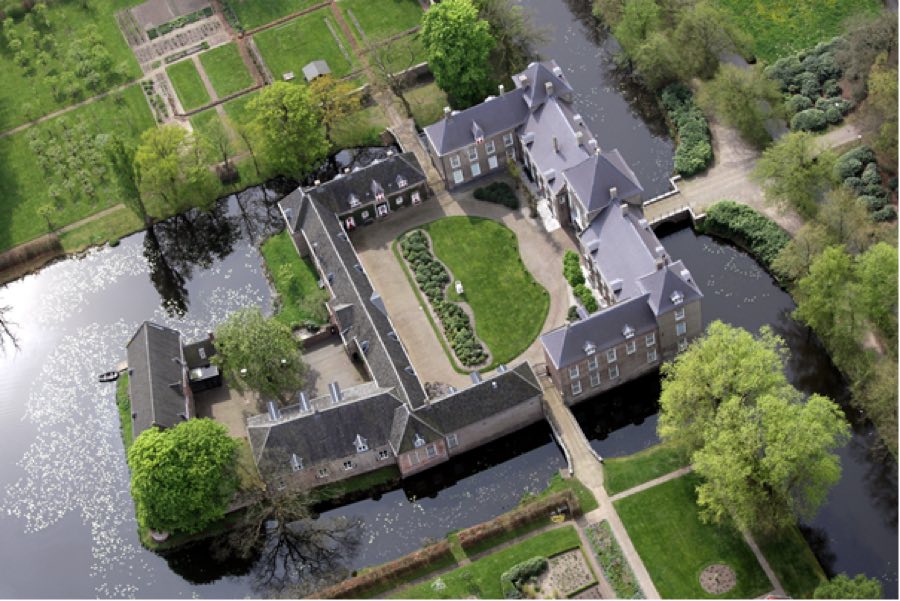
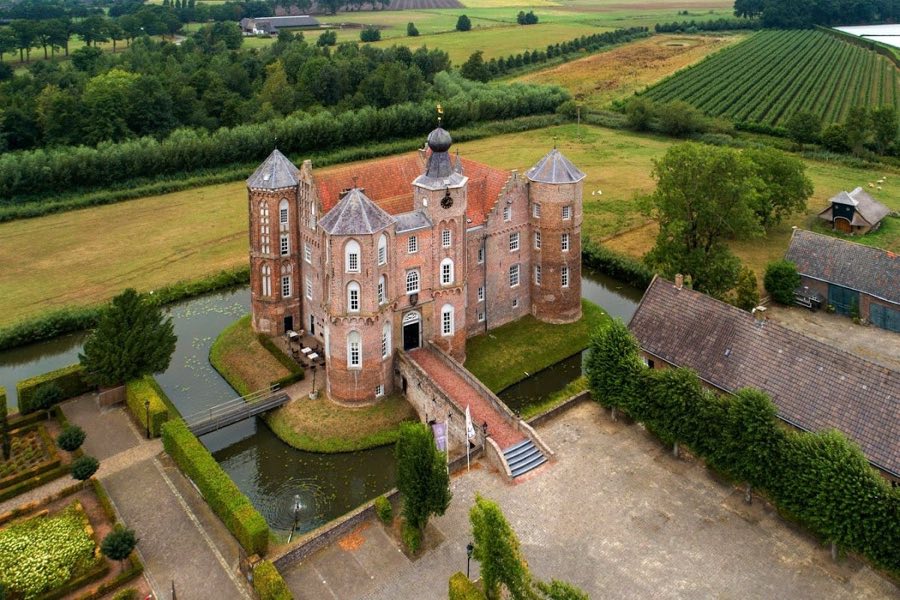
The complex is dominated by a mid-17th-century moated house built as the forward range of a much larger planned castle. This main range, completed around 1665 as the service and entrance block of a square design with corner towers and an internal courtyard, survives as the primary visible fabric from that rebuilding campaign. Only the forward service ranges gained an added upper floor in the 1660s, and the portion that later became the owners’ quarters was originally intended to accommodate garages, stables and servants’ rooms.
Approach to the compound is along a long avenue that crosses the floodplain meadows of the Groote Aa and leads to a sequence of courtyards. The principal entrance opens into an inner court through a gate that bears the coats of arms of the Van Tuyll van Serooskerken and Van Westreenen families; beyond a second portal the court gives onto the remains of the earlier fortress. The house stands amid woods and fields and is surrounded by water on three sides.
Immediately behind the 17th-century front range sits the older medieval block known as Eymerick. Eymerick is a rectangular hall-type building, largely of 15th century fabric with 16th century additions, partly provided with a cellar and probably resting on still older foundations. Eymerick survived because the grand rebuilding was never finished and it was repaired in the early 20th century, with a documented restoration in 1912.
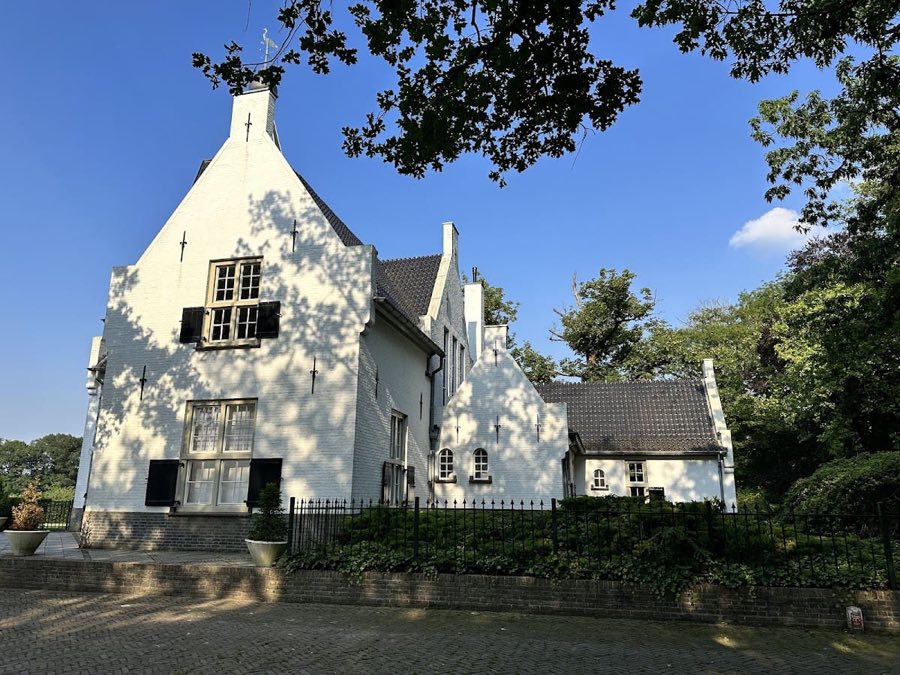
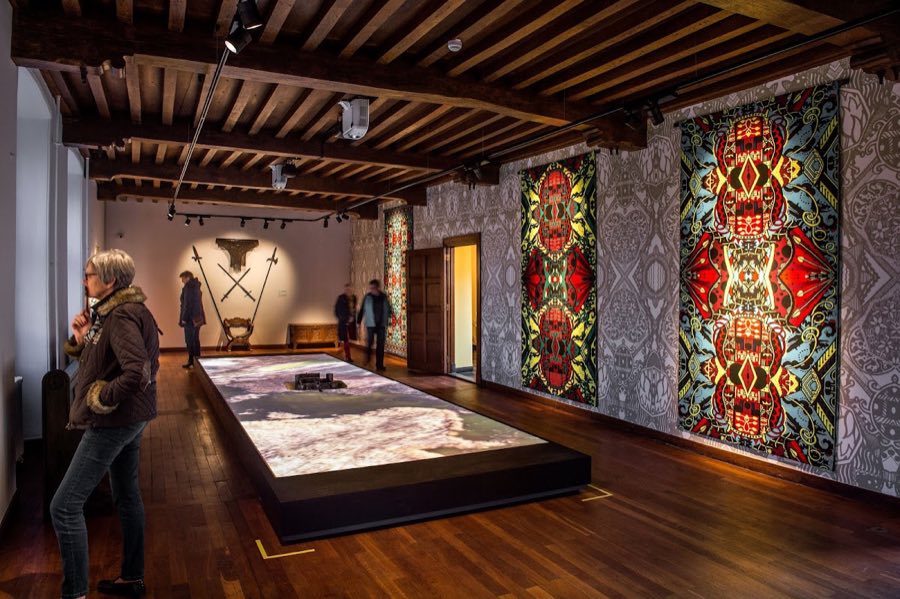
The estate contains ancillary structures from later phases, including outbuildings dated to 1735 and a separate dovecote placed outside the immediate castle precinct. Internally the house comprises about thirty rooms and retains a suite of period interiors. A tapestry hall displays 17th-century Gobelin textiles, some scenes portraying the life of Alexander the Great, together with Gobelins attributed to Charles Le Brun and Audenarde tapestries after Rubens. There are notable bathrooms, including one fitted with an unusual bathtub for its time, and several fine fireplaces; many of these fittings reflect the 17th-century campaign of rebuilding and subsequent enrichments. The forebuilding, Eymerick, the 18th-century service ranges and the ancillary farm and dovecote remain as the principal, documented elements of the site.
No. 86583
No. 18189
No. 86975
No. 53372
Comments
Comments for Heeze Castle will require a verified account before posting.
We'll send a verification link before your first comment is published.