No. 61793
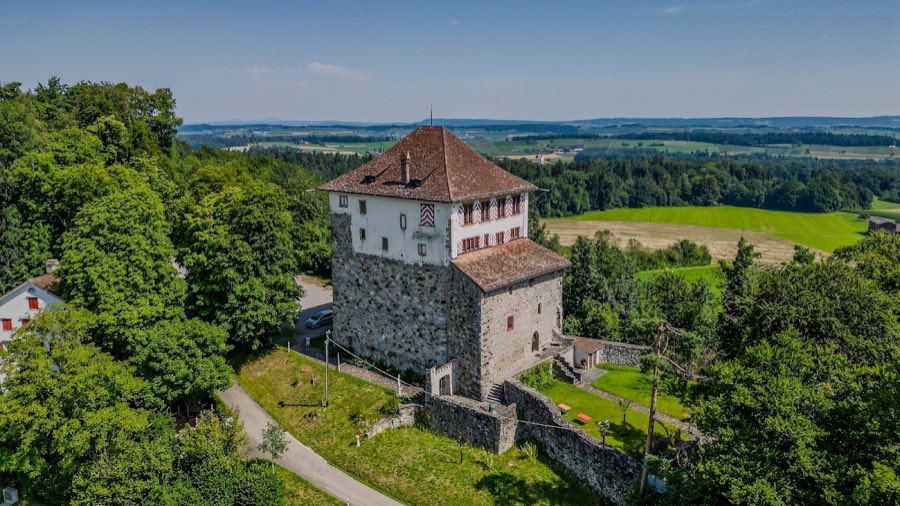
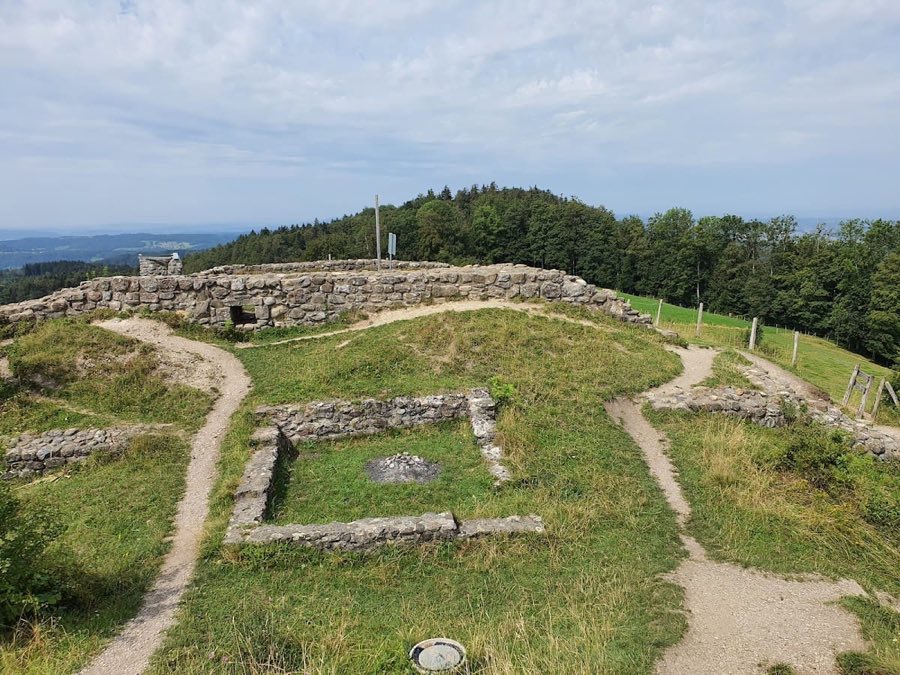
Mörsburg Castle
Switzerland
CastleIntactFor events7th century
No. 50346
Castle · Switzerland
No. 50346 · 47.508 N, 8.771 E
For events
Hegi Castle is marked as a château or castle venue lead. Capacity, indoor/outdoor spaces, catering rules, and accommodation options are published only after public verification.
Event types: Private events, Cultural gatherings, Filming and photography
Quick summary
Hegi Castle is a castle in Switzerland with origins associated with the 15th century.
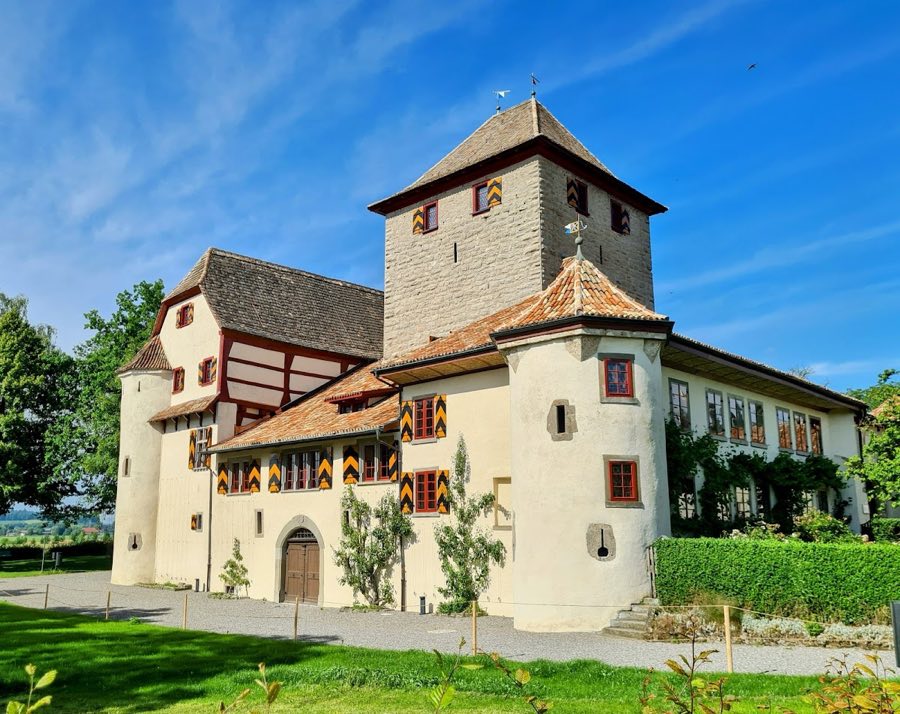
See all castles in SwitzerlandHegi Castle in Winterthur, Switzerland, is a medieval hilltop castle built around 1200 for the Bishopric of Constance by the ministerial Lords of Hegi. Erected during the High Middle Ages, it began as a fortified residence intended to guard episcopal property and later acquired additional functions and status through successive noble owners and municipal rule.
The first recorded mention of the site appears in 1225 in connection with the Hegi family, who served as ministerials to the bishop and also held offices for the Petershausen abbey and various regional fiefs. In the mid‑15th century the direct male line of the Hegi family ended when Hugo IV transferred the estate to his brother‑in‑law Jakob von Hohenlandenberg. Jakob’s sons, Ulrich and Hugo, carried out significant expansion work around 1500 that reshaped the castle into a larger noble residence.
Hugo von Hohenlandenberg rose to become Bishop of Constance and served in that office from 1496 until 1532. In 1519 the property passed into the Aargau Hallwyl family through the marriage of Barbara von Hohenlandenberg to Kaspar von Hallwyl, bringing Hegi into a wider web of regional noble ties.
When a sale to the nearby town of Winterthur was prevented in 1587, the city of Zurich bought the castle and established an upper bailiwick (Obervogtei), making Hegi the seat of a Zurich administrative district. Zurich governed the estate until 1798, appointing members of its Grand Council to oversee the bailiwick, while the castle technically remained a fief of the Bishopric of Constance. The political order of the Old Swiss Confederacy collapsed in 1798 amid the French invasion and establishment of the Helvetic Republic, and the castle then moved into private ownership, with families such as the Fahrners among later proprietors.
Large‑scale interventions to conserve and to remove inappropriate later additions took place in the early 20th century, beginning with a purchase and restoration campaign in 1915–16 and continuing through careful work into the 1930s. The city of Winterthur acquired the property in 1947, and the municipality adapted parts of the complex for public use; a youth hostel operated there from 1953 until 2000. The castle now functions as a museum and a venue for cultural events organized by the Verein Schloss Hegi. In 2012 a planting garden in historical style was recreated on the east side, with further plans for a cut‑flower and herb garden to the south and collaborative educational projects with local teacher‑training colleges. Hegi Castle is listed as a cultural property of national significance in Switzerland.
The castle group is organized around a robust rectangular residential defensive tower set at the heart of the site. That main tower measures roughly 9 by 10 metres internally and stands on masonry walls about 1.6 metres thick. Originally the tower’s entrance was raised above ground level on the north side, and until a 1707 fire it carried a timber upper storey; after the fire the top was rebuilt in masonry and covered with a pitched roof.
At the end of the 15th century the north side was rebuilt as a three‑storey knight’s house, a long, 28‑metre wing running along the plan of the complex. The other three sides of the site were closed by a surrounding curtain wall, and round corner towers were added at three points. These round towers display more of a representational character than heavy military workmanship. A two‑storey hexagonal chapel tower stands at the northeast corner, adjoining the principal living spaces.
Water once encircled the whole complex in a moat fed by a branch of the Eulach stream; that water feature was filled in during the 18th century. In 1613 the west range had its open courtyard roofed over to create the so‑called Gessnerhaus, where stables and rooms for servants were arranged under a continuous roof. On the south side a front wing reached its present form in 1805, and the entrance façade was remodeled in the same year.
Interior fittings combine original elements with later reuses and carefully preserved movable pieces. A late‑Gothic room with a vaulted wooden ceiling dating to around 1500 now occupies part of the interior; that ceiling was reinstalled from the museum at Stein am Rhein. Heating fixtures include a green relief tile stove from the early 17th century, brought from Wagenhausen in 1919, and a green tower stove from the late 16th century originally from Rheineck. The Lower Bailiff’s Room contains 17th‑century painted decoration and leaded glass showing the allied coats of arms of Hohenlandenberg‑Hegi and Hohenlandenberg‑von Mülinen, and its decorative window paintings and frescoes were restored in 1919 and are linked to the painter Hans Haggenberg. The Upper Bailiff’s Room preserves ceiling carving fragments taken from the church of Erlenbach dated 1496, wall inscriptions from the 17th century, fragments of a fresco painted in 1512 from the church of Turbenthal, and a series of coloured heraldic discs from the 16th and 17th centuries. The Upper Chapel is a polygonal chamber roofed by an eight‑part star vault, a high medieval liturgical space probably erected under Jakob von Hohenlandenberg.
Overall, the complex presents a sequence of masonry phases from the 13th century onward, later domestic expansions around 1500, early modern alterations including roofed service ranges, damage and rebuilding after the 1707 fire, and 20th‑century restoration that removed later intrusive additions and assembled several historical interior features for display. Many of these elements survive in restored condition and form the core of the castle’s museum presentation.
No. 61793
No. 97031
No. 56223
No. 44123
Comments
Comments for Hegi Castle will require a verified account before posting.
We'll send a verification link before your first comment is published.