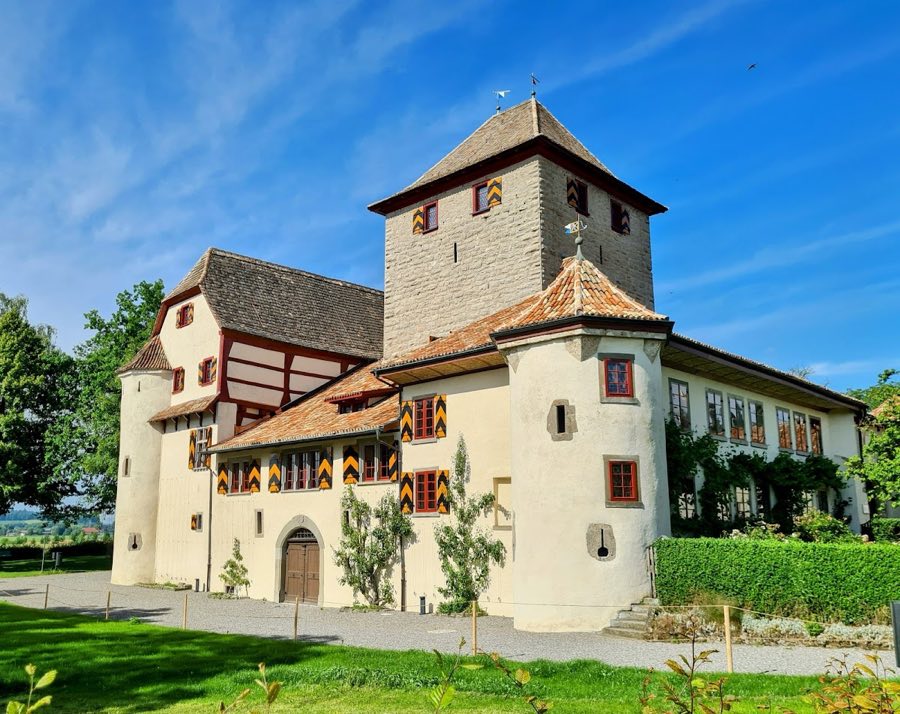
No. 50346
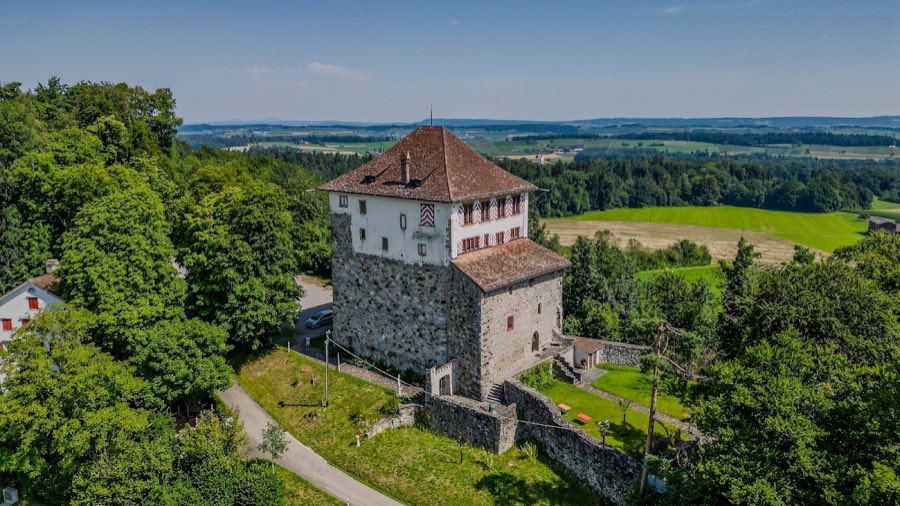
Hegi Castle
Switzerland
CastleRestoredFor events15th century
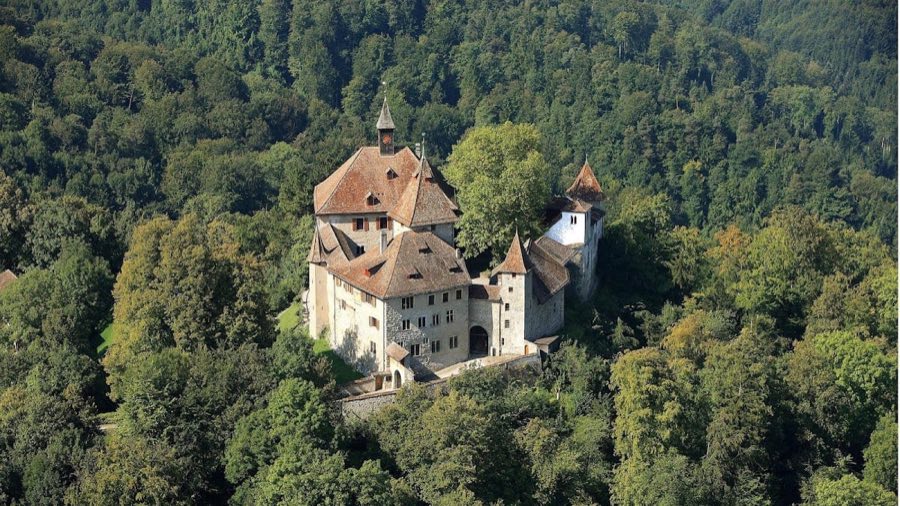
No. 97031
Castle · Switzerland
No. 97031 · 47.458 N, 8.743 E
For events
Kyburg Castle is marked as a château or castle venue lead. Capacity, indoor/outdoor spaces, catering rules, and accommodation options are published only after public verification.
Event types: Private events, Cultural gatherings, Filming and photography
Quick summary
Kyburg Castle is a castle in Switzerland with origins associated with the 11th century.
See all castles in SwitzerlandKyburg Castle stands near the village of Kyburg within the municipality of Illnau-Effretikon in Switzerland. It was established by medieval builders in the early 11th century, likely under the direction of Liutfried II of Winterthur, who constructed a fortress around 1025 to oversee the strategic valley above the Töss river.
The first historical mention of the castle, referred to as Chuigeburg, dates to 1027. During this period, it served as a refuge for Count Werner of Winterthur, who was engaged in a rebellion against Emperor Conrad II in alliance with Duke Ernst of Swabia. The emperor retaliated by conquering and destroying the fortress that same year. Werner himself perished in battle near Falkenstein Castle in 1030. After the extinction of the Winterthur family in the mid-11th century, the castle’s ownership passed through marriage to the House of Dillingen. Although Hartmann I of Dillingen lost control of Kyburg in 1079, he preserved significant authority over northeastern Switzerland.
The 12th and early 13th centuries saw the rise of the Kyburg family, who expanded their holdings by acquiring lands formerly held by the extinct Lenzburg family in 1173 and the Zähringen family in 1218. This expansion elevated them into an influential noble house between the Rhine and the Alps, rivaling prominent families such as the Habsburgs and Savoyards. The Kyburg lineage concluded in 1263, after which the estate passed through Anna of Kyburg to the Habsburg-Laufenburg counts before substantial portions were sold to Rudolf of Habsburg.
From 1273 to 1325, Kyburg Castle gained prominence as the repository for the Imperial Regalia, the symbols of Holy Roman Empire authority. Despite this distinguished role, the castle’s importance diminished following Rudolf’s election as German king. Under Habsburg control, the estate was organized as the County of Kyburg, with the castle serving as its administrative center.
In 1424, the city of Zürich acquired the county and placed its first bailiff, Johannes Schwend the Elder, in charge. He undertook significant restoration work on the then-dilapidated fortress. However, during the Old Zürich War, Austria regained control in 1442 as a consequence of their support but Zürich redeemed the castle in 1452. By 1499, after Emperor Maximilian I relinquished his rights, Zürich held full ownership.
For the next several centuries until 1798, a succession of 59 bailiffs appointed by Zürich governed from Kyburg Castle. These officials were responsible for administering justice and collecting taxes within the county, and the position often served as a stepping stone toward Zürich’s mayoralty. The castle’s administrative role came to an abrupt end with the founding of the Helvetic Republic, when local peasants seized and ransacked the castle but allowed the final bailiff to depart unharmed.
In the 19th century, Kyburg Castle became the seat of an Oberamt, or district administration, beginning in 1815, which shielded the structure from decay. After losing this function in 1831, the canton auctioned the castle in 1832 to Franz Heinrich Hirzel, who intended to dismantle it for building materials. Preservation efforts by local citizens prevented its destruction. In 1835, the castle was sold to Count Alexander Sobansky, a Polish refugee, who made it his family home for nearly three decades.
Among later owners was Lieutenant Colonel Matthäus Pfau, who took possession in 1864 and displayed his painting collection within the castle walls. A merchant named Eduard Bodmer Thomann acquired Kyburg in 1889 and restored it in the spirit of medieval romanticism, opening the castle as a museum guided personally by him until 1914. The canton of Zürich repurchased Kyburg Castle in 1917, investing in extensive renovations from 1925 to 1927 that partially reversed prior alterations. In 1999, the museum’s permanent exhibition was renewed under the Museum Schloss Kyburg association led by Dione Flühler-Kreis.
Today, Kyburg Castle is recognized for its continuous historical importance from medieval fortress through administrative center to cultural heritage site.
Kyburg Castle’s layout reflects its evolution from an early medieval wooden fortification to a substantial stone stronghold. The original ensemble, likely erected around 1027, consisted of wooden buildings protected by a palisade. The oldest surviving stone structures date from the mid-12th to mid-13th centuries and comprise the bergfried (a central defensive tower), the palas (a large residential hall), the chapel, three stone houses, and a southwest corner tower.
One prominent defensive feature is a thick shield wall, about 2.5 meters wide, built in the 13th century between the bergfried and palas to provide added protection. After the Habsburgs took control, the corner tower was dismantled, while the castle expanded southwards. A new northern ring wall was constructed, complete with the principal gate, reinforcing the castle’s defenses.
Following a destructive fire dated between approximately 1250 and 1370, significant rebuilding occurred. By around 1370, the palas reached completion, boasting roughly 290 square meters of living space per floor, ranking it as one of the largest hall buildings in German-speaking regions of that era. When Zürich assumed possession in the 15th century, further modifications included reconstructing the upper bergfried with durable tuff stone and installing a high entrance 11 meters above ground level. The castle’s south facade, particularly of the knight’s house, was rebuilt in 1472 due to unstable foundation conditions.
The castle chapel, probably constructed around 1200, retains its key elements: the nave, choir, and side choir. Documents mention a castle chaplain as early as 1235. Around 1308, Queen Agnes of Hungary is reported to have made alterations to the chapel, though no physical evidence of these changes survives. In 1440, artistic decoration was added by the first Zürich bailiffs, including paintings in the nave and choir. Later, around 1480, bailiff Felix Schwarzmurer donated a cycle of murals depicting the life of Zürich’s patron saint Regula. These paintings were concealed beneath plaster during the Reformation in 1525 and rediscovered in 1865 by Matthäus Pfau. Subsequent restoration and partial supplementation were carried out by Eduard Bodmer. Between 1992 and 1996, the murals underwent detailed study and conservation under cantonal protection, revealing images of various saints, the Annunciation, and the Adoration of the Magi. Stylistic analysis attributes the nave and choir paintings to an artistic workshop from the Lake Constance region, while the side choir decorations likely originated from a local northeastern Swiss artist.
During the 15th century, the castle chapel also served as a secure repository for the Imperial Regalia, housed in an iron-bound chest. The castle entrance area features a bridge leading to the main portal, adorned with the lordly coat of arms and the Imperial eagle above the gateway. Inside, the courtyard has functioned as a venue for various events and gatherings.
One notable later addition to the castle is the so-called “Iron Maiden,” a 2.37-meter-tall wooden structure covered in iron spikes. Acquired by Matthäus Pfau in 1876 from a castle in Carinthia, it was displayed in the castle’s former torture chamber until 1999 and now resides in the knight’s house. This object is not a genuine medieval apparatus; it was never mentioned in contemporary sources and is constructed from non-medieval materials. The spikes are sized for a person over two meters tall, further indicating its symbolic rather than historical use.
Overall, the existing structures of Kyburg Castle present a well-preserved example of medieval architecture adapted over centuries to changing military, administrative, and cultural functions.
No. 50346
No. 56223
No. 44123
No. 61793
Comments
Comments for Kyburg Castle will require a verified account before posting.
We'll send a verification link before your first comment is published.