No. 31439
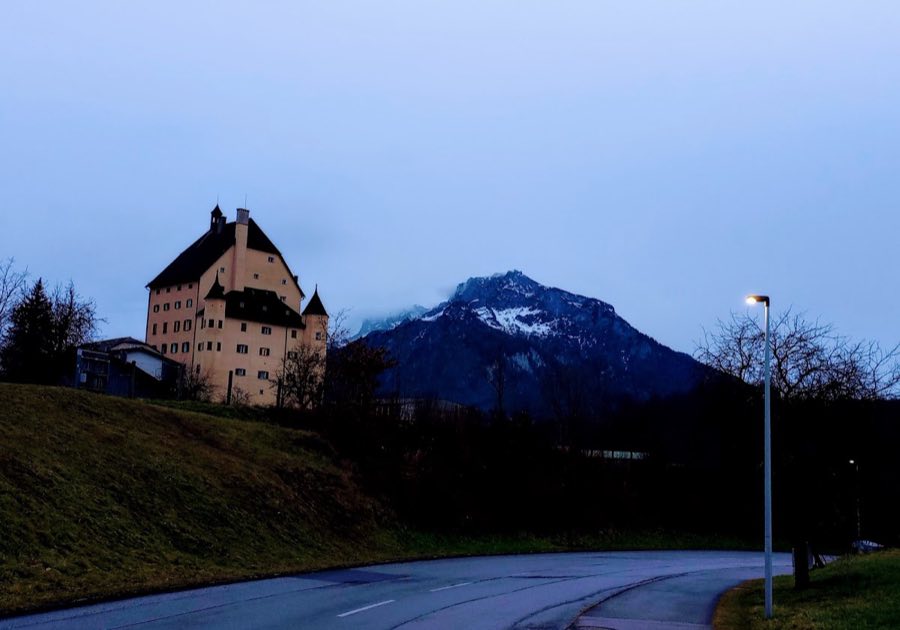
Schloss Goldenstein
Austria
CastleRestored14th century
No. 79742
Palace · Austria
No. 79742 · 47.762 N, 13.061 E
Quick summary
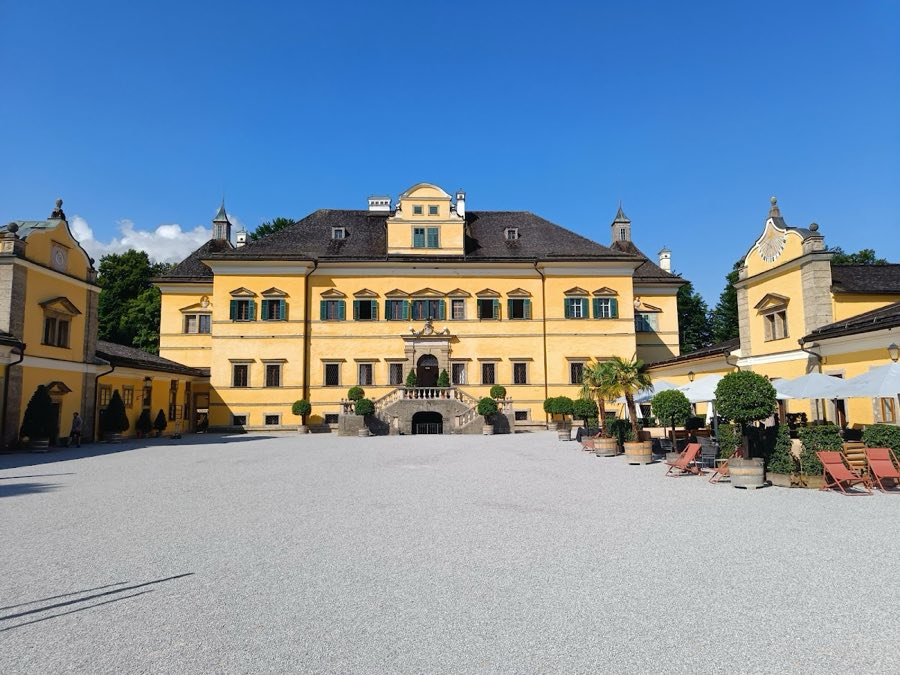
Hellbrunn Palace is a palace in Austria with origins associated with the 17th century.
See all castles in AustriaHellbrunn Palace in Salzburg, Austria is an early 17th-century mannerist suburban villa built for Markus Sittikus von Hohenems, who became Prince-Archbishop of Salzburg in 1612. Constructed between 1613 and 1615 as a pleasure residence, the palace combined a refined courtly setting with an elaborate system of water features and outdoor stages, and it became notable for innovative entertainments and garden design that set it apart in its region. The ensemble played a role in the cultural life of the Prince-Archbishopric of Salzburg and later passed into imperial and municipal hands.
Construction began in 1613 and incorporated an older late-Gothic noble house into the new palace complex. The villa was planned as a mannerist pleasure retreat, grouped around a closed ceremonial forecourt and approached by a long eastward axis. In 1615 a small hilltop pavilion, the Monatsschlösschen, was added on the Hellbrunn slope. Two years later, in 1617, an open-air Stone Theatre hewn into the hill opened with a performance of the pastorale Orfeo; that staging is recorded as probably the first opera presented north of the Alps and is also called the first opera in the German language.
In the decades that followed, the gardens and waterworks were repeatedly reshaped. Around 1730 an imperial garden inspector carried out a transformation that introduced Rococo tastes and reorganized the principal garden axis, including planting a double row of spruce trees and removing the artificial Erdbeerberg, or ‘strawberry hill’, from the main pond. Between 1749 and 1752 the complex of animated water automata was enlarged with the addition of an elaborate Mechanical Theatre, a hydraulically driven tableau used for court spectacle.
By the mid-19th century the estate formed part of the possessions of the Austrian emperor. Ownership later passed to the municipal authorities: the palace and park are today held by the State capital city of Salzburg. Sections of the historic grounds are used by the Salzburg Zoo. The entire complex and its landscape enjoy monument and nature protections, and named avenues and garden elements are legally safeguarded within landscape protection zones.
The site is organized about a mannerist suburban villa and an axial approach that projects east into the surrounding landscape. The main building ensemble opens onto a closed ceremonial forecourt, with matching service wings flanking the reception block. An extended approach axis runs from the palace’s eastern portal along the historic Fürstenweg, a linden avenue that leads toward the floodplain forest and the Salzach River, forming a compositional spine with the gardens and outlying hunting grounds.
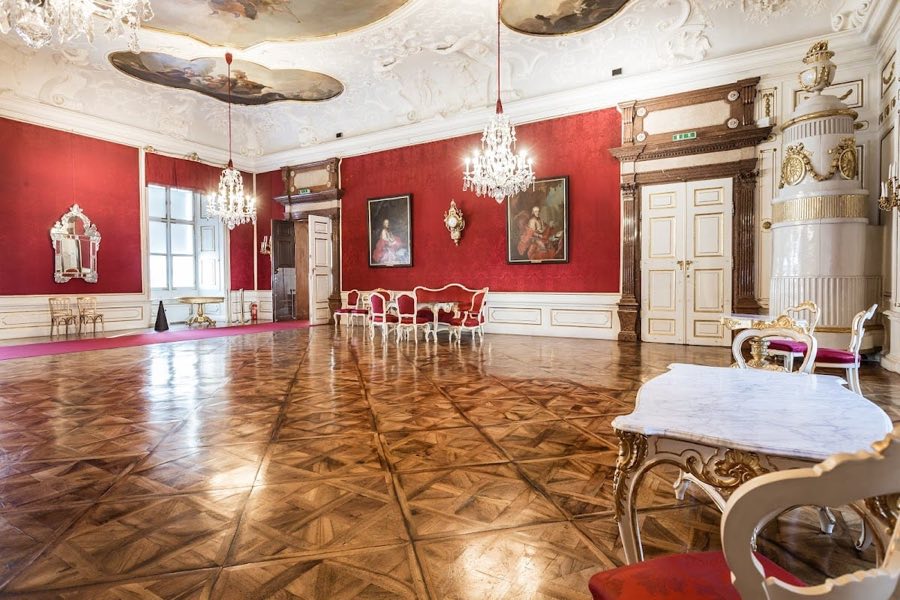
Interior spaces of the palace include a richly painted reception hall whose walls and vaulted ceiling bear allegorical scenes, very likely the work of Donato Arsenio Mascagni. Notable rooms follow a sequence of thematic salons: an octagonal hall featuring social and musical scenes, and rooms named for their pictorial programs such as the Fish Room, the Bird Room and a Corner Room. These state rooms sit above and around the grotto-and-water systems that frame the palace’s theatrical and garden functions.
The grounds contain an extensive Late-Renaissance waterworks system with numerous grottoes and sculptural features. Key elements include a Roman-style theatre with a princely table set beside a pond, the Orpheus Grotto, a historic wine cellar, the Sternweiher pond with the Altembs fountain depicting Perseus, and several named grottoes and fountains such as the Neptune (also called the Rain Grotto), the Mirror, Shell, Birdsong, Ruin and Venus grottoes. Sculptures of fools and wild boars punctuate the routes, and features named the Steinbock Grotto, the Fountain of Diana, the Mydas and Crown Grottoes, and a Neptune Fountain form a coherent hydraulic and sculptural circuit. The water ensemble is described as very well preserved and retains its original hydraulic character.
The Mechanical Theatre stands as a powered stone tableau driven by water. It contains 256 wooden figures set in multi-storey stage groups and is linked to a water organ. The hydraulics make figures move—turning or operating limbs—and the stage presents a town-hall scene that enacts guilds, craftsmen, soldiers and entertainers. This device functions as a mechanized theatrical display integrated into the garden’s water architecture.
The ornamental garden or water parterre is arranged around a formal main pond with a central island, originally carrying the artificial Erdbeerberg, and two symmetrical lateral ponds. Boxwood beds, sculptural groups and clipped alleys of trees frame the parterre. The layout originated in high Renaissance garden principles and was later reworked into a formal Baroque composition, with the Great Garden Axis beginning at the water features beneath a Diana sculpture and continuing east through the hunting garden, the floodplain woodland and across the Salzach toward Schloss Goldenstein.
The Stone Theatre is carved directly into the conglomerate rock of the Hellbrunn hill and functions as an early open-air stage set into a wild, rocky backdrop. Hewn from the hillside, this rock theatre creates a dramatic natural stage that was used for stage works and pastoral performances from the early years of the palace.
On the hill above the main complex stands the Monatsschlösschen, built in 1615 as a small palace pavilion. It now houses a local museum collection, variously described as the Salzburg Folklore Museum or the local-history department of the Karl August Museum, and continues to mark the hilltop assemble of built features.
At the southern extremity of the historic park a sacral ‘wilderness’ garden took the form of a Calvary hill with chapels, hermit sculptures and a hermitage, associated with devotional practice. Only a few foundations of these sacral monuments survive, while the naturally managed wilderness area around the Anif Alterbach survives as an independent part of the park, and large portions of the sacral garden now lie within the grounds used by the Salzburg Zoo.
The whole ensemble, from avenues and clipped alleys to garden sculptures and water machinery, is under monument and landscape protection. The Hellbrunner Gardens are listed as a garden-architectural monument, and specific historic avenues such as the Hellbrunner Allee and named oak rows receive protected status within the regional landscape protection area.
No. 31439
No. 32056
No. 55579
No. 93845
Comments
Comments for Hellbrunn Palace will require a verified account before posting.
We'll send a verification link before your first comment is published.