No. 15876
Burg Lichtenfels
Germany
CastleRuin14th century
No. 57378
Castle · Germany
No. 57378 · 48.392 N, 8.674 E
Quick summary
Wehrstein Castle is a castle in Germany with origins associated with the 15th century.
See all castles in GermanyWehrstein Castle is located in Burgruine Wehrstein, Sulz am Neckar, Germany, and was established by medieval German nobility.
A legend connects the site with Karl der Große, who is said to have met his wife Hildegard at Wehrstein in 752. The nearby settlements of Fischingen and Empfingen appear in documents from 772, showing the area’s early medieval presence. Local noblemen identified as von Wehrstein first appear in records around 1100; at that time Marquard von Wehrstein and his wife Gepa made a donation to the monastery at Hirsau. A golden anchor used as the family coat of arms is recorded about 1100 and, by tradition, commemorates a supposed rescue of a member of the family on a crusade with Frederick Barbarossa.
From the early 1100s the lords of Wehrstein are named in documents. Their territorial lordship encompassed the castle itself, the associated manor farm called Wehrstein, and the villages of Fischingen, Betra and Empfingen. The family produced notable clerical figures as well: Hiltibold von Wehrstein became abbot of St. Gallen in 1318 and served until his death in 1329. The von Wehrstein line seems to have diminished by the early 15th century, with Benz von Wehrstein probably the last of the family in 1409, although ownership of the castle had passed to others earlier; in 1331 Count Rudolf of Hohenberg is already recorded as owner.
In 1373 the Counts of Hohenberg pledged the lordship to the Herren von Weitingen, who carried out enlargements of the stronghold. In 1381 Duke Leopold of Austria purchased the Hohenberg possessions and Wehrstein thereafter became a fief held under Austrian overlordship, a status that continued until the early 19th century. Around 1400 the lordship was pledged to Burkard von Mansperg and converted into a formal fief, and in 1419 the Weitingen family again held the lordship as a fief. Until 1585 the administration of the territory was carried out by a castle bailiff who maintained residence at the castle.
The castle endured the uprising of 1525 without recorded damage. In 1528 Count Christoph of Nellenburg-Tengen acquired the lordship; he died in 1539 and was buried in the church at Empfingen. In 1552 Jos Niklas II of Zollern purchased the lordship on behalf of his cousin, Count Karl I of Hohenzollern, and the settlement of 1575 assigned the estate to the Hohenzollern-Haigerloch line. After that line became extinct in 1634, the lordship passed to Hohenzollern-Sigmaringen.
During the Thirty Years’ War, in 1643 the castle suffered near-total destruction at the hands of Bavarian troops and was later rebuilt. Political change followed early in the 19th century: after the Peace of Pressburg in 1805 Austrian suzerainty ended and the estate passed entirely to Hohenzollern-Sigmaringen. The villages of Fischingen and Betra were placed under the Glatt district office and in 1854 moved to the Haigerloch district office. By about 1830 the structure had fallen into ruin and parts were demolished; larger conservation work took place in 1842, and Prince Karl Anton of Hohenzollern-Sigmaringen undertook measures to prevent further decay. In the early 21st century local supporters formed a Friends group in 2003 to care for the ruin, the property was purchased by Alois Gfrörer in June 2006, and the state monument foundation recognized the ruin as its Monument of the Month in February 2011.
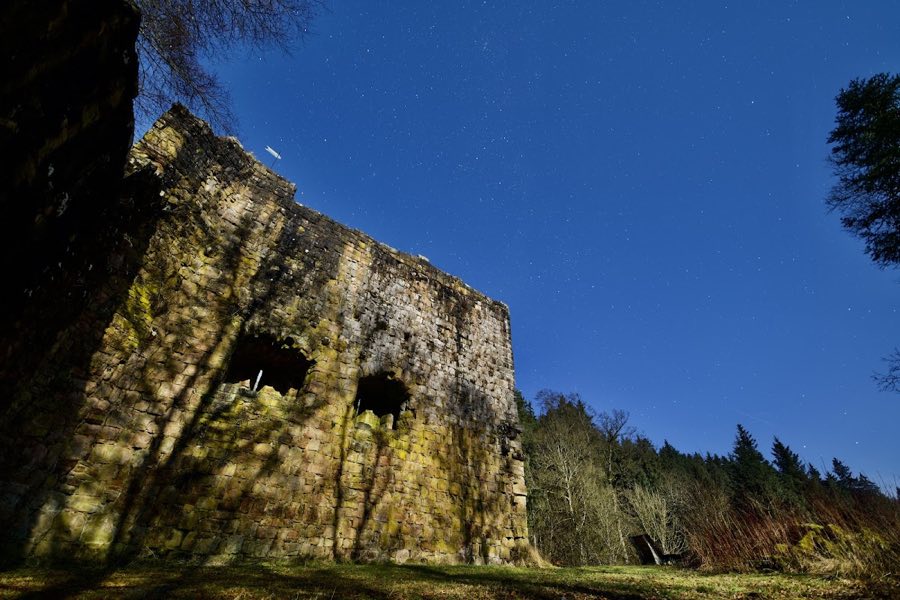
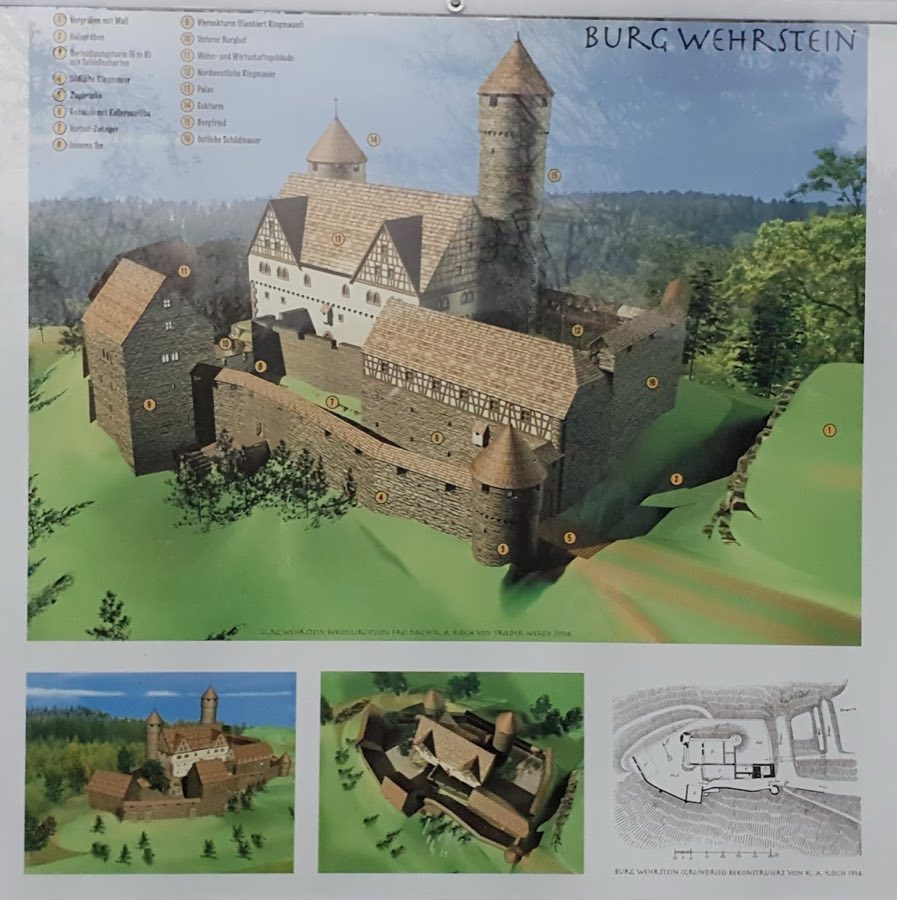
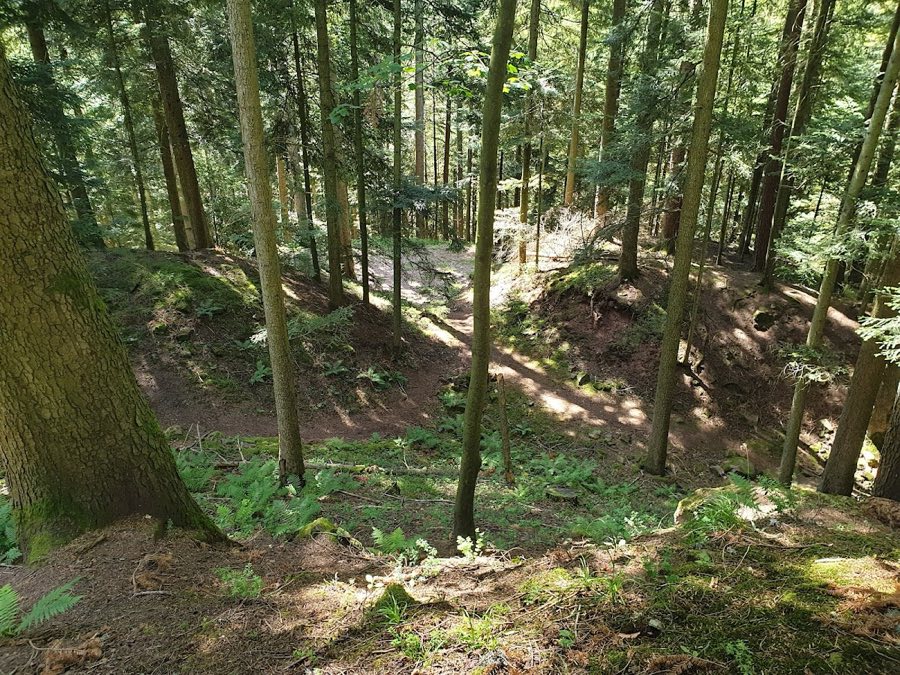
The site is the ruin of a hill castle occupying a raised position above the village of Fischingen. Archaeological and historical documentation records the castle ruin together with the former manor farm that belonged to the same lordship, known as the Wehrstein manor. The ensemble reflects medieval territorial organization in which a fortified residence and an associated agricultural estate formed a single unit of lordship.
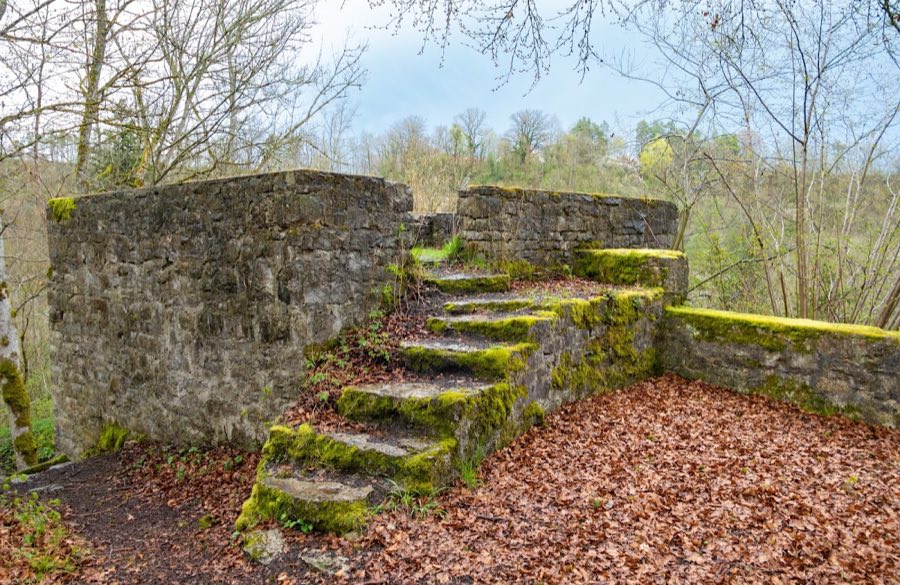
The visible remains today record a long sequence of construction, enlargement, destruction and repair. The fortification was enlarged after 1373 under the Herren von Weitingen, a phase that altered the medieval footprint of the site. In 1643 the stronghold was almost completely destroyed by Bavarian troops during the Thirty Years’ War; subsequent rebuilding created a later historic layer over the ruined medieval fabric. By about 1830 parts of the decayed structure were removed, while more substantial repairs were carried out in 1842. The present state of the castle is that of a conserved ruin, treated as a historic monument and stabilized to prevent further loss.
The manor farm known as Wehrstein formed an integral element of the lordship and is recorded as part of the estate administered from the castle. The site’s material traces and ruined structures show successive reuse and conservation interventions rather than modern reconstruction. Oral and heraldic traditions remain attached to the location; the von Wehrstein coat of arms, recorded around 1100 as a golden anchor, is historically associated with a legend of a rescue during a crusade with Frederick Barbarossa and forms part of the site’s recorded identity.
No. 15876
No. 79170
No. 71791
No. 12693
Comments
Comments for Wehrstein Castle will require a verified account before posting.
We'll send a verification link before your first comment is published.