No. 52428
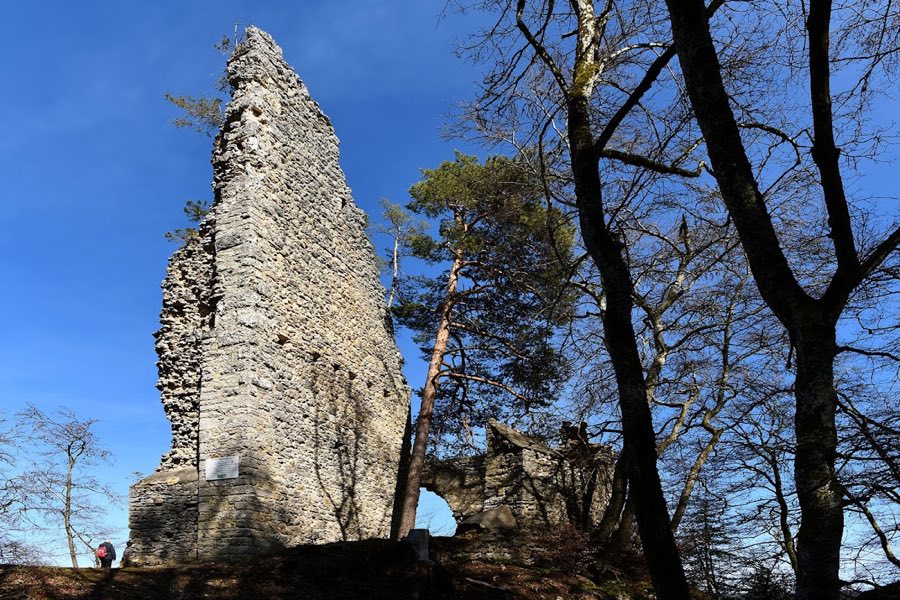
Burgruine Granegg
Germany
CastleRuin11th century
No. 71791
Castle · Germany
No. 71791 · 48.263 N, 8.890 E
Quick summary
Burg Hirschberg is a castle in Germany with origins associated with the 14th century.
See all castles in GermanyBurg Hirschberg stands in Balingen, Germany, and was probably erected by medieval German ministerials connected to the Zollern‑Schalksburg line.
The castle belonged to the high medieval period. Material recovered from the site, including pottery and pieces of tile rim dated to the 12th and 13th centuries, indicates occupation or activity in that era. Documentary evidence names the location in a record from 1378, placing the site firmly within late medieval written sources. The identification of the earthworks as a former spur castle had been disputed for some time, but the medieval finds recovered from the defensive embankments and ditches support the castle’s historical existence.
Local memory preserved the place long after the buildings themselves disappeared. In 1622 Jacob Frischlin recounted Balingen’s foundation legend in which the hilltop stronghold appears, and the site is also woven into the regional tale known as the Sage vom Hirschgulden. Archaeological investigations carried out between 1952 and 1955 examined the earthworks and recovered the surface pottery and tile fragments that tie the visible features to the medieval occupation. In later centuries the structure ceased to stand as a recognizable castle and is recorded as a vanished site.
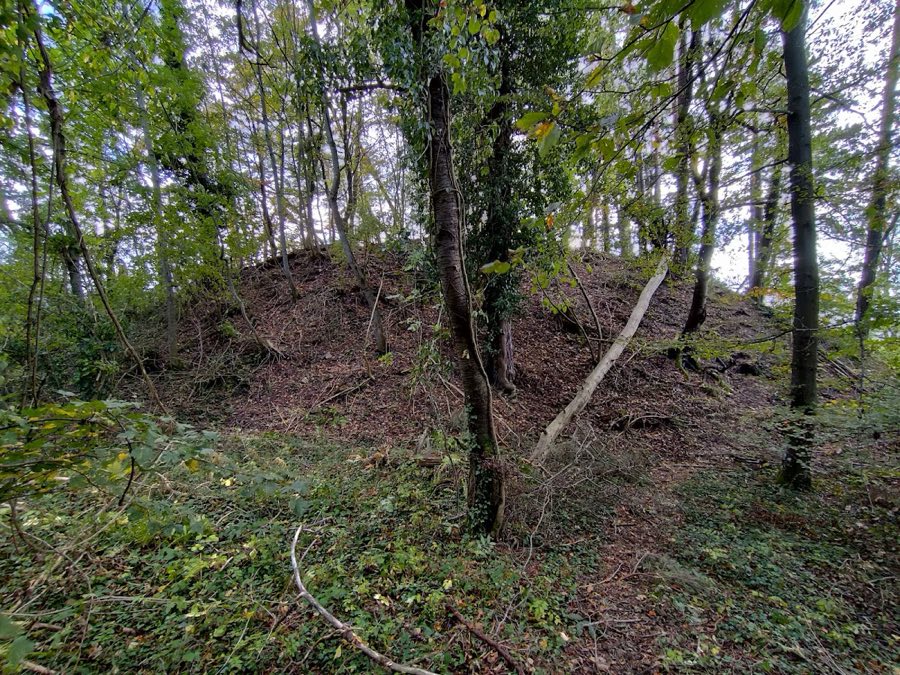
The surviving traces show a typical spur castle arrangement, positioned at the tip of a northwest-facing hill spur 722 metres above sea level, roughly three kilometres east of Balingen’s town church and about 1,350 metres south of Heselwangen’s church. The enclosed area at the spur tip consisted of an outer court in front of an inner stronghold, both bounded by a system of earthwork ramparts and surrounding ditches. These banks and cuts are the primary archaeological remains and reflect the defensive layout used in the high medieval period.
A broad transverse embankment divides the site, measuring approximately 140 metres in length and about 12 metres across. From the northern end of this dividing bank a narrow terraced shelf runs downslope, interpreted as a deliberate defensive terrace forming a confined enclosed zone between defenses, known in castle terminology as a zwinger. The western side of this terrace, where the hill falls away steeply, was deliberately built up with added fill, indicating a human modification to shape or stabilize the defensive terrace. The arrangement of terraces and banks allows for the possibility of an additional outer court either on that terrace or in the space between the two main embankments, a configuration that the site’s planners appear to have considered.
Surface recovery and excavation produced fragments of pottery and tile rims from the medieval period, and these finds were recovered principally in the areas around the ramparts and ditches. Fieldwork carried out in the early 1950s mapped the embankments and recorded those small cultural remains, linking the earthwork plan to medieval occupation. Today the place survives as recognisable banks and ditch hollows in the landscape; the built structures no longer stand, and the archaeology is represented by these traceable defensive earthworks and the pottery and tile fragments documented during excavation.
No. 52428
No. 79170
No. 57378
No. 33763
Comments
Comments for Burg Hirschberg will require a verified account before posting.
We'll send a verification link before your first comment is published.