No. 70643
Ruurlo Castle
Netherlands
CastleRestoredFor events14th century
No. 15470
Manor house · Netherlands
No. 15470 · 52.122 N, 6.384 E
Quick summary
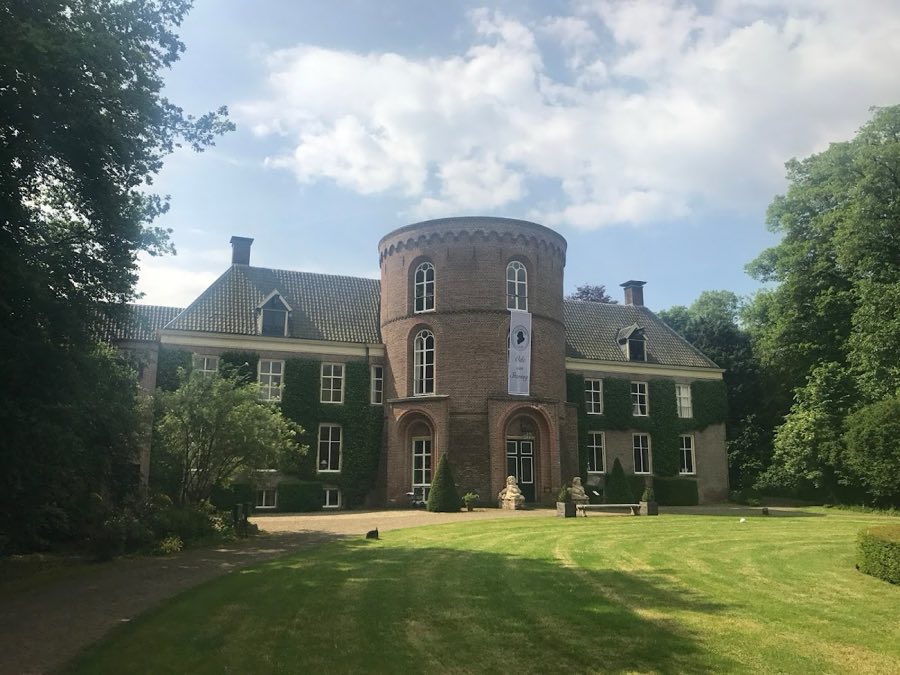
Kasteel De Wildenborch is a manor house in Netherlands with origins associated with the 18th century.
See all castles in NetherlandsKasteel De Wildenborch in Vorden, Netherlands, is a medieval castle first attested in 1372 as the property of the robber-knight Sweder Rodebaert van Wisch. Its earliest recorded life belongs to the late Middle Ages, when fortified dwellings in this region of the Low Countries served both as noble residences and as bases for local warfare and raiding. The castle functioned as a fortified refuge set within surrounding marshland, used by the Wisch family after their raids into nearby counties.
During the later medieval and early modern centuries the site experienced repeated military pressure. In 1490 citizens of Deventer laid siege to Wildenborch while citizens of Zutphen besieged another Wisch stronghold at Terborg; contemporary accounts record these attempts as having little effect. Duke Charles of Guelders then attacked the area repeatedly and, after three sieges, Johan van Wisch relinquished the site in 1512, when the castle became a ducal open house under the duke’s authority. Raiding resumed under Joachim van Wisch from 1519, and in 1523 the duke posted a permanent garrison at Wildenborch and ordered the castle’s defensive works taken down.
The estate passed through several hands over the following centuries. In 1544 Ermgard (Irmgard) van Wisch brought the property by inheritance into the Limburg-Styrum family through her marriage. In the mid-18th century the owner Willem Otto Frederik von Quadt transferred the holding to two architects from Maastricht as a gesture of thanks for other building work; those architects sold the property in 1769 to Colonel Albert Dominicus von Limburg-Styrum. In 1781 D.H. Staring bought the estate, and the Staring family thereafter maintained long-term ownership. The poet A.C.W. Staring lived at the house during the nineteenth century and Winand Staring was born on the estate in 1806. After A.C.W. Staring’s death the property passed to his grandson Jan Isaac Brants (1821–1901) and remained with that line until 1931, when ownership reverted to other members of the Staring family. In 1976 the family placed the land and dwelling into a foundation intended to preserve them; a family member continues to live on the property and manages the Staring archive kept there.
The surrounding grounds changed significantly across two centuries. Marshes that once enclosed the castle were partly drained in 1792, allowing an extensive planting of mixed deciduous forest. A botanical survey of the woods was recorded by F.W. van Eeden in 1886. A large estate sale in 1907, when the property measured some 630 hectares, prompted widespread cutting of the principal forest and, later, the infilling of several ponds, a process noted as late as 1924. Today the estate occupies roughly 300 hectares, and the manor house remains a private residence whose immediate grounds are normally closed except on special occasions.
The site combines a fortified medieval dwelling and its later country estate, situated between the villages of Lochem, Ruurlo and Vorden. Originally the castle stood within extensive marshland that defined its immediate setting, and the surviving landscape features record the shift from wet defenses to managed parkland. The hamlet of Wildenborch lies to the north, a hill called the Zunnebelt stands about two kilometres to the south-west, and a planted area known as Pinetum De Belten sits roughly one kilometre to the west.
A principal medieval feature was the castle’s defensive works, which functioned as protection for the resident family and their followers. These defensive elements existed through the early 16th century but were deliberately removed in 1523 after a ducal garrison was installed; the defensive structures therefore survive in the record primarily as elements that were taken down at that date rather than as standing fortifications. The installation of a permanent garrison in 1523 marks a clear change from a privately held stronghold to direct ducal control.
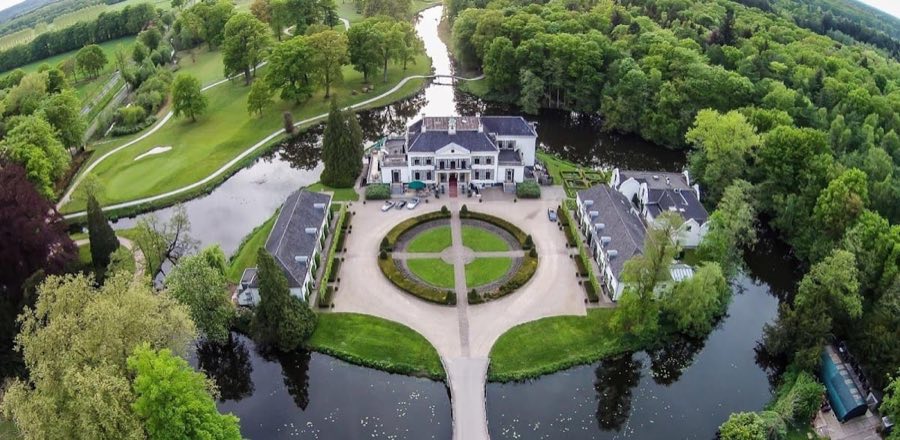
The manor house itself survives as the estate’s central building and continues in use as a private residence managed by the owning family. The house and its immediate grounds are normally closed to the public and are opened only on designated occasions.
The historic parkland and woodland date to the late 18th century, following the partial drainage of surrounding marshes in 1792, when extensive mixed broadleaf planting was laid out. That woodland was substantially reduced after a large 1907 sale that affected the estate’s roughly 630 hectares, and several ponds were later filled, with infilling recorded into the 1920s. Today the estate’s area is about 300 hectares, reflecting those episodes of planting, felling and water-course alteration.
No. 70643
No. 45932
No. 12731
No. 17176
Comments
Comments for Kasteel De Wildenborch will require a verified account before posting.
We'll send a verification link before your first comment is published.