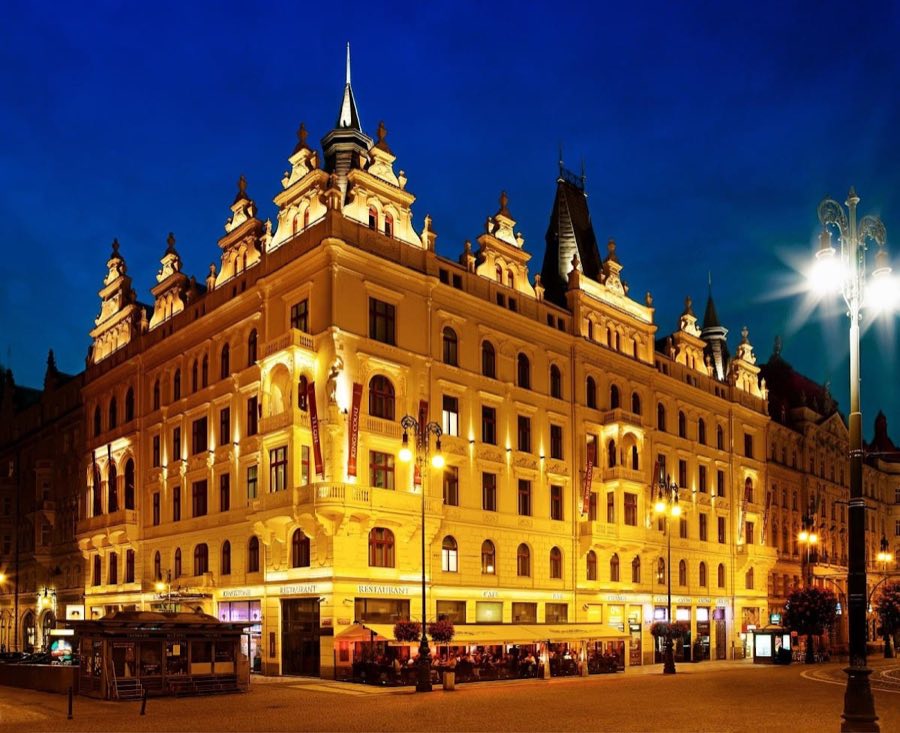
No. 71414
King's Court in Prague
Czechia
PalaceRestoredFor rent15th century
No. 98064
Palace · Czechia
No. 98064 · 50.088 N, 14.422 E
For events
Kinsky Palace, Prague is marked as a château or castle venue lead. Capacity, indoor/outdoor spaces, catering rules, and accommodation options are published only after public verification.
Event types: Private events, Cultural gatherings, Filming and photography
Quick summary
Kinsky Palace, Prague is a palace in Prague, Czechia with origins associated with the 18th century.
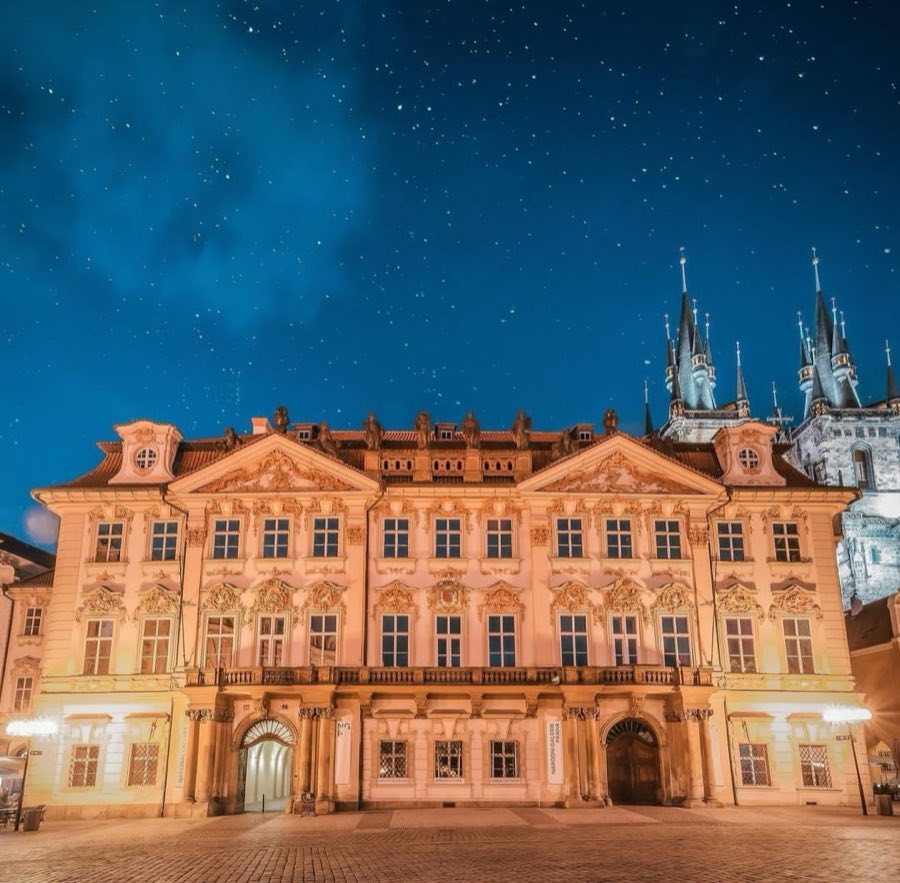
See all castles in CzechiaKinsky Palace in Prague, Czechia, is an 18th‑century city palace constructed between 1755 and 1765 in the Rococo style with rising Classicist influences, built for Count Johann Ernst Wenzel von der Goltz. Erected on Prague’s Old Town Square on the footprints of two medieval houses, the palace became a prominent urban residence whose owners, uses, and events tied it to the civic and cultural life of the city over two centuries.
Construction took place in the middle of the 1700s and incorporated fabric from the older buildings on the site. After the death of the original owner the property changed hands in 1768, when the Bohemian noble Kinsky family acquired it and gave the building the name it still bears. Under Kinsky ownership the interior fittings were altered toward Classicist taste, a Baroque annex was added, and in 1835 the palace was remodelled and joined to an adjacent structure.
Throughout the 19th and early 20th centuries the palace complex housed educational and residential functions alongside shops. From around 1880 the rear building contained the Imperial‑Royal State Gymnasium, a secondary school with German as the language of instruction. Bertha von Suttner, born a Countess Kinsky, was born in the palace on 9 June 1843. The writer Franz Kafka attended the gymnasium in the rear building from 1893 to 1901, and his father, Hermann Kafka, operated a haberdashery on the ground floor in the years around 1912 to 1918. Between 1922 and 1934 the palace accommodated the legation and later the embassy of the Polish Republic.
In 1948 Klement Gottwald addressed the public from the palace balcony, with dates for that appearance reported variously as 25 January 1948 and as occurring during the February 1948 events linked to the Czechoslovak coup d’état; some accounts also confuse the balcony appearance with a separate speech given on Wenceslas Square on 21 January. From 1949 the National Gallery Prague began using the building as a space for exhibitions; it serves the National Gallery’s general directorate and houses permanent displays, including collections of Asian art and Czech landscape painting. The palace entered the List of National Cultural Monuments of the Czech Republic in 1962.
The palace occupies a deep urban plot on Old Town Square and rises over the remains of earlier medieval dwellings. The main construction dates to the mid‑1700s and combines Rococo ornament with smoother Classicist interior fittings added later. The exterior is finished in stucco and painted in a pink and white scheme, with upper floors articulated by numerous statuary figures that punctuate the façade. On the street level two symmetrical doorways frame the front, and a narrow balcony on the second floor links these entrances visually across the face of the building.
A medieval cross vault (vaulted ceiling formed by intersecting arches) survives in the northern portion of the plan, a direct remnant of the predecessor structures on the plot. This vaulted fragment remains in situ and is integrated into the palace’s northern interior, testifying to the sequence of rebuilding on the site and to the reuse of older masonry beneath the later 18th‑century fabric.
The decorative surface work on the façade combines stucco ornament and figural sculpture. The stucco decoration is a prominent part of the exterior finish, and the figurative sculpture includes statues representing ancient gods placed on the upper stories. These sculptural and stucco elements survive on the façade and continue to define the building’s outward appearance, while later additions and an annex reflect the building’s evolving use and enlargement over the 19th century.
No. 71414
No. 56491
No. 76144

No. 27779
Comments
Comments for Kinsky Palace, Prague will require a verified account before posting.
We'll send a verification link before your first comment is published.