No. 39738
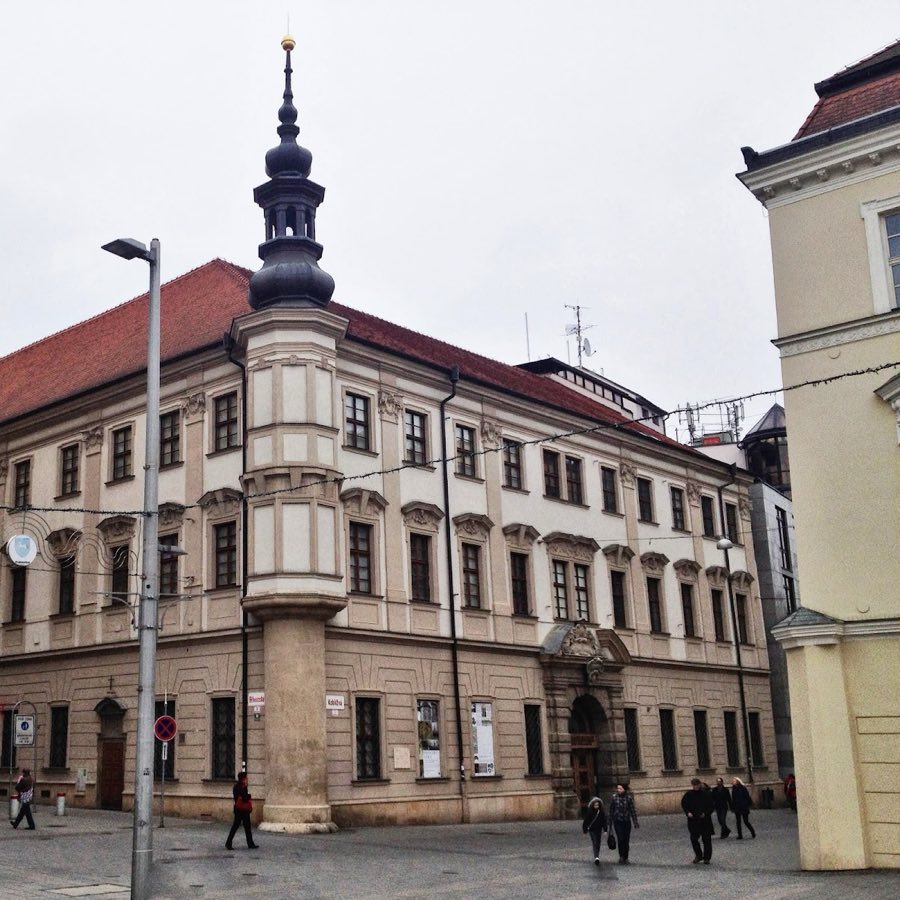
Palác šlechtičen, Brno
Brno, Czechia
PalaceRestored17th century
No. 95134
Palace · Czechia
No. 95134 · 49.194 N, 16.609 E
Quick summary
Klein Palace is a palace in Czechia with origins associated with the 19th century.
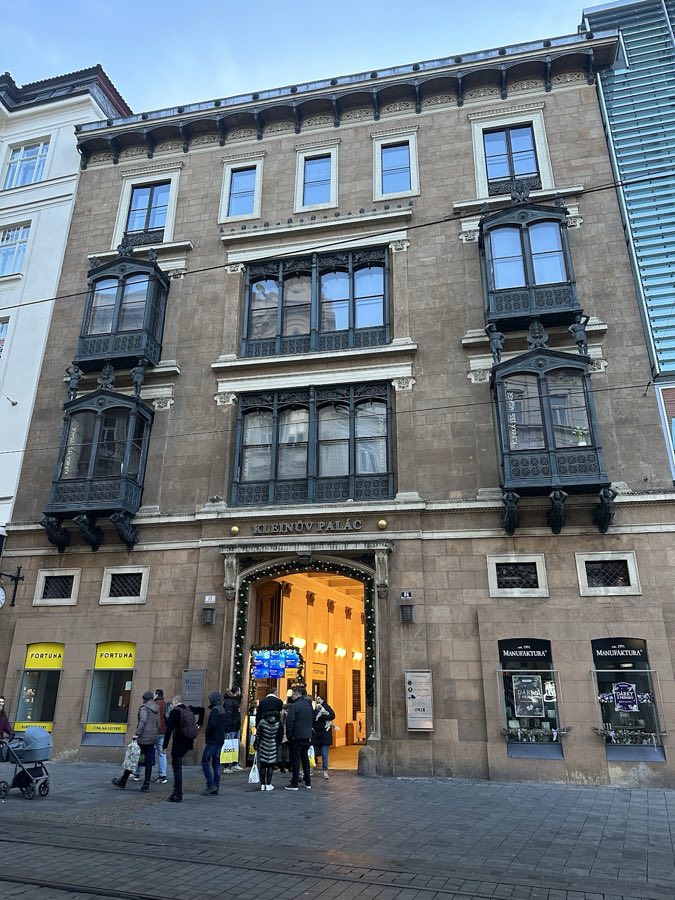
See all castles in CzechiaKlein Palace in Brno, Czechia, is a neo‑Renaissance urban townhouse erected in 1847–1848 as a new family residence for the Klein family. Built on Freedom Square where an older house once stood, the palace was conceived in the mid‑19th century and embodied the wealth and industrial interests of its owners through decorative references to their ironworking business. The building later gained legal protection for its cultural value and, after major late‑20th‑century restoration work, returned to mixed civic and commercial use.
The site began its modern development after the Klein family acquired a property known as U zlaté kule in 1842 and removed the earlier structure to make way for the new townhouse. During construction the main façade received conspicuous iron ornament, including projecting bay windows produced at the Klein family’s metallurgical plant in Sobotín; those metal details were intended to reflect the family’s principal source of income. The palace opened in the late 1840s as the family’s urban residence.
Ownership remained in the Klein family line into the late 19th century. In 1880 Franz Klein II left the house to his sister Maria Klein, who was married to lawyer and politician Eduard Ulrich. From 1885 their son, Eduard Ulrich Jr., became a co‑owner. After his death by suicide in 1904 the heirs disposed of the property and it passed to instrument maker Karl Buchta; Buchta’s family retained ownership until 1945.
The municipality took ownership in 1949 and the building ceased to serve as a private home. In the decades that followed the interior underwent multiple re‑planings by different organizations, and the fabric suffered damage from a fire and from water leaks, leaving parts of the building in poor condition. The palace was placed under cultural‑monument protection in 1958. In 1994 a Prague branch of Crédit Lyonnais purchased the property and funded a comprehensive conservation and reconstruction program carried out from 1995 to 1997 at a cost of 80 million Czech crowns. The works modernized building systems and created new internal space; the palace reopened in 1997. Crédit Lyonnais later became part of Crédit Agricole in 2003; that bank left the Czech market in 2012 and sold its rights to the premises. Since the late 1990s the restored palace has housed shops, the information centre of the Jiří Mahen Library’s Department of Serious Music, and the Brno branch of the Czech Bar Association, among other tenants.
The palace occupies a prominent urban plot on Freedom Square and presents as a neo‑Renaissance townhouse with a formally articulated street façade. The structure combines traditional masonry building techniques of the 19th century with later inserted engineering systems from the 1995–1997 reconstruction. The main frontage is notable for its metal ornament, which ties the exterior appearance to the owners’ metallurgical enterprise.
The primary surviving decorative feature is the ensemble of cast‑iron elements on the main façade. Cast iron was used for projecting bay windows on the first and second floors and for other ironwork that frames and punctuates the street elevation. These iron components were cast at the Klein family’s Sobotín works and remain a visible link between the building’s appearance and the family’s industrial activity. The principal entrance includes a portal topped by a mascaron, and a lantern survives within the internal atrium space.
The interior bears evidence of sequential reuse and later interventions. Mid‑ to late‑20th‑century alterations and damage left parts of the interior degraded until the 1995–1997 conservation and reconstruction campaign. That campaign installed modern mechanical and electrical systems, added an elevator, and inserted an atrium covered by a new glass roof, creating a protected internal court. Today the palace appears largely restored and in active use, with the principal façade, bay windows, portal mascaron and atrium lantern retained as character‑giving elements.
No. 39738
No. 30122
No. 31818
No. 99766
Comments
Comments for Klein Palace will require a verified account before posting.
We'll send a verification link before your first comment is published.