No. 95134
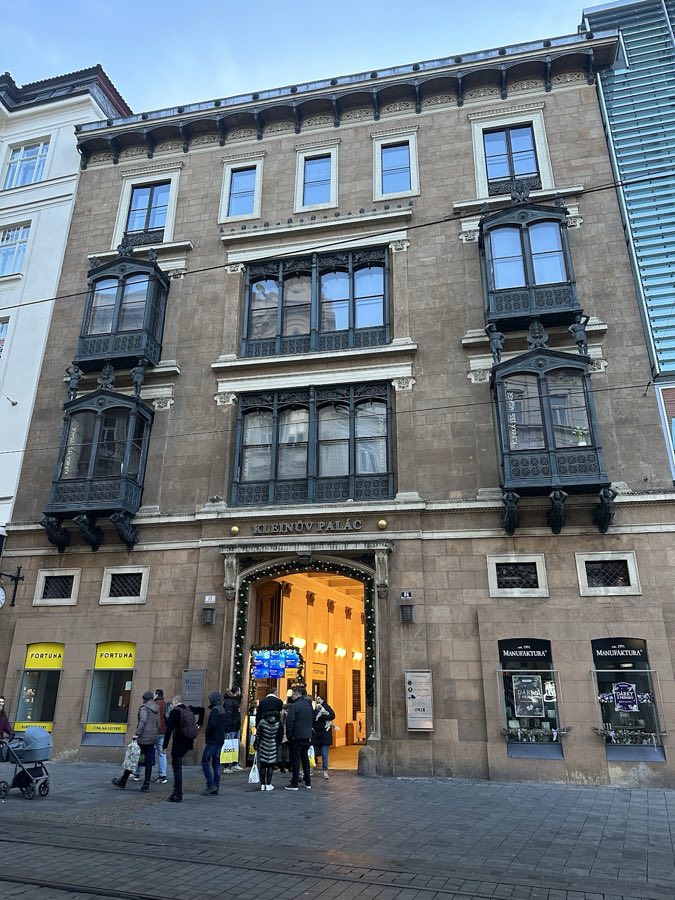
Klein Palace
Czechia
PalaceRestored19th century
No. 39738
Palace · Czechia
No. 39738 · 49.195 N, 16.609 E
Quick summary
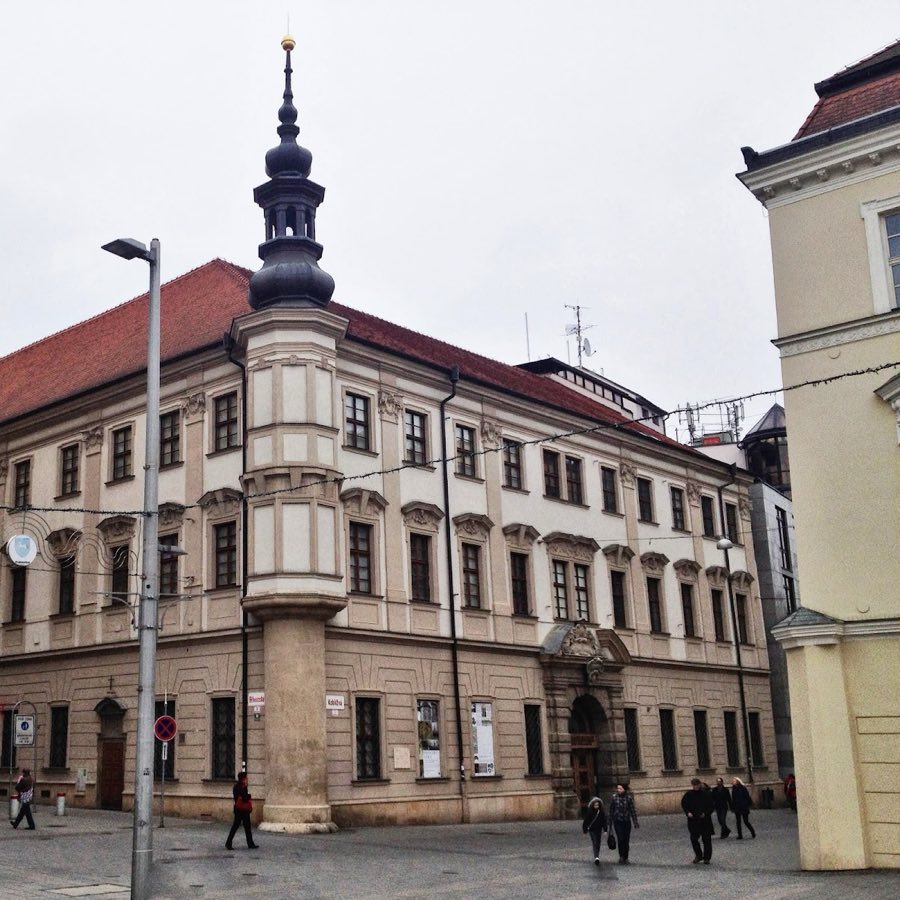
Palác šlechtičen, Brno is a palace in Brno, Czechia with origins associated with the 17th century.
See all castles in CzechiaPalác šlechtičen in Brno, Czechia, is a Baroque palace erected in the late 17th century. From its founding it was tied to an institution for educating daughters of the noble class, and that role shaped its development and layout across centuries. The site stands near the city’s main square and has long been part of Brno’s civic and religious landscape.
The charitable school for noble girls began in 1654 when the widowed Countess Johanna Franziska Priska von Magnis established the foundation; she died the following year. An executor named in her will died soon after, and the Countess’s plan was carried forward by a member of the Dietrichstein family. That family’s involvement is commemorated above the palace entrance, where a cartouche bears the name of Ferdinand von Dietrichstein.
The present building replaced an earlier city property after land purchases in the later 17th century. Construction of the Baroque palace is dated to the late 1600s, with reported building periods falling in the 1670s and again during the 1680s. By 1680 the palace chapel was already in use, when Bishop Karl II Lichtenstein-Castelcorn celebrated mass there. In the mid-18th century the chapel interior received late Baroque fresco decoration painted between 1751 and 1756 by Josef Štern.
A major alteration took place in 1790–1791, when the palace was raised by an additional floor and physically joined to the neighbouring Althan Palace as part of an enlargement. The two buildings remained linked until the mid-20th century. During the Second World War the adjoining Althan building suffered heavy bomb damage and was later demolished (a German account gives demolition in 1948). The palace for the noble maidens was threatened with demolition but was retained.
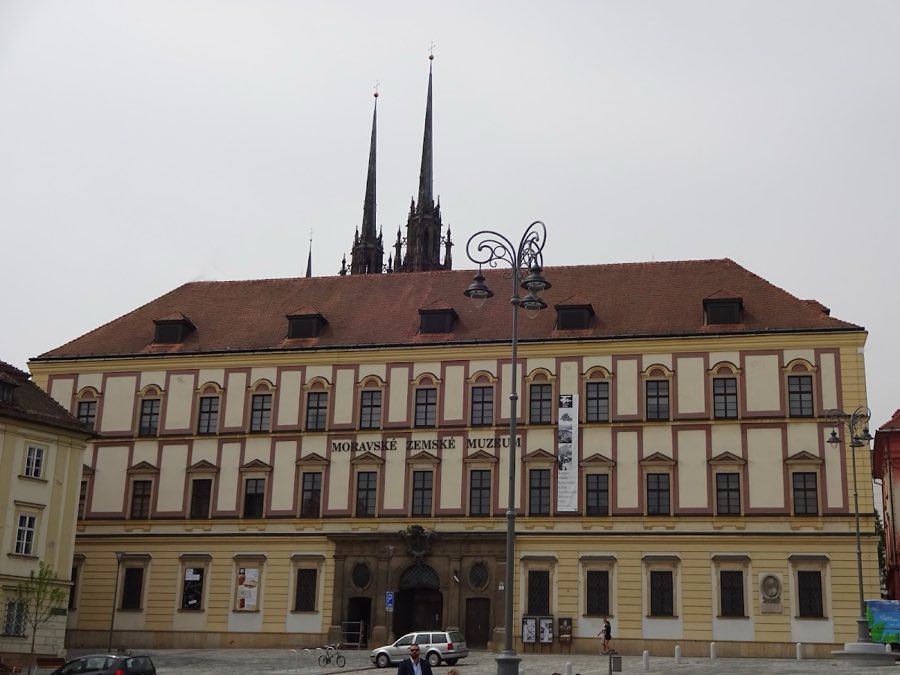
In the 1950s the building passed into the care of the Moravian Museum and a reconstruction project adapted it for museum use while aiming to preserve its historic exterior. Work carried out from 1957 to 1960 prepared the palace to host an ethnographic display. In 1961 an exhibition titled “People in Five Generations” opened and remained, with limited changes, until autumn 1999. The palace underwent further reconstruction in 2000–2002 and from 2003 served as a venue for temporary exhibitions, public lectures, and concerts. It closed again in 2018 for continued rebuilding and the installation of two permanent exhibitions, and it reopened to the public on 22 April 2022. The building has been protected as a cultural monument since 1958.
The palace presents as a Baroque urban residence that began as a single-storey house and was elevated by one more floor at the end of the 18th century. The street-facing façade is anchored by the main entrance on Kobližná Street; above that portal is a carved cartouche that records Ferdinand von Dietrichstein’s name. The exterior preserves the overall Baroque composition created during the late 1600s and modified in 1790–1791.
Inside, the palace contains a chapel dedicated to the Presentation of the Virgin Mary. The chapel includes an altar and an organ and was adorned with late Baroque frescoes painted by Josef Štern between 1751 and 1756. These mural paintings and the liturgical fittings remain defining features of the interior and reflect the building’s original religious connection to the girls’ institute.
As part of the 1790–1791 enlargement the palace was physically linked to the neighbouring Althan Palace; that connection is a documented phase in the building’s fabric. The adjoining Althan structure was later removed after wartime damage, while the palace for the noble maidens survived and was conserved. Major postwar reconstructions took place from 1957 to 1960, and further restoration and adaptation occurred in 2000–2002; the building was closed for additional works in 2018 and reopened on 22 April 2022. Today the palace stands restored, its chapel decoration preserved, and its entrance cartouche and raised storey bearing witness to the principal phases of construction and reuse.
No. 95134
No. 30122
No. 31818
No. 99766
Comments
Comments for Palác šlechtičen, Brno will require a verified account before posting.
We'll send a verification link before your first comment is published.