No. 78875
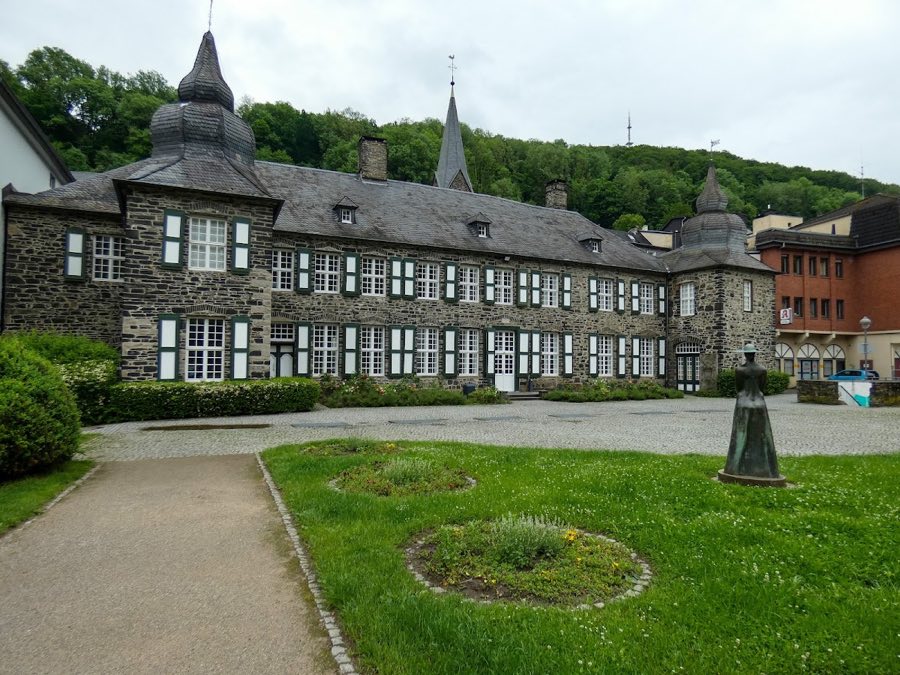
Burg Holtzbrinck
Germany
CastleRestoredFor events16th century
No. 48962
Palace · Germany
No. 48962 · 51.397 N, 8.065 E
Quick summary
Landsberger Hof is a palace in Germany with origins associated with the 17th century.
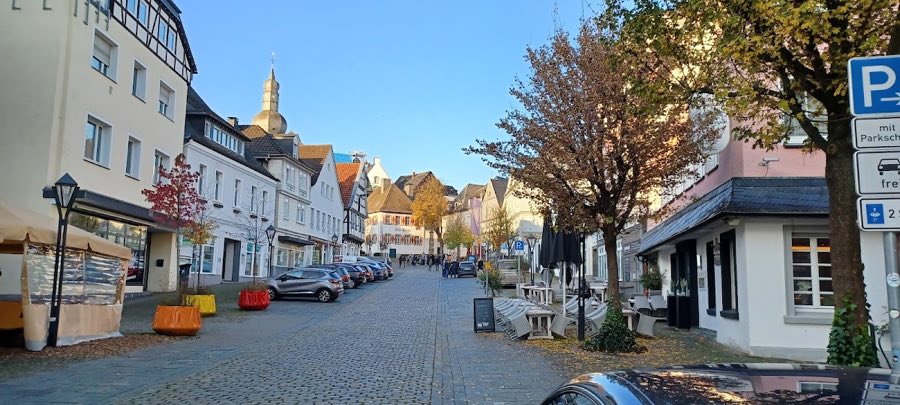
See all castles in GermanyLandsberger Hof in Arnsberg, Germany is a town palace erected in 1605 by Elector Ernst of Bavaria, an early 17th-century French-influenced city residence that became a center of local princely administration in the Duchy of Westphalia. From its construction the house played a public role: it passed between private owners with close ties to the electoral court and served repeatedly as the seat or lodging of senior electoral officials and visiting electors, making it a focal point for regional government and justice over several centuries.
Shortly after completion the Elector transferred the house to Gertrud von Plettenberg, who managed princely castles in the area and acted as Ernst’s long-term companion. On Gertrud’s death ownership passed to her daughter Katharina, who left Arnsberg after marrying a nobleman in Spanish service. While Katharina was absent the building was let to the Electorate for an annual rent.
During the long rule of Elector Ferdinand of Bavaria (1612–1650) the Electorate paid Katharina, then a nun in Belgium, a lump sum of 4,000 gulden intended to benefit her convent church in France. In this period the house served as the residence and workplace of the Landdrost, the highest electoral official in the duchy, housing the administration charged with enforcing the Electorate’s authority in Westphalia.
Under Elector Maximilian Heinrich the Electorate bought the property outright. The regional estates later conveyed the house to the Landdrost Daniel Dietrich von Landsberg in recognition of his services, and the complex thereafter became known as the Landsberger Hof. The von Landsberg family retained ownership until 1921, although public bodies made increasing use of the premises from the 18th century onward.
A major rebuilding took place between 1733 and 1741 after a fire, and later, when the local castle was destroyed in 1762, Landsberger Hof became the residence for the Electors of Cologne during their stays in Arnsberg. With the approach of French revolutionary armies the electoral administration fled Bonn, and from 1794 the building served as the seat of the Electorate’s High Court of Appeal. Under Hesse-Darmstadt rule from 1803 it housed central government offices including the treasury chamber and the war commission. After transfer to Prussian control from 1816 it became the office and residence of the first regional government president, von Bernuth.
From 1825 the palace accommodated the Royal Court (Königliches Hofgericht), and later, after a new courthouse was provided, it held institutions such as the Upper Postal Directorate. Nineteenth-century municipal plans to convert the property into a girls’ school failed when the von Landsberg family set an asking price the city would not meet. The city eventually acquired the complex and used it for the volunteer fire brigade and a local history museum. For financial reasons during the Second World War the city sold the property to the District of Arnsberg; it later passed to the Hochsauerlandkreis.
After 1945 the building served a sequence of institutional uses: a school for children of Belgian soldiers stationed in Arnsberg, an information office called Die Brücke, and offices for the regional district police. Following the fire brigade’s departure in 1959 the war-damaged structure was carefully restored, and since 1964 the restored palace has housed the regional-history Sauerland Museum, with a museum café occupying one of the outbuildings.
The complex occupies a compact plot in the old town and comprises a principal residence block with a tower attached to its rear, a side wing, and a number of ancillary outbuildings. The town palace was raised directly above a stretch of medieval city wall dating to around 1240, so the present arrangement reflects a 17th-century urban residence consciously sited on earlier defensive fabric and built with French-inspired planning for a city palais.
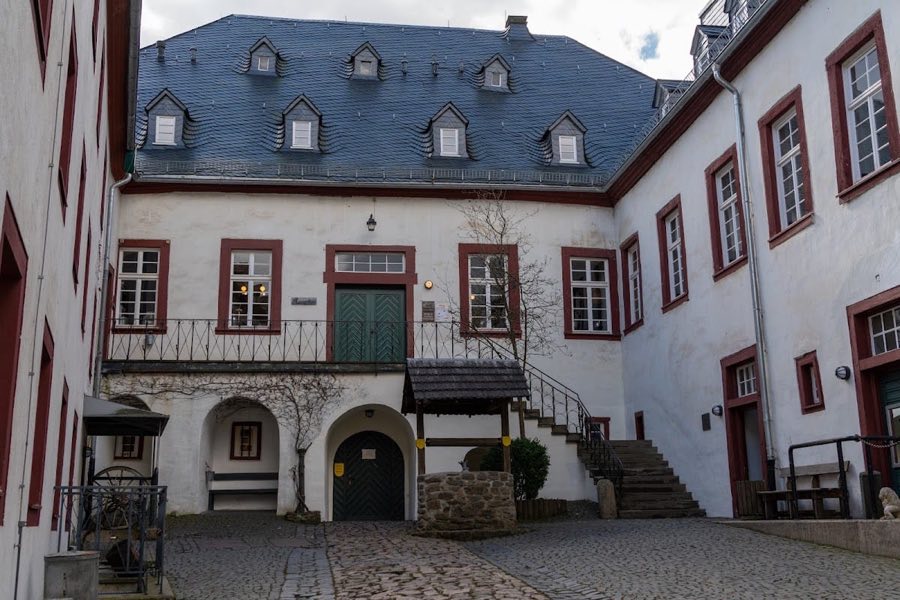
The main building, constructed in 1605, functioned as a princely urban residence and later as offices and apartments for high-ranking officials. That main block was rebuilt between 1733 and 1741 after a fire and sustained damage in the mid-20th century; those later losses were repaired during postwar restoration work, and the building now stands restored and in use as the Sauerland Museum.
The rear-attached tower served as part of the palace’s vertical massing and provided discrete accommodation and offices linked to the principal rooms. It remains integrated into the restored palace complex and forms part of the museum spaces today.
The side wing and the ancillary outbuildings historically supported the household and administrative functions of the palace. Over time these secondary structures have been adapted for public uses; one outbuilding now houses the museum café, and other parts of the ensemble accommodated courts, postal authorities, municipal services, and emergency services at various points in the building’s history.
Below the palace there once lay a representative garden and a promenade, both deliberately placed to enhance the house’s setting. Those landscape features were removed as the town expanded, and the immediate grounds were absorbed into the urban fabric. The overall complex presents today as a restored, continuously occupied historic building that preserves its sequence of uses from princely residence and administrative centre to museum and public facility.
No. 78875
No. 28483
No. 66577
No. 49664
Comments
Comments for Landsberger Hof will require a verified account before posting.
We'll send a verification link before your first comment is published.