No. 66683
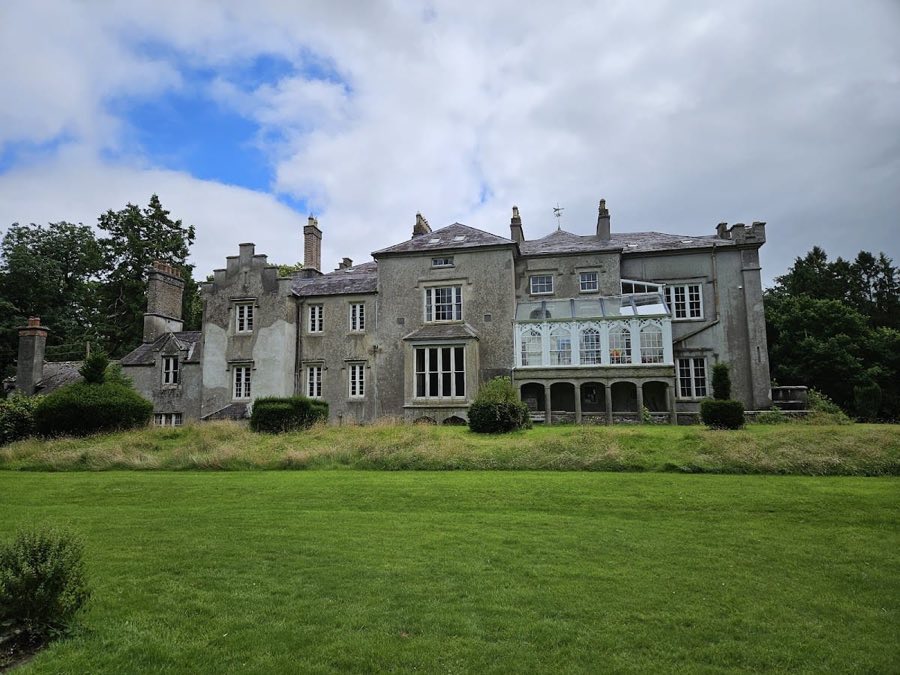
Shankill Castle
Ireland
Tower houseRuin15th century
No. 38581
Castle · Ireland
No. 38581 · 52.736 N, 6.978 W
Quick summary
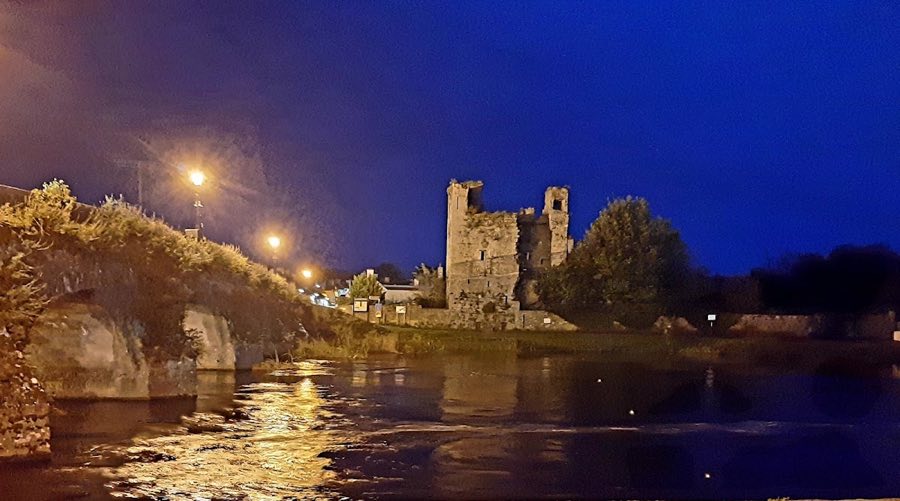
Leighlinbridge Castle is a castle in Ireland with origins associated with the 12th century.
See all castles in IrelandLeighlinbridge Castle, Leighlinbridge, Ireland, was built by the Normans around 1181.
The earliest phase began with a Norman fortification established about 1181, associated with John de Clahull (also recorded as Claville) acting under Hugh de Lacy. In the late 1200s the Carmelite order arrived in Ireland and set up their first Irish priory near the castle, and a bridge across the River Barrow was constructed about 1320.
In the fifteenth century a separate stronghold known locally as the White Castle was erected about 1408 by Gerald FitzGerald, fifth Earl of Kildare; by the mid nineteenth century no trace of that structure could be located. During the mid 1500s the Carmelite friary at Leighlinbridge was suppressed in 1543. Three years later Edward Bellingham adapted the former friary into a fort with protective walls, turning the place into a military centre for the province of Leinster and establishing stables for roughly two dozen horses.
Violence touched the site repeatedly in the later sixteenth century. Some accounts record that Rory Oge O’More attacked and captured the castle in 1577 and damaged part of the town, while a nineteenth century reporter, John Ryan, maintained the castle was not taken and that the assault was repulsed. During the O’Neill rebellion of the 1590s the castle was repaired and re-garrisoned for the crown. In 1604 the king granted the property to George Tuchet, Lord Awdeley.
The castle played a role in the wars of the 1640s. At the outbreak of the Irish Rebellion of 1641 it was held by forces of the Catholic confederation. In the later conflict it served as a rallying point for the Marquis of Ormond in 1647 and again in 1649, and in 1649 Colonel Hewson captured the place for the troops of Oliver Cromwell. The site has been described as a monument of Ireland’s history and culture of national significance.
The castle occupies a rectangular enclosure beside the River Barrow and was built in dressed stone. By the 1840s the surviving plan formed a four-sided walled bawn measuring about 96 by 71 metres, with the river forming one boundary and a ditch surrounding the other three sides. The curtain wall was substantial, recorded at roughly 2.1 metres in thickness, and formed the perimeter of the defended court.
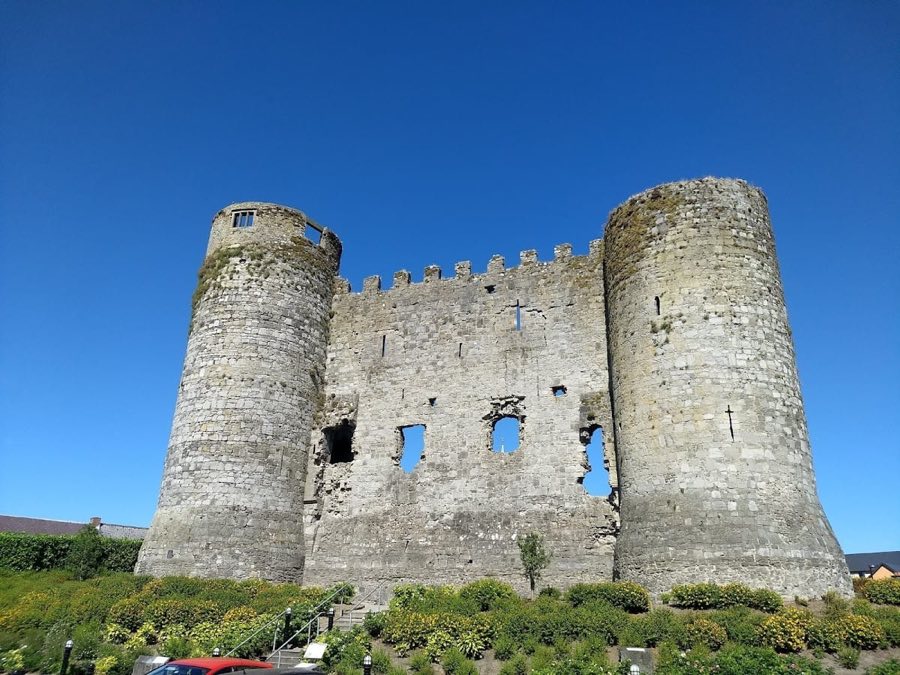
A large rectangular keep of fifteenth-century date stood in the northwestern corner of the enclosure. This tower reached nearly 15 to 16 metres in height in its original state; by the 1840s only one face of the outer wall and a single internal floor of the keep remained, the surviving level being supported by an arch. The southwest corner contained a round rear defensive tower rising to about 7.3 metres with walls recorded at roughly 3.0 metres thick as noted in nineteenth century descriptions.
Later modifications reflect the site’s sixteenth-century military refit. A modern assessment describes the principal building as a three-storey limestone tower house whose ground floor is vaulted, with the roof space enclosed by walls that contain mural passageways. Both the tower and the surrounding bawn are recorded as having openings for artillery, features that align with a sixteenth-century phase of defensive architecture. The friary conversion carried out in 1546 was part of this reworking of the complex into a military installation.
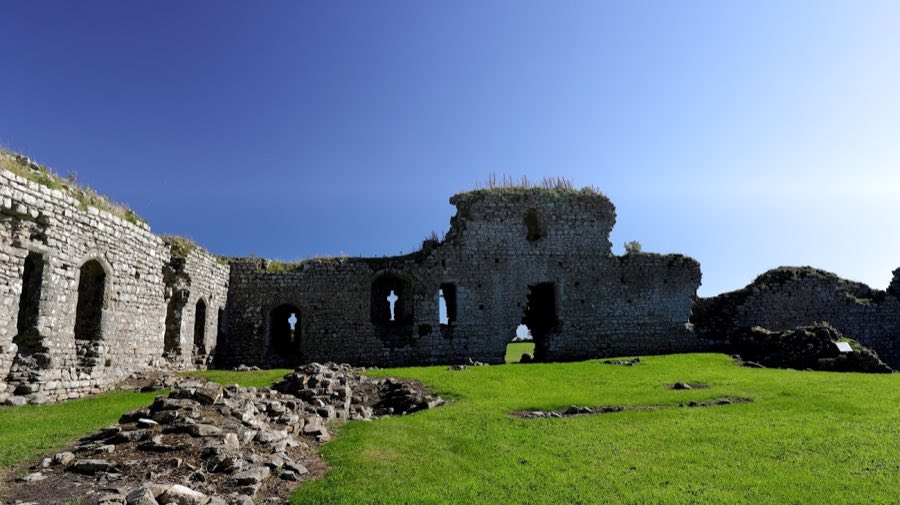
Today the site stands as a ruin. The main surviving element is a broken tower of about fifteen metres and portions of one side of the enclosing wall remain in situ, while other parts of the enclosure survive only as earthworks or fragmentary masonry. The castle lies beside the nine-arched bridge over the River Barrow, the bridge itself having been built around 1320. The castle site continues to be recognised for its historical and cultural importance.
No. 66683
No. 77860
No. 98428
No. 83485
Comments
Comments for Leighlinbridge Castle will require a verified account before posting.
We'll send a verification link before your first comment is published.