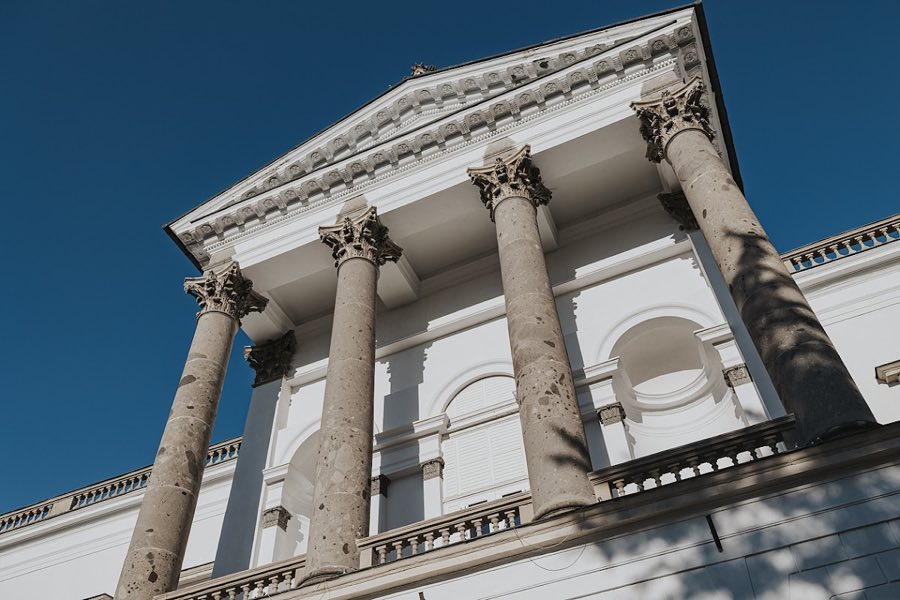
No. 73606
Topoľčianky Castle
Slovakia
CastleRestored13th century
No. 72354
Castle · Slovakia
No. 72354 · 48.222 N, 18.601 E
For events
Levice Castle is marked as a château or castle venue lead. Capacity, indoor/outdoor spaces, catering rules, and accommodation options are published only after public verification.
Event types: Private events, Cultural gatherings, Filming and photography
Quick summary
Levice Castle is a castle in Slovakia with origins associated with the 13th century.
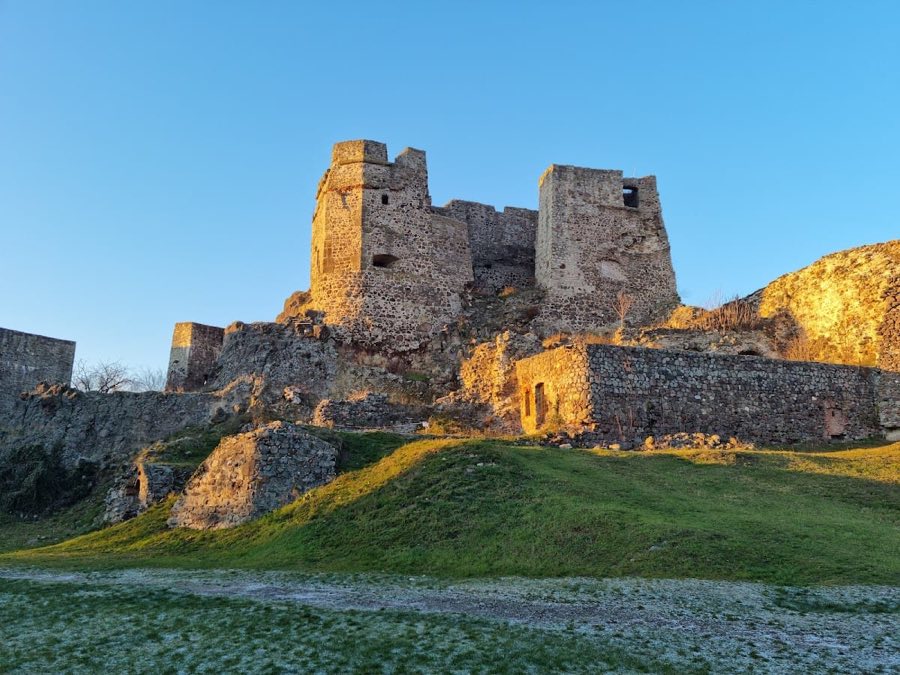
See all castles in SlovakiaLevice Castle, located in the municipality of Levice in present-day Slovakia, was constructed in the late 13th century by medieval Hungarian builders as part of a network of fortifications to protect key mining towns in central Slovakia. Its position atop a rocky hill, surrounded by marshlands nourished by the Hron River and the Podlužiansky stream, was chosen to dominate and defend the southern approach to economically vital centers such as Banská Štiavnica, Kremnica, and Banská Bystrica.
The earliest documented owner of the castle was Imrich Bečej, recorded in a 1313 document of the Kalocsa chapter. Shortly after, the powerful noble Matúš Čák Trenčiansky took control of the fortress. Following Čák’s death in 1321, the castle was surrendered to King Charles Robert by the castle’s castellan, Juliuš of Topolčianky. By the close of the 14th century, ownership shifted to the Levický family, which lent its name to the castle and surrounding region.
In 1434, Levice Castle suffered heavy damage due to a fire but was soon rebuilt. It reverted to royal possession in 1529 and was managed by the Tekov župans, the heads of the surrounding county. After the death of Gabriel Tekovský, one of these župans, the castle came under the control of Malchior Balassa, a notorious robber knight. Balassa’s outlaw activities prompted an imperial siege, culminating in the fortress’s capture and the execution of some of its defending forces.
When the Levický lineage died out in 1553, the stronghold became crown property once again and was integrated into the defensive system against the expanding Ottoman threat. Ownership passed through several noble families, including the Dobó family—František Dobó became župan in 1574—the Kolonics, the Csákys, and from 1690 onward, the Esterházy family.
During the mid-16th century, Levice Castle underwent significant reconstruction, notably the addition in 1571 of a two-story Renaissance manor with corner towers in its lower courtyard. Early in the 17th century, further fortifications connected the castle’s walls to the town’s defenses, though a moat separated these structures. Labor for these expansions included serfs brought from distant parts of the kingdom, such as Orava and Liptov.
The castle played an active role in the wars against the Ottoman Empire. The Turks first appeared before its walls in 1544 but failed to seize it. However, after a prolonged siege, they captured the fortress on November 2, 1663. The Ottoman occupation was short-lived, as the castle was liberated following the Battle of Levice on July 19, 1664. Subsequent to these events, the castle’s defenses were further reinforced under the supervision of the Habsburg marshal Louis de Souches.
In 1696, a major fire swept through the town, severely damaging Levice Castle. Its military importance declined, and the garrison was withdrawn in 1699. During the years 1702 to 1709, the castle was intermittently occupied by Kuruc rebels under Francis II Rákóczi. Before retreating, the rebels devastated the fortress by detonating its powder magazine, effectively ending its function as a defensive stronghold.
Levice Castle was constructed in the Gothic style on a rocky hilltop surrounded by marshes, which provided natural protection. Its layout comprised an upper castle, which housed the main Gothic palace, and a lower courtyard added later. The upper castle occupied the highest ground, serving as the primary fortification of the site.
One of the most prominent features surviving today is the so-called “captain’s house,” which includes the western bastion. These structures were restored in the Baroque style after 1710 and now accommodate the Tekov Museum. The museum’s exhibitions explore the historical and natural heritage of the surrounding region, connecting the castle’s past to local culture.
The Renaissance manor built in 1571 is also well preserved. This two-story building, designed with corner bastions, lies in the lower courtyard and represents the mid-16th-century transformations of the site adapting to contemporary military and residential needs.
Fragments of the upper castle walls remain, including sections from the Gothic palace complex. Among the surviving defensive works is the eastern bastion, which today serves as a restaurant or tea house, blending historical preservation with modern use. Additionally, the southwestern bastion has been adapted into an amphitheater, maintaining the castle’s architectural footprint in public life.
In the early 17th century, the castle’s outer defensive walls were strengthened and connected to the town’s fortifications. This system was separated from the urban defensive walls by a moat, enhancing the castle’s protection. These fortification improvements reflect efforts to respond to evolving military challenges, including the ongoing Ottoman threat during that period.
The castle’s unique location, high above the town and encircled by wetlands originating from the Hron River and Podlužiansky stream, was a crucial factor in its defensive capabilities. The natural environment worked alongside the castle’s stone walls to create a formidable barrier against attackers throughout its active centuries.
No. 73606
No. 48992
No. 27060
No. 26234
Comments
Comments for Levice Castle will require a verified account before posting.
We'll send a verification link before your first comment is published.