No. 44823
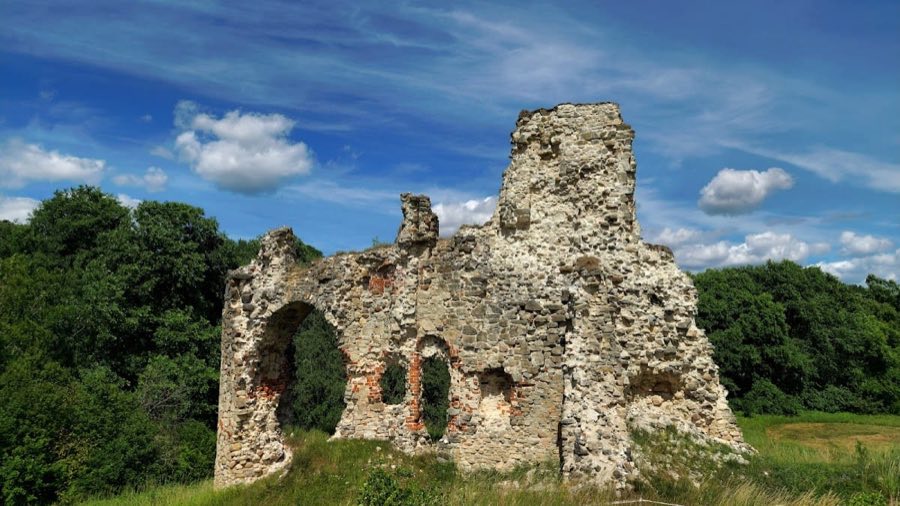
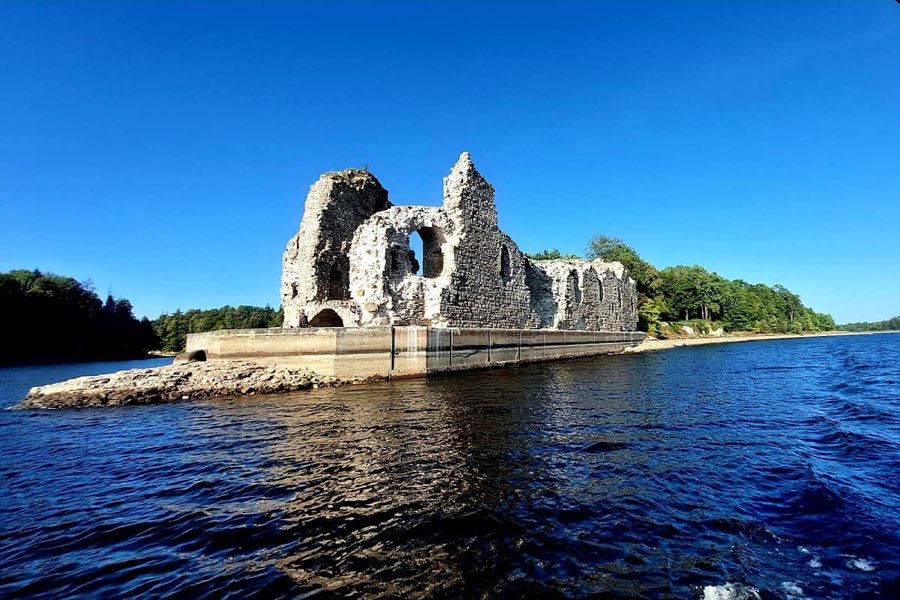
Aizkraukle Castle
Latvia
CastleRuin13th century
No. 78917
Castle · Latvia
No. 78917 · 56.711 N, 24.838 E
Quick summary
Lielvārde Castle is a castle in Latvia with origins associated with the 13th century.
See all castles in LatviaLielvārde Castle is situated in Lielvārde, Ogre Municipality, Latvia. It originated as a Livonian wooden fortress constructed by the indigenous Liv people on a hill overlooking the Daugava River. The site first entered recorded history in 1201, when Bishop Albert of Riga granted the wooden stronghold to the knight Daniel von Banerow, although the local Liv elder maintained control over the region.
During the early 13th century, the wooden fortress faced violent conflict. Crusaders burned it in the course of the Autine uprising, a local resistance against the new Christian rulers. In 1213, the Liv elder named Uldeveni was captured during a raid by Lithuanian forces but was eventually ransomed by the Order of the Sword Brothers, a military order active in the Baltic region.
Before 1229, Daniel von Banerow replaced the original wooden fortifications with a stone castle on the same site. This new structure likely drew inspiration from the nearby Uexküll tower fortress, built downstream, and functioned as a small vassal castle. Following Daniel’s death, control of Lielvārde shifted several times: in 1248, Bishop Nikolai transferred the castle to Riga Cathedral, only to reclaim it for his own holdings in 1255.
The castle’s strategic location made it a focal point in regional conflicts throughout the medieval period. In 1262, the Samogitians, a Baltic tribe, achieved a significant victory against the Order’s forces near Lielvārde, forcing retreating soldiers to seek refuge within the castle walls. Nearly a century later, in 1361, Lithuanian troops temporarily occupied and looted the castle. By the early 1400s, Lielvārde had become the administrative center, or bailiff’s seat, for the Riga archbishopric’s Latvian district. Despite this official function, the castle retained qualities of a farmstead stronghold, sometimes described as a “bread barn” castle.
Ownership and use evolved further in the 15th and 16th centuries. The castle was pledged to the Order of the Sword Brothers until 1435. From 1514 to 1534, the site housed the Bernardine monastery associated with the Antonija Brothers Convent. During this monastic period, a stone church was constructed within the castle courtyard, reflecting its religious importance.
The Livonian War (1558–1583) brought further upheaval. In 1559, Lielvārde Castle was pledged to the Polish king and defended by Polish-Lithuanian troops. However, in 1577, it was destroyed by Russian forces. Partial restoration was attempted in 1633 under the Swedish governor Nils Asersons Mannerscheld, but the castle was not fully maintained afterward. Instead, a manor center gradually developed near the ruins.
By the late 18th century, the castle had diminished considerably. An artist named J.C. Brotze drew it in 1792 showing two floors, although today only one and a half floors remain, with the upper windows lost. The adjacent manor house, built in the early 19th century in a classical style and later rebuilt in the early 20th century by architect Wilhelm Bockslaff for Baron Arthur von Woolf, was itself destroyed during World War I due to artillery along the Daugava frontline.
Throughout its history, several bailiffs, or fogts, administered the castle. Known figures include Heinrich Orghos (before 1372), Hinke Kastorp (1391), who pledged the castle to the Order, and Stanislaus (1556). The historic ruins of Lielvārde Castle have been protected as a national archaeological monument since 1998. Conservation work was completed in 1987, and a wooden reconstruction representing the original Liv wooden fortress was erected nearby in 1997.
The ruins of Lielvārde Castle occupy a steep bank on the right side of the Daugava River, situated on a raised hill known locally as Livukalns. The site benefits from natural defenses, including a deep river valley on one side and a plateau separated by two ditches, a feature that represents a segmented fortification system designed to hinder attackers.
Archaeological excavations conducted in 1981 uncovered a fragment of the castle’s defensive wall at the southeastern edge of the hill. This section, made of stone and approximately 1.5 meters thick and 4 meters long, lies buried about one meter beneath the surface. It reflects typical medieval methods of fortification, with thick walls intended to resist assault.
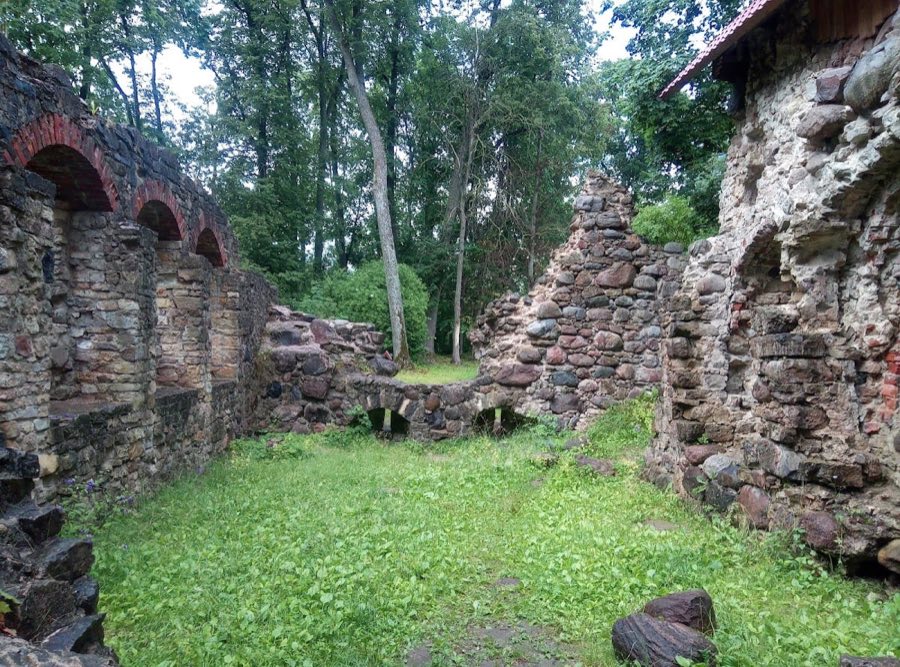
The surviving ruins primarily date from the 14th century and stand opposite the area where the original wooden castle once existed. No physical remains of the initial Liv wooden fortress survive. The medieval stone castle originally had two floors; however, today, only one and a half floors remain intact. Notably, the row of windows that would have illuminated the second floor has been lost over time.
Within the castle courtyard, a stone church was constructed during the 16th century while the Bernardine monastery was active on the site. Although the church itself is now in ruins or no longer standing, its presence is a significant marker of the castle’s religious function during that period.
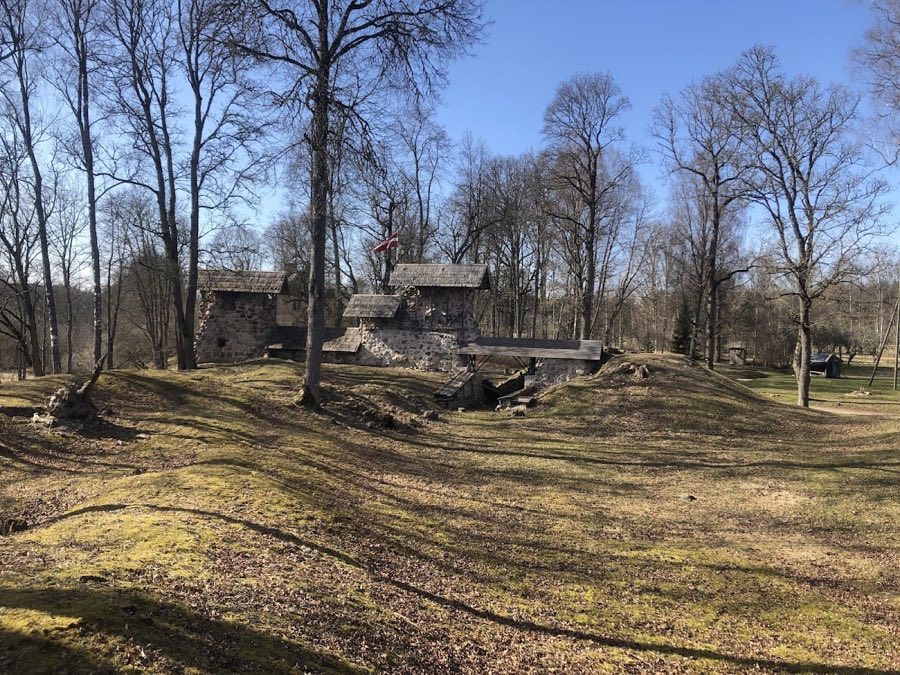
Today, the ruins are preserved within Lielvārde Park, forming part of a cultural landscape that includes the local Evangelical Lutheran church, a series of tree trunk carvings illustrating scenes from the Latvian epic Lāčplēsis, and a museum devoted to the Latvian national poet Andrejs Pumpurs. Approximately one kilometer from the castle ruins, a wooden reconstruction has been built to represent the original Liv wooden fortress, offering a visual interpretation of the dwelling once occupied by the Liv elder Uldeveni.
Overall, the site’s archaeological features—such as the thick defensive walls, the remains of a stone church, and the ditches defining the plateau—document a complex history of military defense, religious activity, and administrative use spanning several centuries. The castle’s state today reflects both its medieval importance and later periods of conflict and neglect.
No. 44823
No. 65096
No. 10236
No. 59361
Comments
Comments for Lielvārde Castle will require a verified account before posting.
We'll send a verification link before your first comment is published.