No. 71177
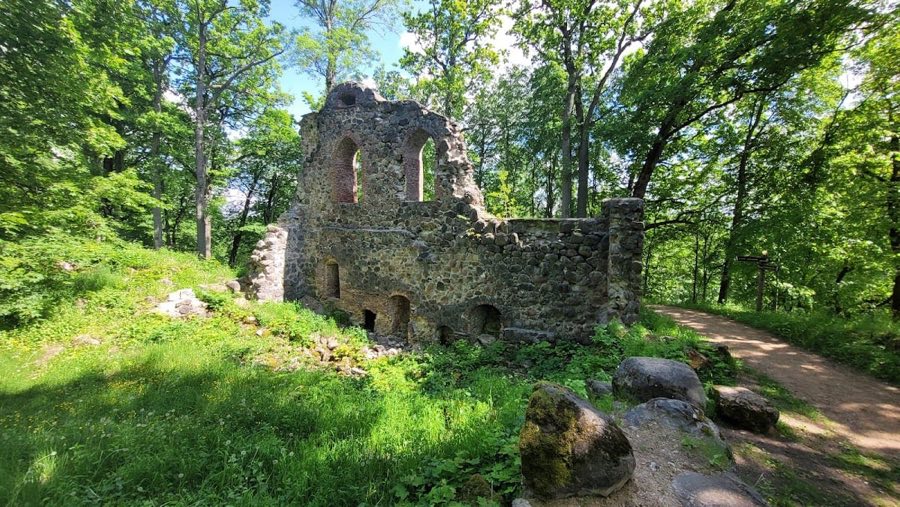
Krimulda Castle
Latvia
CastleRuin13th century
No. 65096
No. 65096 · 56.979 N, 24.631 E
Quick summary
Ropaži Castle is a castle in Latvia with origins associated with the 14th century.
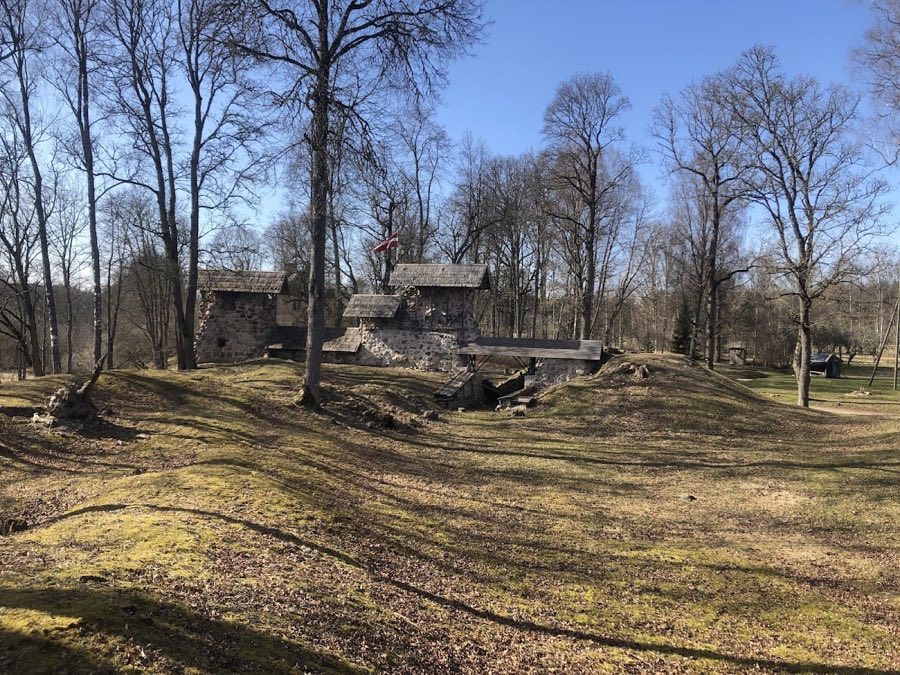
See all castles in LatviaRopaži Castle ruins stand in the municipality of Ropaži in Latvia, originally built by the Livonian Order during the Middle Ages. The site lies near the Lielā Jugla River and occupies land historically associated with the Livonian people.
Its earliest recorded mention dates back to 1205, when Livonian and Semigallian forces clashed with retreating Lithuanian troops near this location. This area was then inhabited by the Väina Livs, a subgroup of the Livonian people. In the early 14th century, between 1320 and 1322, the Livonian Order Master Gerhard von Jorke established the castle on the remains of an older Livonian hillfort. The construction aimed to secure a critical land corridor and to defend the path toward Riga, an important center in the region.
Throughout the following centuries, Ropaži Castle served as both an economic hub and a center of governance under the Livonian Order. After the Order’s decline, ownership passed to noble families, notably the Tiesenhausen family and later Heinrich von Dohna. The castle’s significance lay in its administrative role as well as its military function within shifting regional powers.
During the Livonian War, Russian forces attacked the castle in the harsh winter of 1558–1559, setting it ablaze. Despite this destruction, the fortress was repaired and remained operational into the early 1600s. In 1601, during ongoing conflicts between the Polish-Lithuanian Commonwealth and Sweden, the castle surrendered to Swedish troops without resistance. By 1623, historical records describe it as largely in ruins. More recently, archaeological work has uncovered additional details about the castle’s historical defenses, shedding new light on its past configuration.
Ropaži Castle was constructed atop an ancient hillfort, taking advantage of natural defensive features provided by the steep banks of the Lielā Jugla River. On the south and west, the sharp incline of the riverbank, rising between six and ten meters, essentially acted as a natural moat, limiting access and enhancing protection. The fortress’s walls were built with thick granite masonry reaching up to 1.5 meters in thickness, arranged in an irregular six-sided shape.
The castle followed a free-form defensive layout known as a “laagerkastell,” characterized by its pentagonal trapezoidal shape. A long wing overlooking the river, dating from the 14th to 17th centuries, formed the main residential segment. A shorter wing, built later in the 15th or 16th century on the opposite side, helped enclose a large courtyard at the heart of the fortress. This internal space would have served various functional purposes, enclosed by sturdy walls built from fieldstones set in lime mortar.
One focal point on the northwest side was the main gate, which was reinforced in the 15th century by a substantial round artillery tower, reflecting updates to withstand the era’s evolving siege technologies. On the narrower southeastern side of the castle stood a forecastle—a smaller outer fortification or outwork—opening into the courtyard through a northwest entrance. Within the protective outer walls, wooden buildings once lined the interior; however, these were destroyed during the devastating fire caused by the Russian assault in the late 1550s.
Today, the castle’s remnants include only two significant masonry fragments. The largest piece measures roughly 13 meters long and stands about 5 meters tall, providing a tangible sense of the original scale of the fortifications. Excavations carried out in 2006 and again in 2011 revealed previously unknown defensive walls, expanding understanding of the fortress’s full extent. The surviving ruins, mostly limited to traces of walls atop the hill, suggest a quadrangular defensive layout, illustrating its strategic design and adaptation over centuries.
No. 71177
No. 59361
No. 79352
No. 13997
Comments
Comments for Ropaži Castle will require a verified account before posting.
We'll send a verification link before your first comment is published.