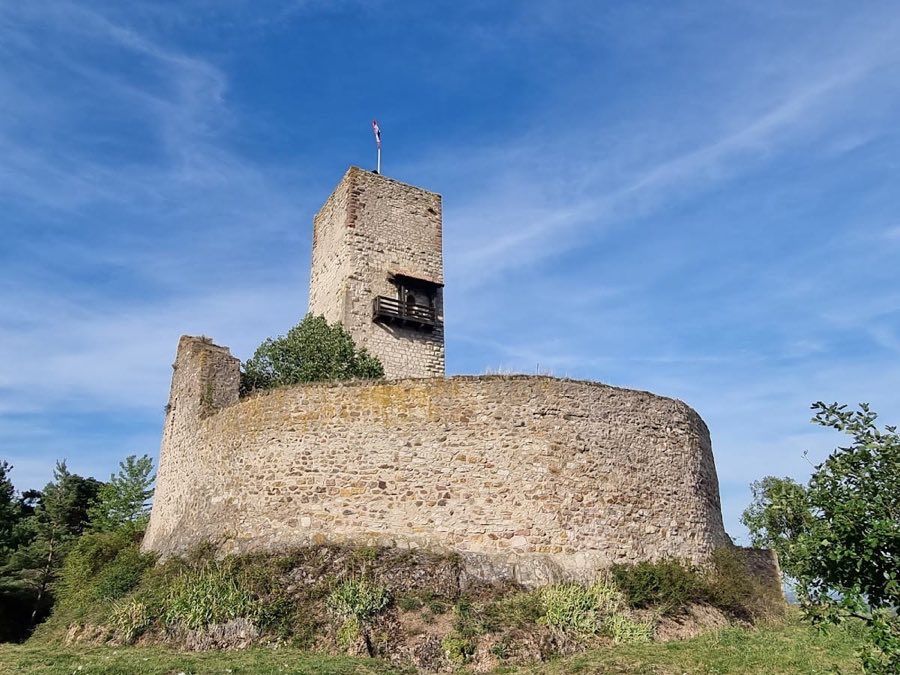
No. 14013
Château du Wineck
France
ChâteauRuin13th century
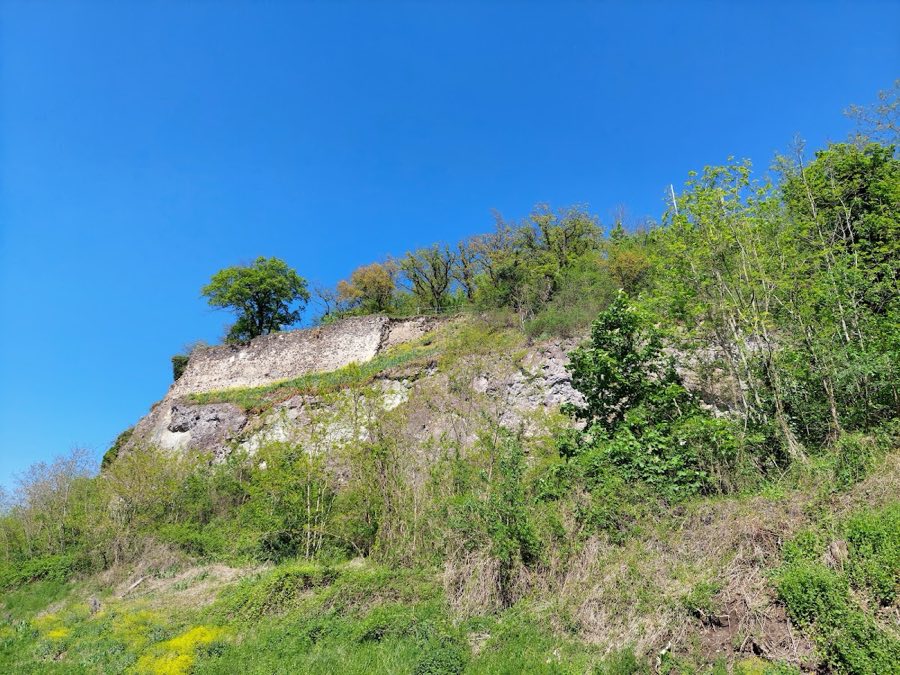
No. 73824
Castle · Germany
No. 73824 · 48.147 N, 7.604 E
Quick summary
Limburg Castle, Sasbach am Kaiserstuhl is a castle in Sasbach am Kaiserstuhl, Germany with origins associated with the 13th century.
See all castles in GermanyLimburg Castle in Sasbach am Kaiserstuhl, Germany, is a medieval hill castle.
The site appears in records from the early 1200s under the names Burg Limburg, Limpurg, and in older literature Lindberg. During the first half of the 13th century the fortress passed among several major families, including the Zähringer and branches of the Habsburgs, and it was linked with the Freiburg counts. In 1215 Albrecht von Habsburg used the castle to hold the abbot of Ebersmünster captive. Around 1239 Gottfried of Habsburg-Laufenburg married Adelheid, daughter of Count Egino of Freiburg, and gave her half the castle as her dower. At that time local administrators included Konrad von Bodman in 1231, Heinrich von Falkenstein in 1239, and a Konrad recorded in 1242 who may have been a member of the Falkenstein family.
The later 13th and early 14th centuries saw the site change hands through conflict and sale. In the 1281 Three-Week Freiburg Feud Egino transferred lordship over Limburg to Eberhardt of Habsburg and to Rudolf of Habsburg-Laufenburg. Rudolf then sold his share to Kuno of Bergheim, and in 1300 Kuno’s sons conveyed shares back to Egino of Freiburg. By 1336 ownership was split, with one interest allied to the city of Freiburg and another held by the lords of Müllnheim. In 1381 Margrave Hesso of Hachberg revoked the rights to Limburg from Johann of Müllnheim.
Around 1480 the castle was held jointly by the Palatine counts of Tübingen and Lichteneck together with the lords of Rathsamhausen. From 1498 until 1590 the Counts of Tübingen are recorded as the holders. After the Tübingen line died out in 1645 the House of Austria enfeoffed the imperial war councillor Franz Girardi von Kastel with the village of Sasbach and with Limburg Castle. Documents record the site as still being occupied in the 1500s, and by 1701 it is described as a ruin. In 1945 wartime bombardment severely damaged the upper tower, destroying substantial portions of the bergfried. A later tradition, originating with the Fugger–Birken narratives and cited by Martin Gerbert in 1772, names Limburg as the birthplace of Rudolf of Habsburg for the year 1218; that claim is not contemporary with the castle’s medieval records.
Limburg occupies a rocky spur of the Kaiserstuhl about 272 meters above sea level and roughly 40 meters above the Rhine. The castle was laid out down the slope across three terraces, a pattern that organized service, residential, and defensive functions according to height. The lower terrace contained a well and several service buildings, the middle terrace held the main residential or representative houses, and the highest terrace supported the bergfried together with an adjoining living structure. The site’s location allowed observation of the river crossing below.
The fortified core measures about 40 by 80 meters and was surrounded by a protective wall whose thickness reaches one to two meters. Natural rock faces form steep boundaries to the north and west, while a deep artificial ditch protects the south and east sides; the approach to the castle is likely from the south. Substantial stretches of the former perimeter and internal walls survive in situ as visible wall remnants. The bergfried, once the dominant tower on the upper terrace, suffered heavy destruction in 1945; significant parts were lost then, while other masonry from the tower and adjacent residential building remain as fragmentary ruins.
Archaeological and documentary evidence shows the complex in use through the 16th century and recorded as a ruin by 1701, and the standing wall remains today reflect both medieval construction and later damage. The surviving terraces, the lower well area, and the substantial wall runs convey the castle’s original three-tier layout and its role guarding the Rhine crossing.
No. 14013
No. 95926
No. 51296
No. 36657
Comments
Comments for Limburg Castle, Sasbach am Kaiserstuhl will require a verified account before posting.
We'll send a verification link before your first comment is published.