No. 62114
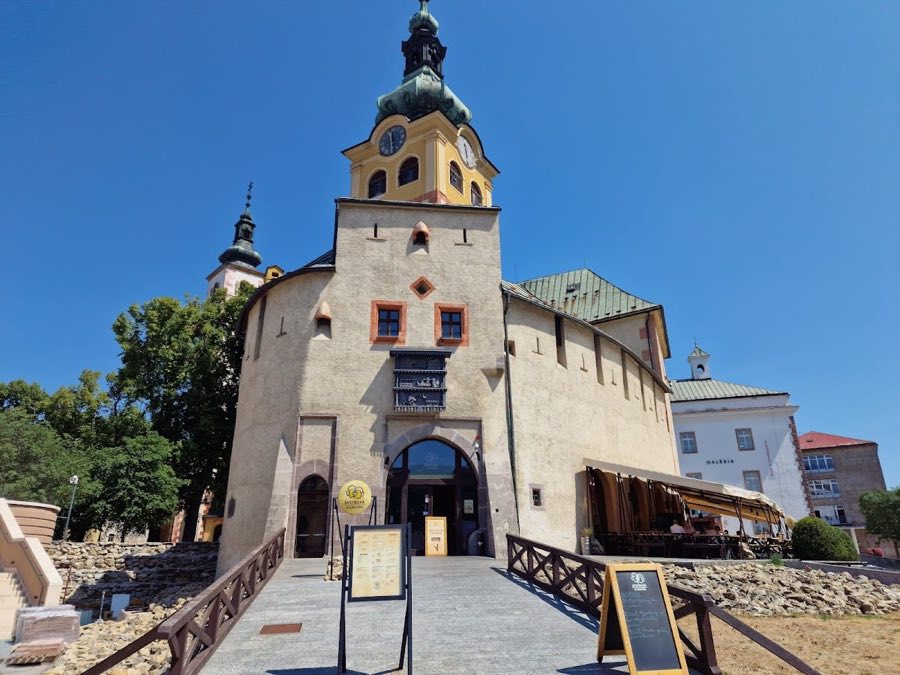
Banská Bystrica Castle
Slovakia
CastleIntact13th century

No. 80870
No. 80870 · 48.772 N, 19.281 E
Quick summary
Ľupča Castle is a castle in Slovakia with origins associated with the 15th century.
See all castles in SlovakiaĽupča Castle is located in the municipality of Slovenská Ľupča in present-day Slovakia. It was constructed by the medieval Hungarian Kingdom shortly after the devastating Mongol invasion of 1241-42, established on the site of an earlier fortification to bolster royal defense and control in the region.
The castle first appears in written records in 1250 under the name “Liptza.” It served as an important royal residence and hunting retreat for Hungarian monarchs, including Charles Robert (Charles I) and Louis the Great. Their frequent stays highlight the castle’s role as both a strategic stronghold on the route leading to vital mining towns in central Slovakia and as a favored location for royal hunting activities. During the medieval period, the castle switched hands multiple times amid regional conflicts. In particular, the powerful noble Matthew Csák’s family gained possession for a time before the crown reclaimed control.
In 1443, the castle suffered severe damage from a strong earthquake, necessitating major reconstruction efforts. Shortly thereafter, Hussite forces occupied the castle during their mid-15th-century campaigns, strengthening its defenses but also causing demographic shifts in the surrounding area due to depopulation and changes in ethnic composition.
Throughout the 16th and 17th centuries, ownership passed through several prominent families and individuals. The Dóczy family held the castle initially, followed by Paul Rubigall, a wealthy noble responsible for introducing Renaissance-style renovations after 1572. Subsequent proprietors included Franz Wesselényi and Imre Thököly, known as a leader of the kuruc anti-Habsburg uprisings. The castle played a role in these conflicts, including an occupation by Rákóczi’s forces during the early 18th-century uprising from 1703 to 1711.
After the anti-Habsburg wars, Ľupča Castle gradually diminished in strategic and administrative importance. In the late 19th century, it was repurposed as a prison and later served as an orphanage between 1873 and 1930. During World War II and the Slovak National Uprising, the castle functioned as a detention camp for those accused of collaborating with fascist regimes. In the postwar decades, it hosted a vocational school, charity offices, and youth socialist organizations.
Since 2002, the castle has been under the ownership of the steel company Železiarne Podbrezová, which has led significant restoration work. Recognized today as a national cultural monument, the castle continues to serve as a social home, with preservation efforts ongoing since 2008.
Ľupča Castle is perched on a hill rising approximately 440 meters above sea level, overlooking the village of Slovenská Ľupča in the Hron valley at the edge of the Starohorské Mountains. The complex is arranged with upper and lower courtyards that reflect its historical layers of construction and adaptation.
A remarkable feature of the upper castle is a deep well carved directly into the rock, reaching a depth of about 62.5 meters. This well not only secured a vital water source during sieges but also includes an escape tunnel leading beyond the castle walls, illustrating medieval defensive ingenuity. Nearby, two richly decorated stone portals from the upper courtyard demonstrate the skilled craftsmanship applied during Renaissance renovations.
The upper floor houses a chapel notable for its painted frescoes, which adorn its interior walls. Alongside the chapel, a sacristy contains an elaborately painted wooden ceiling, reflecting Baroque modifications made in the late 17th century. These artistic details reveal the castle’s religious functions and the evolving aesthetic tastes of its occupants.
In the lower courtyard stands the “Korvínova lipa,” a linden tree believed to be more than 700 years old. This venerable tree is among the oldest known in Central Europe, providing a living connection to the castle’s long history.
The castle grounds also include original statues dating from 1725. These sculptures were originally part of a plague column located in the town square of Slovenská Ľupča and later incorporated into the castle complex. Their preservation at the site adds a layer of historical and cultural significance.
Through numerous restorations—from Renaissance restructuring after the late 16th century to Baroque enhancements—the castle has retained much of its historic architecture despite damage from earthquakes, military conflict, and fire. Today, many of these features remain conserved, embodying centuries of architectural evolution while accommodating modern uses.
No. 62114
No. 49302
No. 37972
No. 47141
Comments
Comments for Ľupča Castle will require a verified account before posting.
We'll send a verification link before your first comment is published.