No. 30641
Macroom Castle
Ireland
CastleRuinFor rent12th century
No. 31867
Castle · Ireland
No. 31867 · 51.905 N, 8.960 W
For sale
Macroom Castle in Ireland is marked with a public sale signal. Asking price, tenure, land area, floor area, and room counts are shown only after public verification.
Status: Public sale signal
Price: Price on application or not publicly verified
Property type: Castle
Notable features: Residential use, Public-access operations
Availability note: Submit an official public listing or register buying interest to complete the sale record.
For events
Macroom Castle is marked as a château or castle venue lead. Capacity, indoor/outdoor spaces, catering rules, and accommodation options are published only after public verification.
Event types: Private events, Cultural gatherings, Filming and photography
Quick summary
Macroom Castle is a castle in Ireland with origins associated with the 12th century.
See all castles in IrelandMacroom Castle stands in Macroom, Lackaduff, Ireland, and appears to date to the era of King John, probably built during the Anglo-Norman period although its earliest patrons are uncertain.
The site may originally have belonged to the O’Flynns, the Carews, or the Daltons, and the old Irish name Caisleán Uí Fhloinn records an association with the O’Flynns. In 1353 the castle, with the town of Macroom, was granted as an appanage to Dermot MacCarthy, the first Lord of Muskerry, and the MacCarthys of Muskerry held the property, with interruptions, from about that date until 1691.
In the sixteenth century Teige MacCarthy carried out repairs and expansions and died at the castle in 1565. At the opening years of the seventeenth century the site was involved in armed contest. On 18 August 1602 Cormac MacDermot MacCarthy, sixteenth Lord of Muskerry, was arrested and he escaped from Cork City prison on 29 September 1602. Government forces under Captain Flower and later Charles Wilmot besieged the castle and captured it in 1601 or 1602, exploiting an accidental fire within the buildings.
During the Confederate wars the castle received important visitors and served as a gathering point. In 1645 the Papal Nuncio Giovanni Battista Rinuccini was received at Macroom by Lady Muskerry and her eldest son Charles, then aged eleven, while Donough MacCarty, second Viscount Muskerry, was engaged in negotiations in Dublin. In 1650 Boetius MacEgan, Bishop of Ross, assembled a Confederate force at the castle. Before joining the bishop’s army in the castle park the garrison burned the building, and in the fighting that followed the bishop and Roche, the High Sheriff of Kerry, were taken prisoner, the sheriff was shot, and the bishop was later hanged after events at Carrigadrohid. General Ireton subsequently sent a troop to Macroom that burned both the town and the castle.
After those upheavals the property was granted in 1656 to Admiral William Penn, who took up residence. At the Restoration the estate returned to Donough MacCarty, now styled the first Earl of Clancarty, and he carried out further enlargement and renovation. During the Williamite War the fourth Earl of Clancarty, Donogh MacCarthy, permitted the castle to serve as a prison for Protestants evicted from Cork, a use recorded on 11 September 1689. In 1691 Williamite forces occupied Macroom; Jacobite troops besieged the castle until Major Percy Kirke relieved the garrison. The estate was confiscated in 1691 and later put up for sale by auction in 1703.
The Hollow Sword Blade Company acquired the property at that sale and soon resold it to Francis Bernard, later created first Earl of Bandon. By 1824 the estate was held jointly by the Earl of Bandon and Robert Hedges Eyre. As part of an early nineteenth century scheme to improve the town centre the gatehouse and the Market House were erected before 1824. Robert Hedges Eyre died unmarried in 1840 and William Hedges-White inherited Macroom; he remained owner in 1861 and is stated in the record to have succeeded his brother as third Earl of Bantry in 1668.
In the twentieth century the castle again figures in conflict. During the Irish War of Independence the British Auxiliary forces used the buildings. On 18 August 1922 anti-treaty forces burned the castle during the Civil War. In 1924 Olivia, who was both a descendant of the MacCarthy chiefs and the widow of Lord Ardilaun, sold the castle demesne to a group of local businessmen so that it might be held in trust for the people of the town. A German account records that the castle served to protect a ford across the River Sullane.
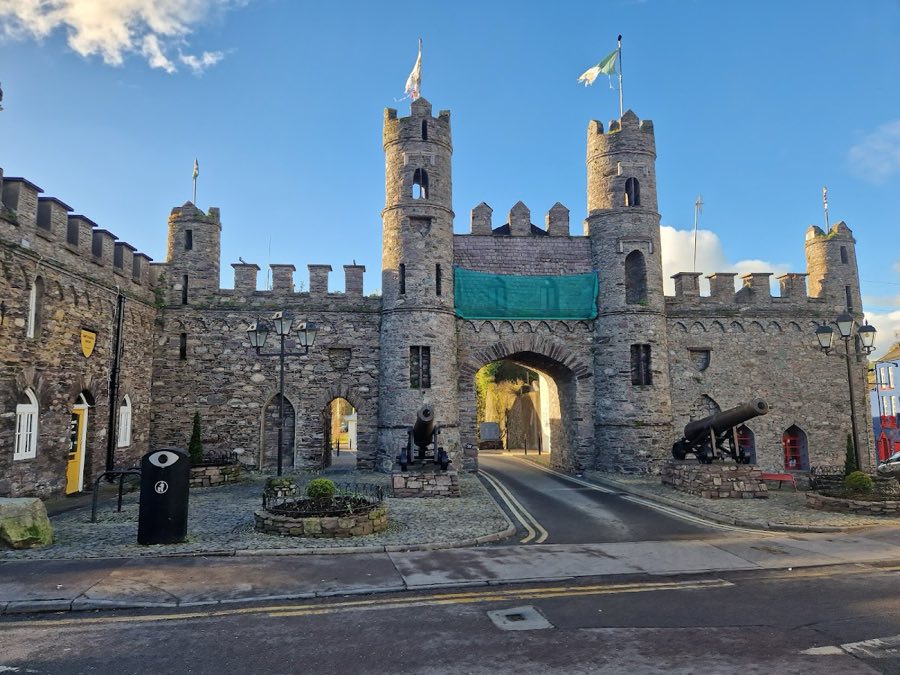
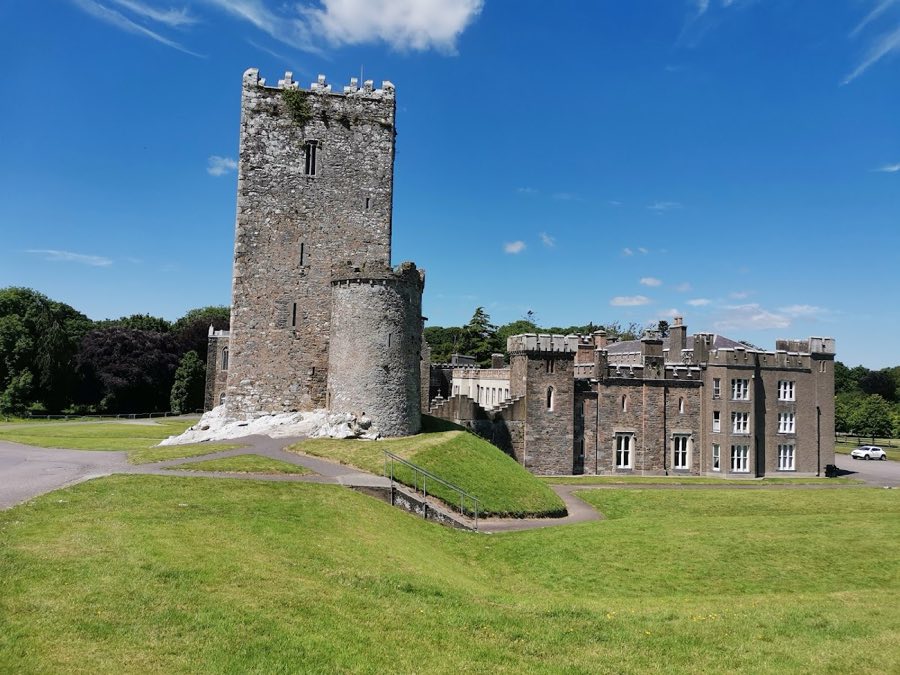
The site of Macroom Castle includes a medieval-romantic gatehouse and a castle ruin near the River Sullane bridge. The castle grounds now largely contain modern buildings, including a college, but key historic structures remain.
The gatehouse was built before 1824 by Robert Hedges Eyre as a decorat
No. 30641
No. 91020
No. 44697
No. 50398
Comments
Comments for Macroom Castle will require a verified account before posting.
We'll send a verification link before your first comment is published.