No. 36312
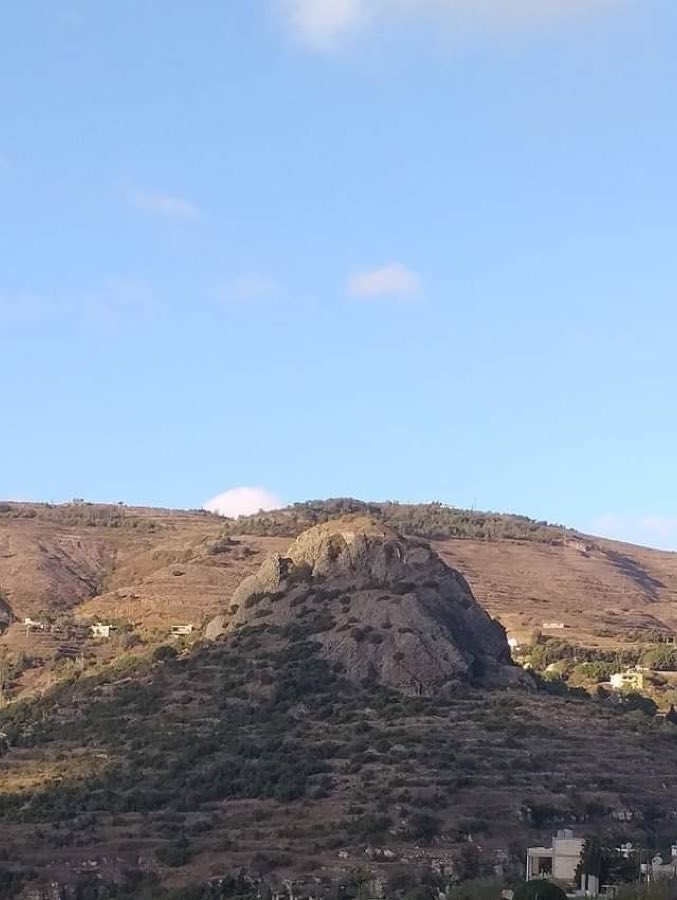
Al‑Sheikh Deeb Castle (Qulay'a/Coleé)
Syria
CastleIntact12th century
No. 24967
No. 24967 · 35.066 N, 36.343 E
Quick summary
Masyaf Castle is a castle in Syria with origins associated with the 12th century.
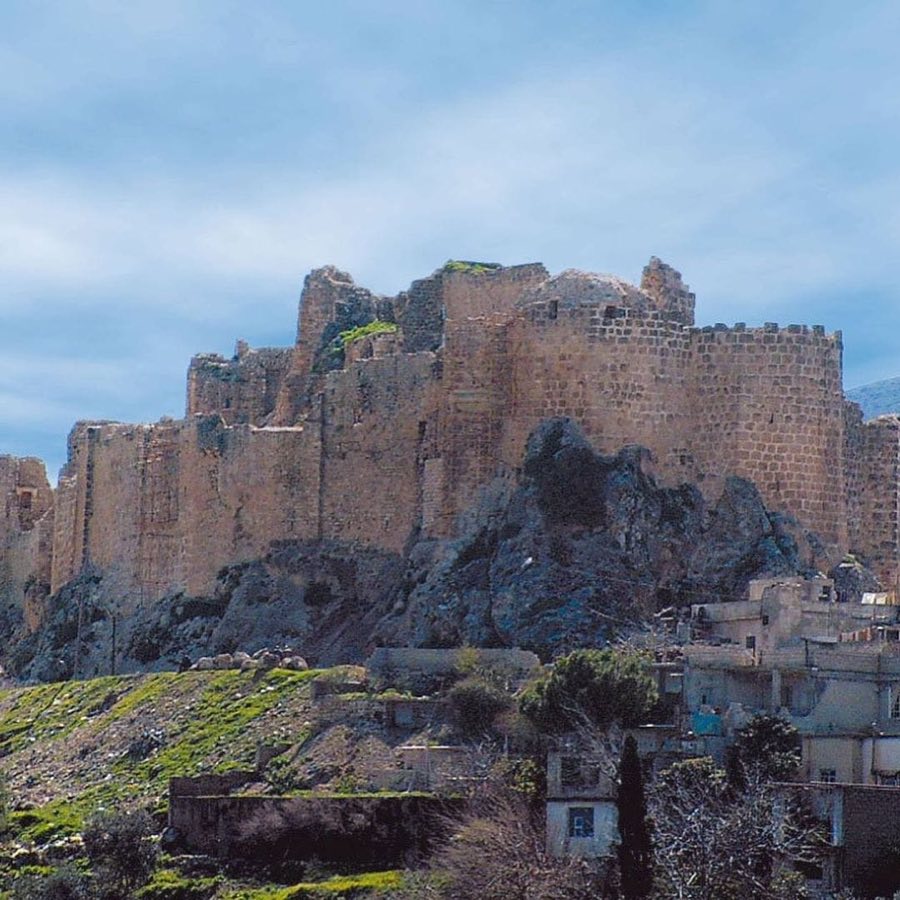
See all castles in SyriaMasyaf Castle is located in the town of Masyaf in Syria and was originally constructed during the Roman era. The fortress sits on a strategic site first fortified around 44 BCE as part of a Roman network intended to control important trade and military routes in the region.
During the early 12th century, the castle came under the control of the Mirdasid emir Thabit ibn Mahmud. In 1127 CE, it changed hands when sold to Sultan ibn Munqidh, a notable ruler of the time. Soon after, in 1141, the fortress was seized by the Nizari Ismailis, often referred to as the Assassins, under the leadership of Rashid ad-Din Sinan. He governed from Masyaf Castle until his death in 1193 and made it the administrative center of a Nizari emirate that thrived in the region from the mid-1100s into the late 1200s.
The castle’s military importance is underscored by its successful defense during a siege led by Saladin in 1176, which concluded with a negotiated truce rather than conquest. However, the castle’s control shifted following the Mongol invasions. In 1260, the Mongols briefly captured Masyaf, but it was reclaimed later that year through a Nizari alliance with the Mamluks. By 1270, the fortress officially came under the authority of the Mamluk Sultan Baibars.
In the early 19th century, the castle became a contested site once again when Alawite forces killed the ruling Ismaili emir and took possession in 1808. The Ismailis regained control with the support of the Ottoman Empire, which had governed the region since the 16th century. During the campaign of Ibrahim Pasha in the 1830s, the fortress suffered damage that affected its walls and buildings. Throughout Ottoman rule, Masyaf Castle functioned as an administrative center.
In the 20th century, during the French Mandate period (1920–1946), the castle temporarily housed a French garrison. After years of neglect, restoration began in 2000, led by the Aga Khan Trust for Culture, focusing mainly on the castle’s Nizari period structures and uncovering a range of historical artifacts linked to its long and varied past.
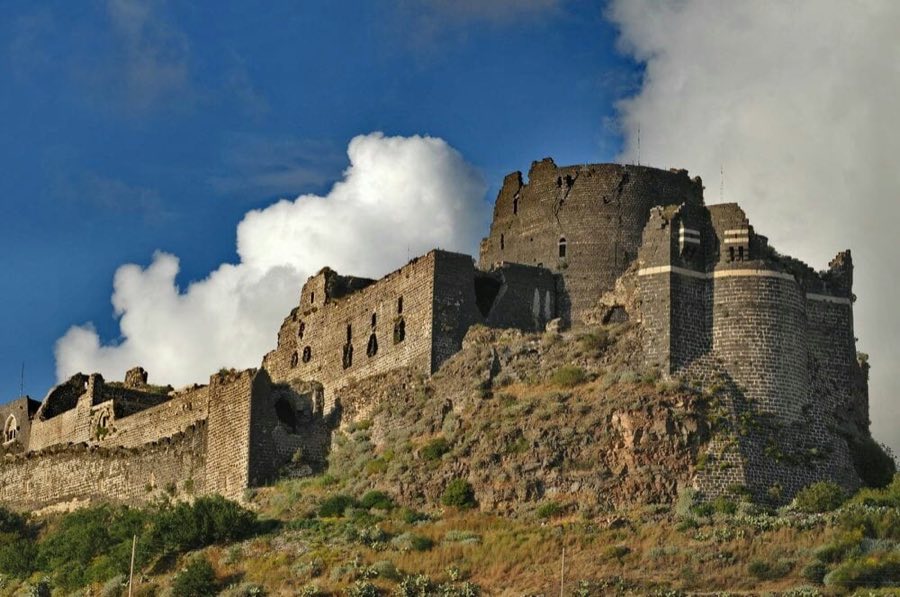
Masyaf Castle occupies a rocky plateau elevated roughly 20 meters above the surrounding landscape, with foundations dating back to Byzantine times. Its roughly square layout centers on an inner citadel located on the southern, highest part of the hill. This inner fortress is protected by rectangular towers at each corner, each featuring two levels of defensive positions, and encloses an open courtyard at ground level.
Surrounding the main fortress, an outer defensive wall follows the edge of the plateau. It is reinforced by five substantial rectangular buttress towers providing additional support and defense. At the base of the hill, another outer wall with several rectangular towers stands guard, each equipped with small arrow slits designed for archers on two defensive levels.
The primary entrance lies at the southwestern corner of the outer wall and is a notable example of Islamic architectural design. It comprises two large halls connected by a long corridor that turns at a right angle. From this entrance, two main internal routes extend into the castle: one to the north—a 65-meter passage partially cut into the bedrock, flanked by arrow slits and towers, culminating in a large hall—and another to the south, consisting of a stairway and rock-cut gate leading up to the upper castle area.
The castle’s fortifications evolved through multiple construction phases. Early walls were built using a mix of large and small stones, with some sections later strengthened by adding double walls in response to changing military technology. A significant renovation during the late 12th century under Rashid ad-Din Sinan introduced polygonal towers with five large arrow slits on two defensive levels, especially prominent along the western and northern sides, emphasizing the fortress’s strategic military role.
Further architectural additions in the early 13th century include a palace within the upper inner citadel, marked by a decorated gate inscribed and dated to 1226 CE. Defensive upgrades during this period created a smaller advanced gate reinforcing the main entrance. A fortified area housing a bathhouse was constructed by the mid-13th century and remained in use until the Mongol invasion in 1401.
Under Mamluk rule, particularly during Sultan Baibars’ reign, restorations introduced a series of defensive balconies located on the southern and eastern approaches to the castle entrance. In the late 18th century, the castle became home to residential buildings, including the house of Emir Mustafa al-Malham (1793) on the eastern side of the outer fortress walls. The castle continued to be inhabited until the French Mandate period.
Archaeological work during recent restorations uncovered features such as a secret tunnel believed to have served as an escape route, ancient public baths, and a sophisticated water collection system with channels directing rainwater into cisterns beneath the castle to ensure a reliable supply. Excavations also revealed a wide array of artifacts spanning multiple eras, including pottery shards, glazed vessels, and coins from pre-Islamic times through to the Ottoman period. Notably, glassware bearing Chinese inscriptions points to the castle’s connections with Silk Road trade, while European-minted coins confirm its role in broader commerce.
Restoration efforts since 2000 have emphasized using traditional building methods and materials matching the original construction, replacing earlier repairs that had employed modern cement. Some nearby houses were dismantled to enhance access to the main gate, and the ongoing work aims to preserve the castle’s historic fabric while uncovering layers of its complex past.
No. 36312
No. 64140
No. 27511
No. 56910
Comments
Comments for Masyaf Castle will require a verified account before posting.
We'll send a verification link before your first comment is published.