No. 72175
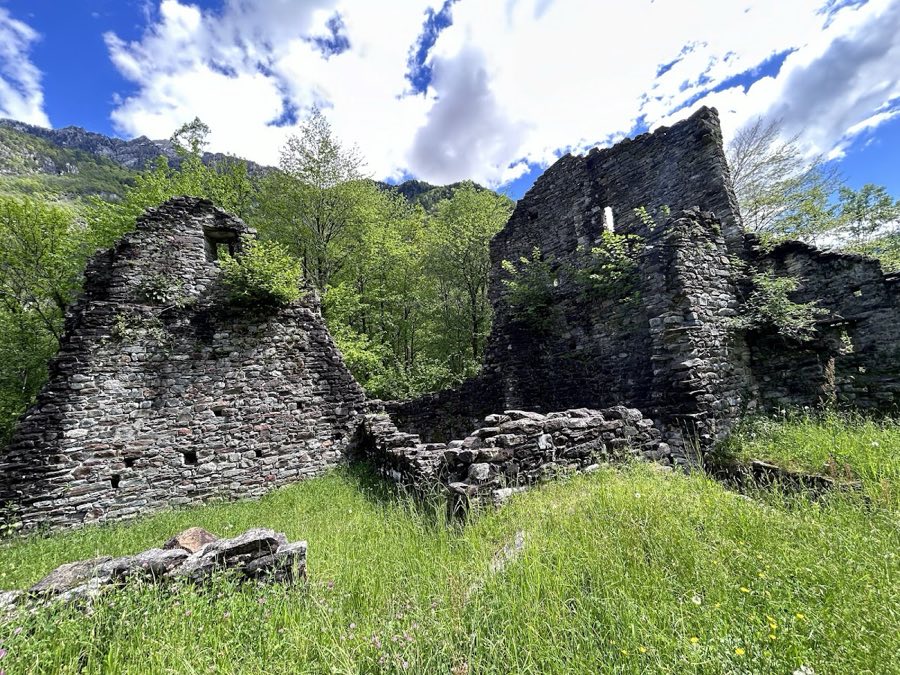
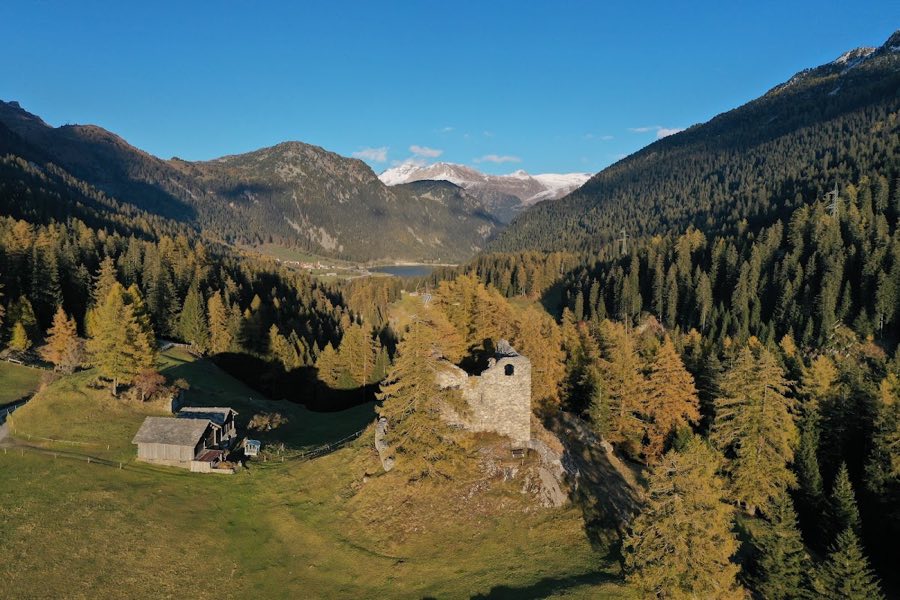
Norantola Castle
Switzerland
CastleRuin13th century
No. 63232
Castle · Switzerland
No. 63232 · 46.380 N, 9.232 E
For events
Mesocco Castle is marked as a château or castle venue lead. Capacity, indoor/outdoor spaces, catering rules, and accommodation options are published only after public verification.
Event types: Private events, Cultural gatherings, Filming and photography
Quick summary
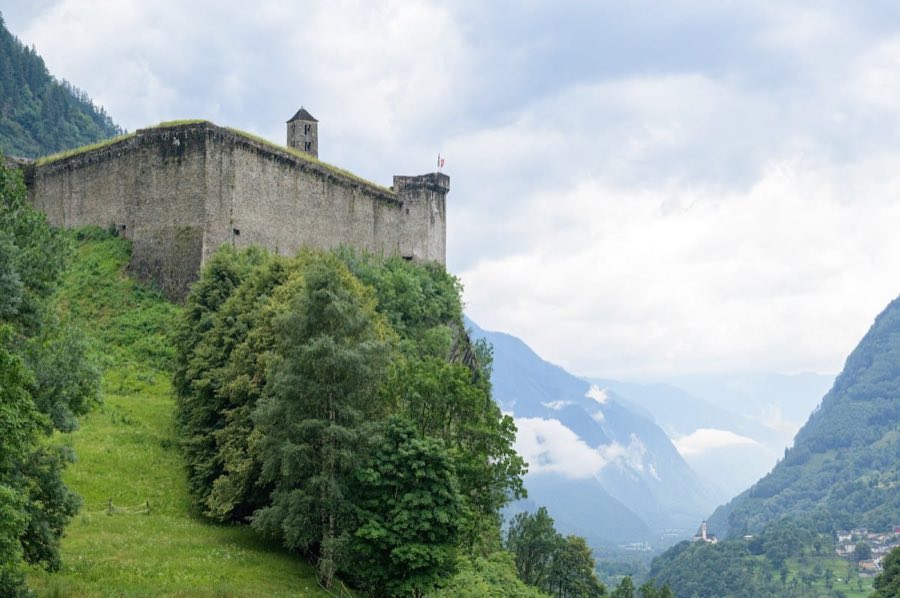
Mesocco Castle is a castle in Switzerland with origins associated with the 7th century.
See all castles in SwitzerlandMesocco Castle stands on a rocky hill south of the village of Mesocco in Switzerland’s Graubünden canton. The site has been settled since the Neolithic era, with the earliest fortification likely a small fortified church built in the 6th or 7th century. This early structure was replaced by a Romanesque church in the 11th century, marking the beginning of the castle’s religious and defensive significance.
The castle itself was first recorded in 1219. It was constructed and governed by the Freiherren, or Barons, of Sax, who controlled the Mesolcina valley for about 400 years. Their influence extended across the San Bernardino Pass, making the castle a key political and administrative center in the region from the early 13th century onward.
In 1403, the Freiherren von Sax were elevated to counts by Emperor Sigismund. Their power reached its height under Baron Albert von Sax-Misox, a founding member of the Grey League, a regional alliance. However, Albert’s murder in 1406 triggered a decline in their dominance, weakening their hold on the castle and valley.
The late 15th century brought conflict to Mesocco Castle as the Duchy of Milan, the Grey League, and the Swiss Confederates vied for control. In 1479, the Grey League seized the castle. The following year, General Gian Giacomo Trivulzio acquired it for 16,000 Rheingulden, representing Milanese interests. Trivulzio strengthened the castle’s defenses, adding firearms and cannons, and allied with the Grey League in 1496, supporting military campaigns during the Swabian and Musso Wars.
By 1526, fearing the castle might fall into foreign hands, the Three Leagues ordered it to be slighted, meaning deliberately damaged to prevent its use. Despite this, much of the stonework remained intact. The administrative center was then moved to Roveredo, and Mesocco Castle gradually fell into ruin. The main tower was destroyed by lightning in 1835.
In the 20th century, efforts to preserve the castle began. Architect Eugen Probst led excavations and stabilization work in 1925–26, though some interventions lacked systematic planning. Further restoration took place between 1986 and 1993, including rebuilding the polygonal west tower and northern walls, helping to preserve the castle’s remains for future generations.
Mesocco Castle occupies the entire summit of a rocky hill and is enclosed by an irregular pentagonal wall with five towers. The complex includes four main parts: the outer bailey to the northeast, the main castle on the plateau, the inner keep or core castle attached to the west wall, and the church of San Carpoforo within the walls.
The outer bailey is surrounded by a ring wall about 1.5 meters thick. No gates or buildings survive there today. At the foot of the hill stands the Romanesque church Santa Maria del Castello, first mentioned in 1219, which served the castle community.
The main castle is protected by a strong 13th-century ring wall featuring battlements and five towers. The largest tower, called Torre Grossa, on the east side, has walls up to five meters thick. The northwest tower has a polygonal base and has been partially rebuilt; its upper floor contains remains of a residential chamber. All towers have narrow arrow slits for defense.
Inside the main castle, medieval structures once included stables, a dairy, a foundry, a bakery, and a cistern along the east wall. These buildings reduced the open courtyard space. The core castle, or Rocca, features a five-story bergfried (a tall defensive tower) dating from around 1150–1200, preserved up to eight meters high. Its original high entrance on the west side was accessed by wooden stairs, later replaced by stone steps. The Rocca also includes a paved courtyard with a cistern, a west wing, and a north wing.
A three-story residential palazzo built around 1400 stands on the north side of the Rocca. It has a stone gallery, window openings with seating niches, a fireplace, and traces of early 15th-century frescoes. Outside the ring wall, an external latrine shaft with seating niches on different floors remains visible.
The church of San Carpoforo inside the castle has a horseshoe-shaped apse and rests on the foundations of the earlier 6th or 7th-century church, which had a round apse. The Romanesque church, built in the 11th century, includes a freestanding seven-story bell tower with paired round-arched windows. Paintings from the 17th century were reportedly still largely intact at that time.
The castle’s walls and towers were upgraded in the late medieval period to include embrasures for firearms, reflecting advances in military technology. Despite damage from deliberate slighting and natural events, much of the masonry remains in situ, with some towers and walls restored in the late 20th century.
No. 72175
No. 31542
No. 62138
No. 36377
Comments
Comments for Mesocco Castle will require a verified account before posting.
We'll send a verification link before your first comment is published.