No. 66359
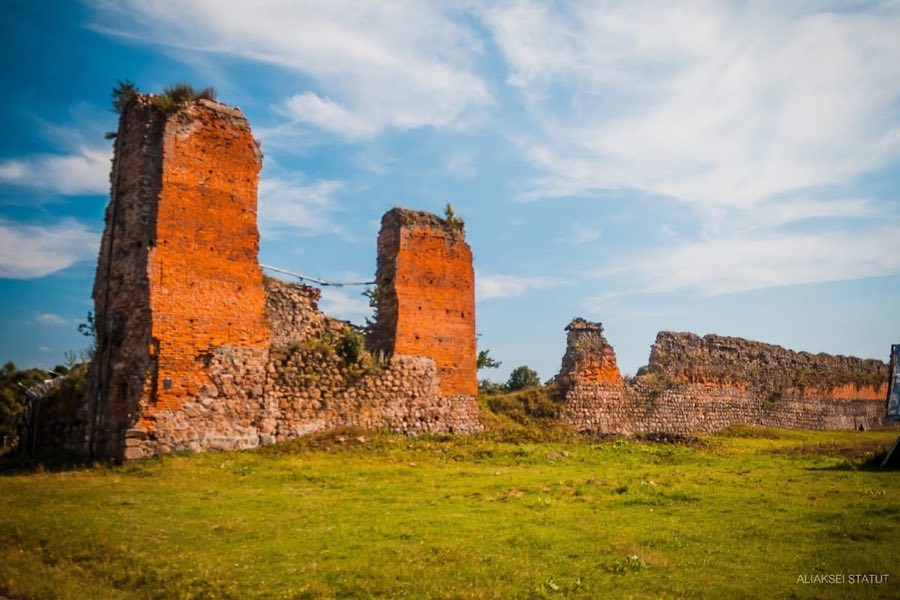
Kreva Castle
Belarus
CastleRuinFor events14th century
No. 46025
Castle · Belarus
No. 46025 · 54.335 N, 26.873 E
Quick summary
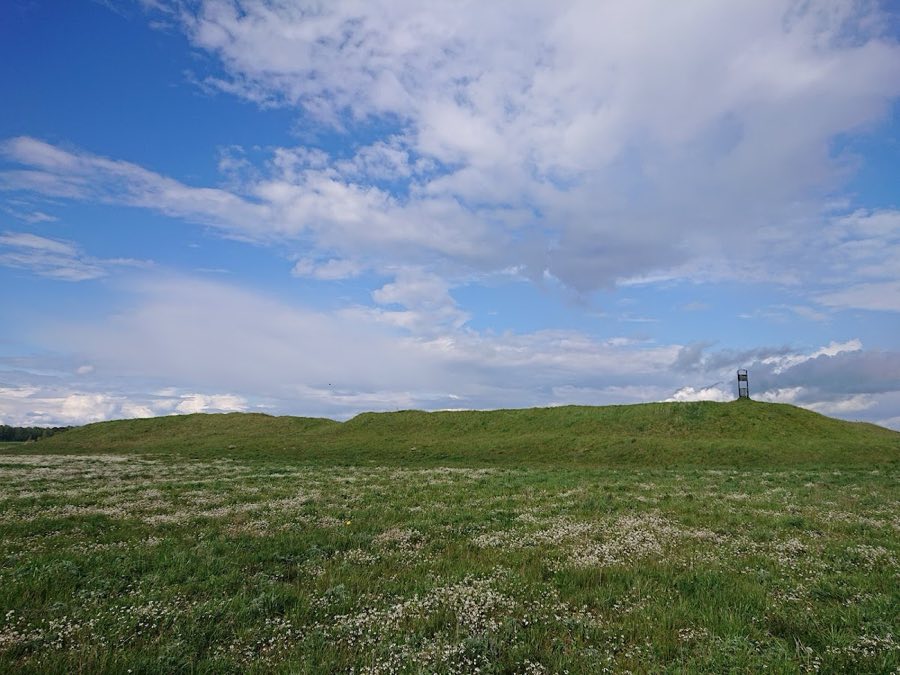
Molodechno Castle (Молодечненский замок) is a castle in Belarus with origins associated with the 14th century.
See all castles in BelarusМолодечненский замок stands in Maladziečna, Belarus; it was built and used during the era of the medieval Grand Duchy of Lithuania.
The fortress first appears in a dated document from 16 December 1388, when Prince Dmitry Olgerdovich of Novgorod-Seversky signed a letter of obedience to Grand Duke Jogaila at the castle. That act is treated as the earliest written mention of Molodechno and establishes the site as an established seat of local power by the late 14th century.
Ownership of the castle passed through several noble houses over the following centuries, including the Zaslavski, Mstislavski, Sangushki, Kiszki families and, in the early 17th century, Lev Sapieha. In the early 16th century the site saw direct military action: forces from Novgorod and Pskov under Prince M. Kislica besieged the fortress twice in 1519 and again in 1533. Those attacks probably set parts of the stronghold on fire, a fact later confirmed by archaeological traces of burning.
In 1567 representatives of the Grand Duchy of Lithuania and the Kingdom of Poland held preliminary talks at Molodechno about the conditions that would lead to the Lublin Union. During the 17th century the castle’s defenses were modernized, and it is recorded that King Charles XII of Sweden is believed to have visited the place during the Northern War.
By the 18th century the Oginski family held the site and converted part of the castle into a secular residence. The courtyard received a palace that contained a substantial library and a collection of paintings, while the surrounding grounds were shaped into garden-park ensembles with artificial ponds, mounds and canals; the owners maintained orangeries that grew oranges, pineapples, lemons and pomegranates.
Napoleonic forces passed through Molodechno twice in 1812, in June and again in November. On 22 November Russian detachments led by A. Yermolov, E. Chaplits and Cossack commander M. Platov defeated the French near Molodechno, and the castle was reported as half destroyed. In the spring of 1814 M. K. Oginski acquired the property but did not carry out major repairs; he transferred half of the building, together with its library and musical instruments, to a local five-class district school. Over the course of the 19th century the complex decayed, and by the late 1800s the castle had fallen into ruin. Today the surviving earthworks are protected as an archaeological monument and were included in a state program for landscape improvement under the “Castles of Belarus” initiative.
The fortress was constructed on a low, swampy stretch of the Ush river and occupies what functioned as an island in that wetland. Builders drove a dam and planked a roughly 120 by 80 meter patch of the swamp with logs, then filled it to create an artificial platform standing about four meters above the surrounding ground, the fill consisting chiefly of gravel and sand. The site layout emphasizes use of the wet terrain as a defensive advantage.
Around the raised platform there are broad earth ramparts made of sand and clay, preserved to heights of up to about 3.5 meters and widths reaching approximately 11 meters. Behind these embankments archaeological layers document a system of timber fortifications that stood against the inner face of the bank. The original defensive arrangement included stone or timber walls and towers and an entrance gate; a water-filled moat encircled the stronghold, and at the water’s edge an additional earth bank rested on a foundation of large stones.
Modifications made in the 17th century are visible in the archaeological record. A belt of sharpened wooden stakes was installed at the base of the main embankments, corner towers were replaced by bastions following Dutch designs, and a piled fence was set at the foot of those bastions. The approaches to the gate were strengthened with stone retaining walls, showing a clear effort to adapt the older medieval works to newer forms of field fortification.
Within the castle yard a small stone church stood from the 16th through the 18th centuries; excavations recorded its footprint as approximately 11 by 24 meters and found evidence that the interior was decorated with fresco paintings. Layers within the ramparts and the habitation deposits contain traces of burning, attesting to episodes of fire in the site’s history. At present the earth ramparts remain in situ as the visible heritage of the former fortress, and the place is treated as an archaeological monument with conservation and landscape works planned under a national program.
No. 66359
No. 43733
No. 23898
No. 12644
Comments
Comments for Molodechno Castle (Молодечненский замок) will require a verified account before posting.
We'll send a verification link before your first comment is published.