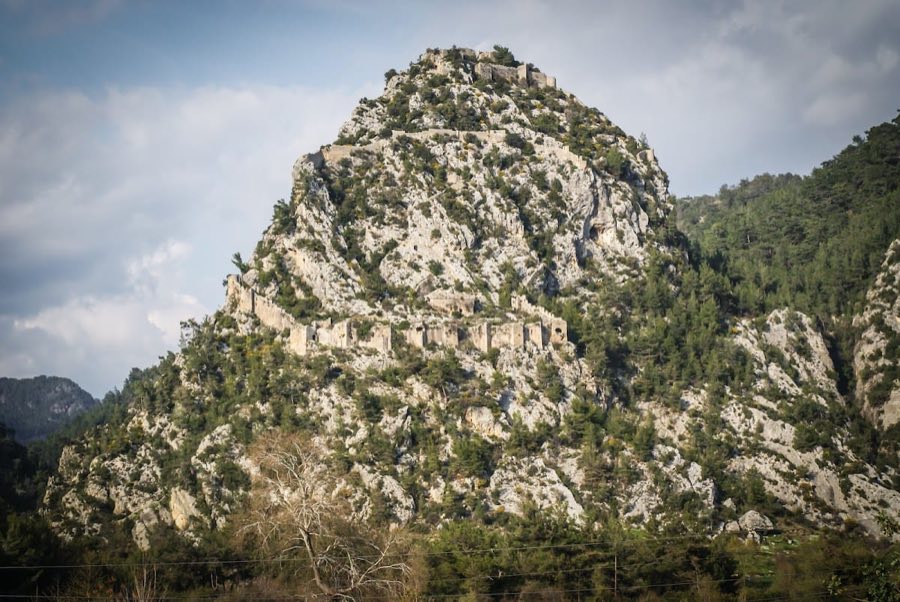
No. 11757
Alara Castle
Turkey
CastleRuin11th century
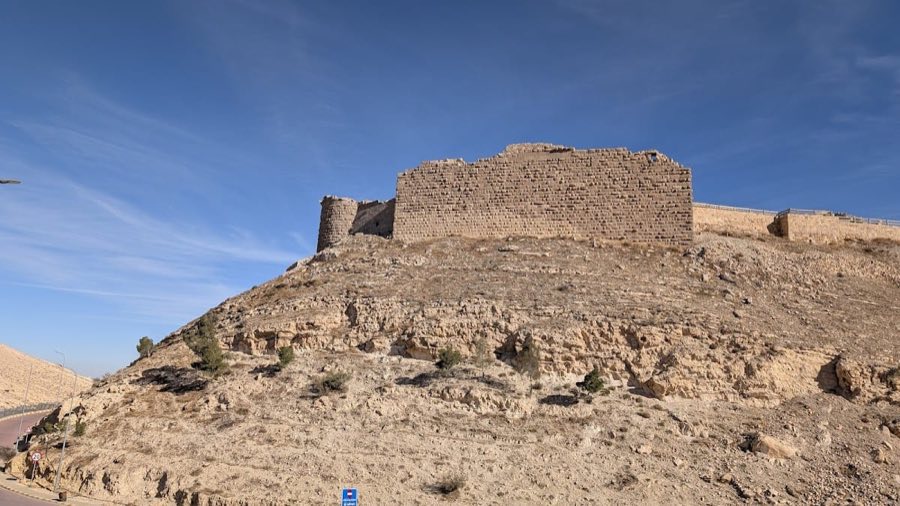
No. 22014
Castle · Jordan
No. 22014 · 35.561 N, 30.531 E
Quick summary
Montréal Castle is a castle in Jordan with origins associated with the 12th century.
See all castles in JordanMontréal Castle is located in the municipality of Shobak, Jordan. It was constructed in 1115 by the Crusaders under King Baldwin I of Jerusalem during his campaign following the capture of Aqaba in 1116. The fortress was established by the Crusader Kingdom of Jerusalem to control movement along the “King’s Highway,” a strategic trade and pilgrimage route that connected the Dead Sea with the Red Sea and linked the cities of Cairo and Damascus.
Initially, Montréal served as the heart of the lordship of Oultrejourdain, an administrative region known in Latin as terra trans Iordanem, meaning land beyond the Jordan River. The castle and surrounding territory passed through the hands of several Crusader nobles, including Romain du Puy and Paganus. Eventually, the lordship’s center shifted to the nearby fortress of Kerak. Throughout the 12th century, Montréal was a key military stronghold, enduring multiple sieges, particularly led by the Muslim leader Saladin. Notable attacks occurred in 1171, 1182, 1187, and a prolonged siege lasting from 1187 to 1189 culminated in the castle’s capture by Saladin’s brother, al-‘Adil. Despite this conquest, a significant Christian community continued to live in the area for several decades afterward.
Following the Muslim takeover, Montréal remained an important military and administrative site under the rule of the Ayyubid dynasty and later the Mamluk Sultanate. Both regimes undertook major construction projects to strengthen the fortress, including the erection of a palace featuring four iwans—large vaulted halls—and additional towers during the 13th century. The Mamluks incorporated and enhanced the existing Crusader fortifications, leaving commemorative inscriptions written in Kufic script to mark their renovations.
The castle continued to function as a garrison and administrative center well into the Ottoman era, with further repairs and occupation documented into the 16th century. However, its use declined in the late 17th century when military forces withdrew. Despite this, the site remained inhabited until the 20th century. Since the mid-19th century, archaeological research has intermittently examined the castle, with modern efforts including 3D geographic information system (GIS) mapping in the 2000s. Montréal Castle is now recognized for its historical importance and is listed on Jordan’s tentative World Heritage list.
Montréal Castle crowns a steep, cone-shaped hill rising 1382 meters above sea level near Shobak in Jordan, overlooking the wide valley of Araba. Its location on a rocky outcrop with steep slopes naturally protected it from siege engines. The fortress has an oval layout defined by a double ring of defensive walls reinforced with projecting bastions. While three concentric walls once surrounded the castle, only the innermost wall remains largely intact today. The outer walls are composed of roughly finished stone quarried locally, a construction style typical of southern Crusader castles, reflecting practical defensive priorities over decorative elements.
Among its defensive features, Montréal Castle includes a surrounding moat and multiple towers of varying shapes. Most are rectangular, but one prominent corner tower is circular, a distinctive feature not commonly seen in other Crusader fortresses in the region. The main entrance faces east and leads through a winding passage that turns clockwise, offering a strategic advantage against attackers. This gate was secured by two iron locks and a vaulted corridor, emphasizing the strong security measures.
Inside the walls, the castle’s inner courtyard contained essential military and religious buildings. Notably, it housed a three-aisled church likely dedicated to St. Mary, as recorded in a 1152 document. In addition, a smaller chapel between the inner and outer walls served either the local Eastern Christian community or functioned as a baptismal chapel. Water was managed through an ingenious underground system that descended 365 steps to two cisterns filled by a natural spring within the mountain. Additional water storage tanks carved into the rock supported the fortress’s long-term sustainability.
The complex included other functional buildings such as a palace featuring four iwans built during the Ayyubid period, as well as baths, mills, and olive presses indicative of daily life and industrial activity within the castle. Archaeological excavations have uncovered remains of a water mill, believed to have been used for processing sugarcane, alongside pottery typical of the late Islamic period. Later Mamluk renovations strengthened the fortress further by adding new towers and fortifying existing walls, with inscriptions in Kufic script commemorating these efforts.
Surrounding the castle were gardens nourished by two springs at the hill’s base, along with houses and agricultural estates owned by religious bodies such as the Templum Domini and the Monastery of St. Catherine of Sinai. Today, the ruins stand as an open-air museum preserving a remarkable fusion of Crusader, Ayyubid, and Mamluk architectural and historical legacies. Archaeological work continues, supported by modern technology like 3D GIS mapping, which helps document and conserve this significant heritage site.
No. 11757
No. 72713
No. 29705
No. 15872
Comments
Comments for Montréal Castle will require a verified account before posting.
We'll send a verification link before your first comment is published.