No. 58901
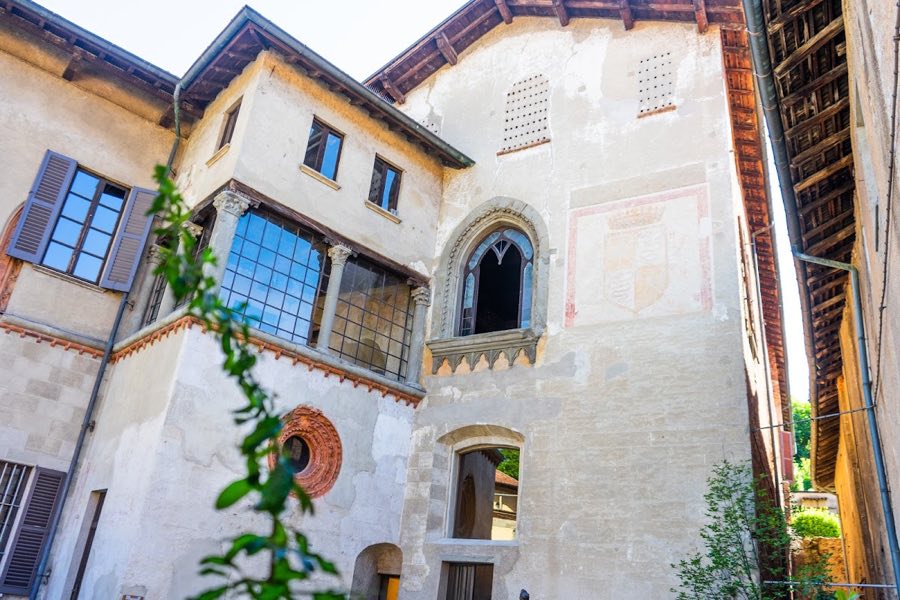
Palazzo Branda Castiglioni
Italy
PalaceRestored15th century
No. 10448
Castle · Switzerland
No. 10448 · 45.926 N, 8.914 E
Quick summary
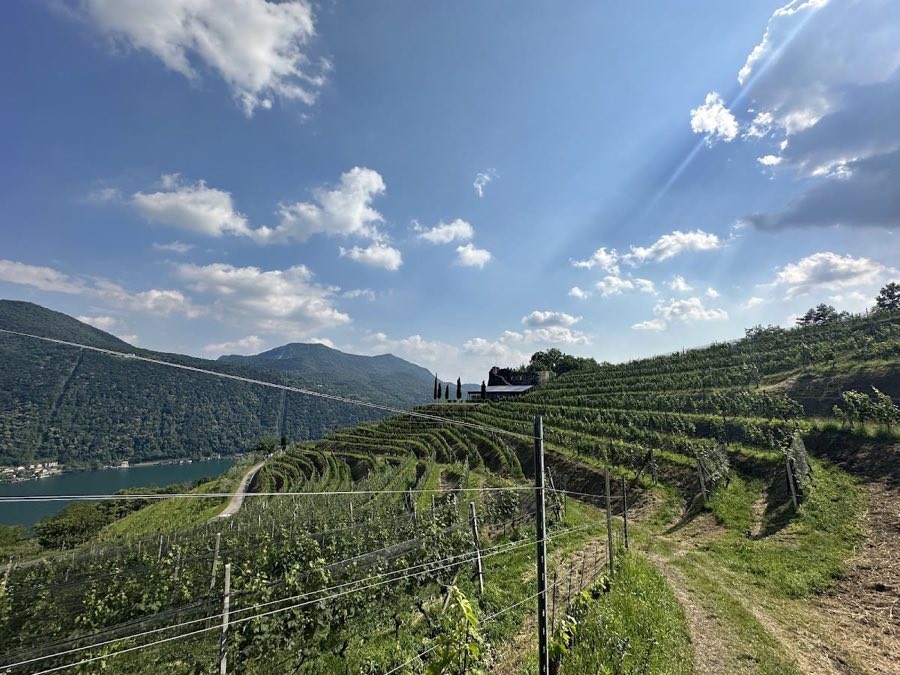
Morcote Castle is a castle in Switzerland with origins associated with the 12th century.
See all castles in SwitzerlandMorcote Castle, situated in the municipality of Morcote in Switzerland, was originally built by medieval European powers beginning in the 12th century. Its construction spanned several centuries, reflecting the turbulent political landscape and frequent changes in ownership throughout the region.
During the early 15th century, Morcote Castle played a key role in regional power struggles. In 1416, Count Loterio Rusca exchanged the castle for control of the Chiavenna valley with Filippo Maria Visconti, Duke of Milan. However, the Chiavenna valley was later reclaimed by Franchino Rusca in 1445. That same year, the inhabitants of nearby Como took Morcote Castle and transferred it to the Ambrosian Republic, a short-lived government established in Milan.
Not long after, the influential Sanseverino family gained possession of the fortress. By July 1467, they had handed control over to Bianca Maria Sforza, a member of the prominent Sforza family that governed Milan. A Milanese official who documented his visit noted the castle was well supplied with both offensive and defensive weapons, highlighting its strength as a military stronghold.
Recognizing its strategic value, the Duchy of Milan designated Morcote Castle as a central defensive position to secure the Sottoceneri area, the southern portion of the Ticino region. To improve the castle’s defenses, the duchy enlisted court engineer and architect Benedetto Ferrini, who arrived at the site in early 1479. A report three years later from Duke’s envoy Ettore Rusca praised the fortress for its enhanced robustness.
Ownership shifted again in 1484 when the castle returned to the Sanseverino family. This period of control ended in 1512 with the conquest of the castle by the Swiss Confederation. Less than a year later, on 9 May 1513, the Swiss ordered all movable property to be removed to the nearby town of Lugano and decreed that the castle itself be abandoned, marking the end of its active military use.
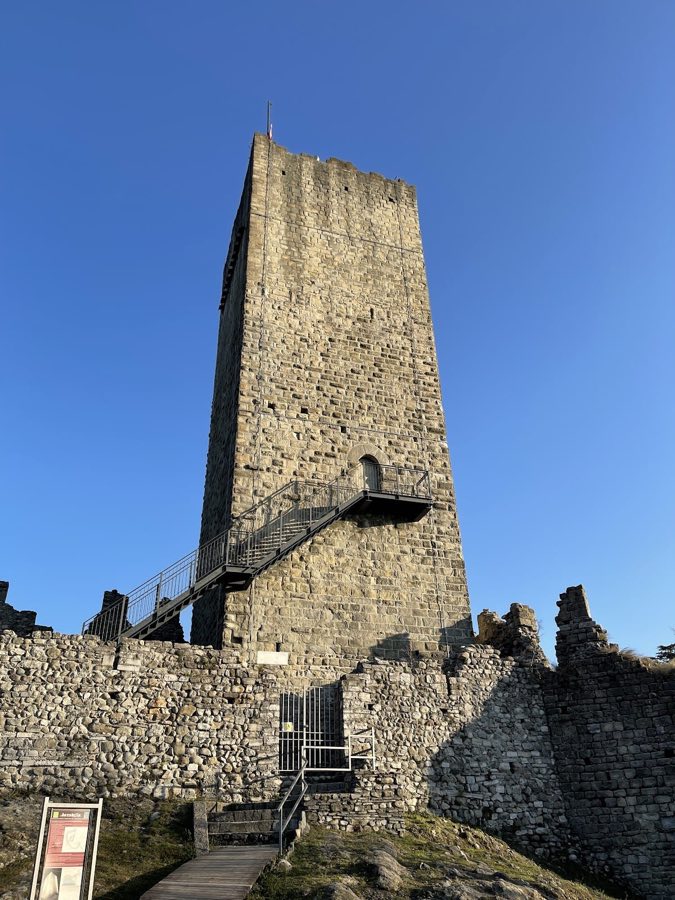
Today, the ruins of Morcote Castle reveal a layout typical of medieval defensive architecture, combining elements designed for both attack and protection. Among the surviving structures are the foundation traces of a square tower, which likely served as a key lookout and stronghold within the castle complex.
Surrounding these remains are portions of the original perimeter walls, which enclosed the site and guarded against invaders. These defensive walls would have been robust constructions, though today only fragments remain visible, allowing a general understanding of the castle’s fortified boundary.
Also present at the site is a circular tower, distinct from the square foundation. Circular towers were often constructed to better deflect projectiles and provide wide-ranging vantage points. Its survival as a partial structure provides insight into the castle’s multi-faceted defense strategy.
In front of the main entrance, evidence of a ravelin exists. A ravelin is an outwork, typically triangular in shape, placed to protect the gate and walls from direct assault by breaking up attacking forces before they reach the main defenses. This feature illustrates the sophistication of the castle’s fortifications during its period of active use.
Traces of a drawbridge have been identified as well, which would have controlled access across a defensive moat or ditch. The presence of such a mechanism highlights the castle’s ability to restrict entry and enhance security.
While the castle’s decorative elements and interior structures are no longer apparent, these remaining features allow a clear sense of its former military function and strategic importance on the shore of Lake Lugano. The ruins stand as a testament to the castle’s layered history and role in protecting the region during centuries of conflict.
No. 58901
No. 42557
No. 51020

No. 75856
Comments
Comments for Morcote Castle will require a verified account before posting.
We'll send a verification link before your first comment is published.