No. 56724
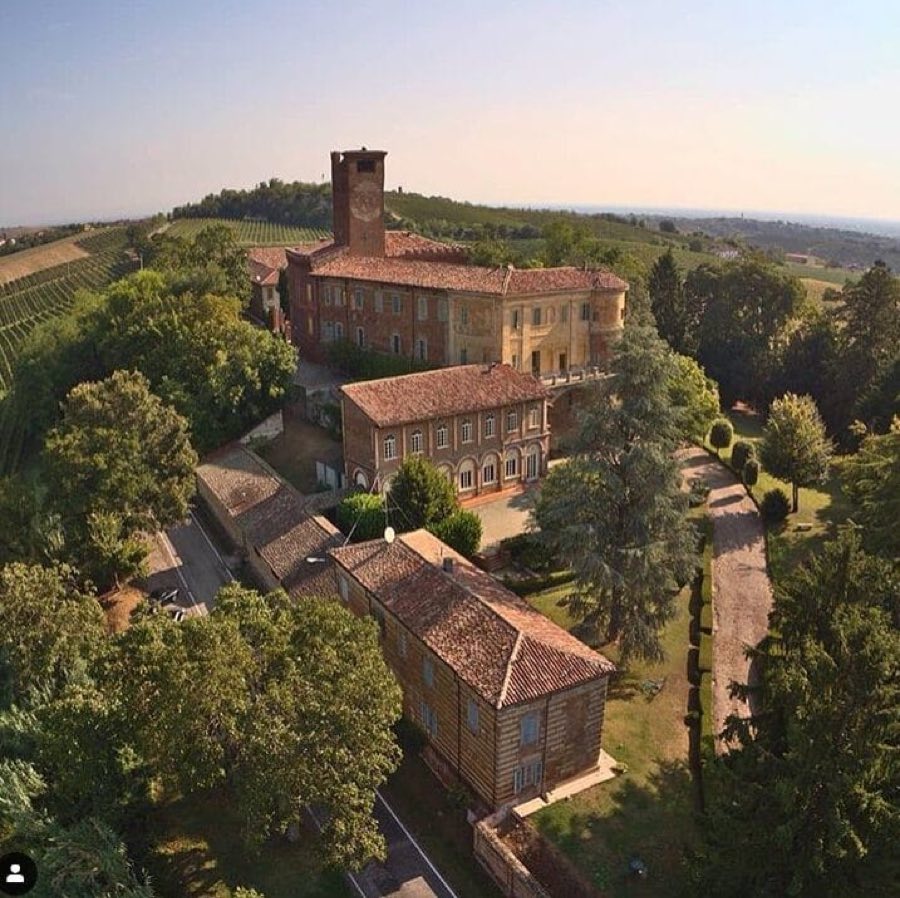
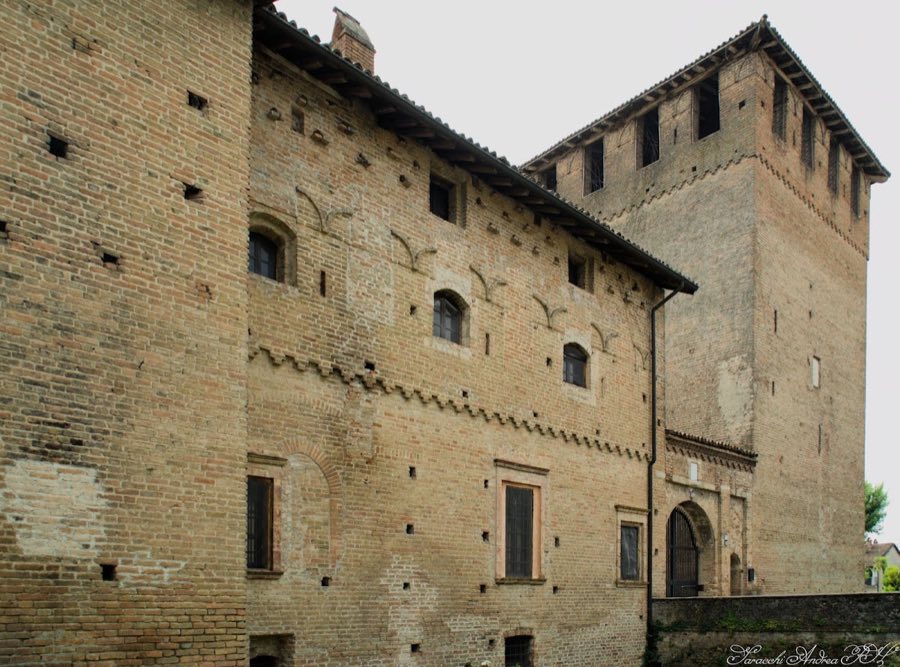
Castello di Uviglie
Italy
CastleRestored14th century
No. 55020
Palace · Italy
No. 55020 · 44.912 N, 8.617 E
Quick summary
Museo Civico di Palazzo Cuttica, Alessandria is a palace in Alessandria, Italy with origins associated with the 18th century.
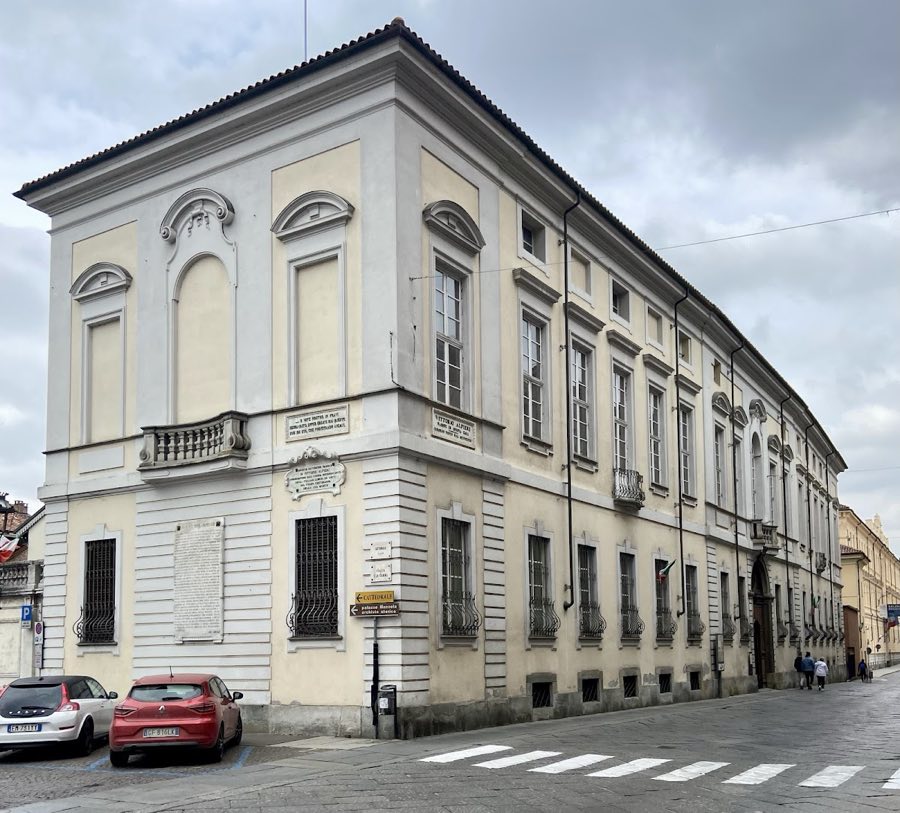
See all castles in ItalyThe Museo Civico di Palazzo Cuttica in Alessandria, Italy is a city palace commissioned in the 18th century by Luigi Cuttica, the thirteenth Marquis of Cassine, built by an Italian noble family in a Baroque idiom that leans toward classical restraint. From its completion the residence played a prominent role in local civic life, becoming a gathering place for the city’s intellectual circles and an important social address in Alessandria.
In the era of French rule across northern Italy the palace was selected as a residence by French generals François de Chasseloup-Laubat and Hyacinthe François Joseph Despinoy. During the Napoleonic administrative reorganization the building was designated the Prefecture of Marengo in 1806, making it the seat of the local prefectural authority under the new political order.
After the Napoleonic period the municipal authorities acquired the property and adapted it to public service. Administrations housed there included the Prefecture and the Provincial Administration, as well as financial offices. Later the building also accommodated the post office and the court, reflecting its role as a center for civic and institutional functions.
In more recent decades the palace has been repurposed for cultural and educational uses. One wing serves as the Civic Museum, while the larger building contains the State Conservatory of Music Antonio Vivaldi together with a connected middle school. In 2004 the museum created a specialized collection for prints, bringing together nearly two thousand engravings, maps, and city views under several named collections, and the interior galleries were arranged to present archaeological, artistic, religious, Napoleonic, and Risorgimento materials to illustrate the region’s long history.
The palace presents as an urban noble residence of the eighteenth century, executed in a Baroque manner with strong classical references. Within the building a dedicated museum wing is laid out as a sequence of rooms and galleries, each assembled around a particular chronological or thematic focus so that archaeological finds and later artworks are shown in distinct presentation spaces.
The museum’s first gallery displays late seventeenth‑century woven tapestries that illustrate episodes from the Acts of the Apostles and originate from Santa Maria Domus Magna of Alessandria. This room also contains a celestial globe made by Father Pietro Maria da Vinchio and dated 1750–51, an instrument crafted for mapping the stars and preserved among the palace collections.
Three archaeological halls present material from the area of ancient Dertona, covering a time span from the Bronze Age through the founding of the Roman colony and into the period of Gothic domination. The first hall contains ceramic vases and funerary urns recovered from local necropolises. The second gallery exhibits marble fragments that once decorated aristocratic houses, while the third gathers finds associated with the later, Christianized city, including a stone archivolt fragment that bears an inscription referring to a Bishop Giuseppe dated 770. These objects are arranged to show continuity in local settlement and civic life.
A room dedicated to sixteenth‑ and seventeenth‑century art holds major painted altarpieces. Among these are a Triptych of the Annunciation attributed to the Master of San Guido of Acqui, possibly Galeotto Nebbia and dated 1497, a Polyptych depicting the Coronation of the Virgin by Gandolfino da Roreto, and the Immaculate with Saints Francis and Anthony of Padua by Carlo Francesco Nuvolone, a work transferred from the Capuchin convent of Tortona. These panel paintings illustrate the devotional and artistic traditions of the region.
The Napoleonic gallery groups objects and images from the late eighteenth and early nineteenth centuries tied to Alessandria’s history, including prints by Giuseppe Pietro Bagetti that portray episodes of the French campaign and the preparatory cartoon for Francesco Mensi’s Apotheosis of Napoleon; Francesco Mensi served as director of the Pinacoteca. A separate Risorgimento room, organized for the 150th anniversary of Italian unification, presents material celebrating local patriots Andrea Vochieri and Cristoforo Moia.
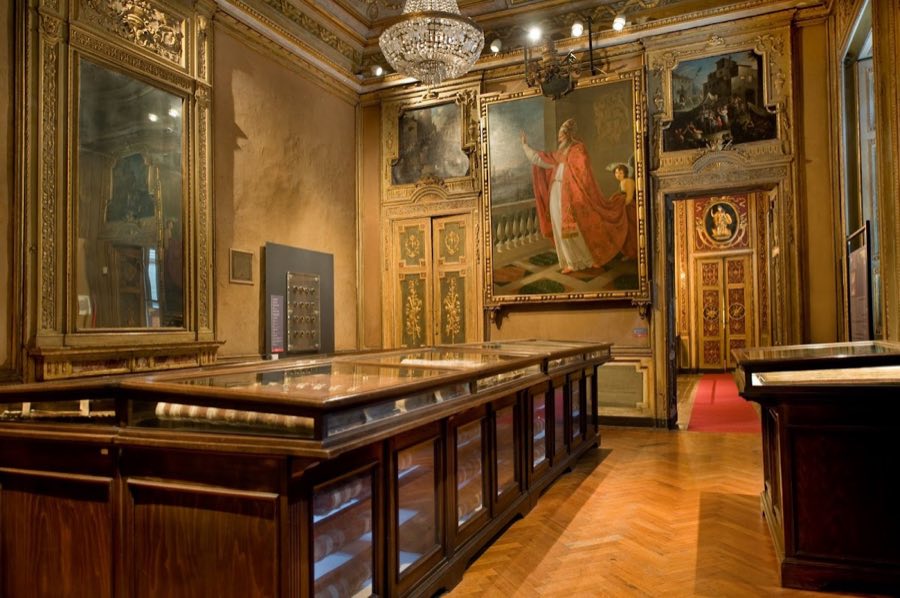
Rooms recalling ecclesiastical history focus on Pope Pius V and the Dominican foundation in his native area. These displays include around forty choir books produced about 1560 in Rome for the convent of Santa Croce of Bosco Marengo, each containing illuminated miniatures, and liturgical vestments such as a cope whose hood shows an embroidered image of Pius V made by a Piedmontese embroiderer. The museum’s print collection, established in 2004, comprises roughly two thousand items on paper — maps, historical town views, and engravings by contemporary artists — and is organized into the named collections assembled over time.
No. 56724
No. 24582
No. 22720
No. 25906
Comments
Comments for Museo Civico di Palazzo Cuttica, Alessandria will require a verified account before posting.
We'll send a verification link before your first comment is published.