No. 85185
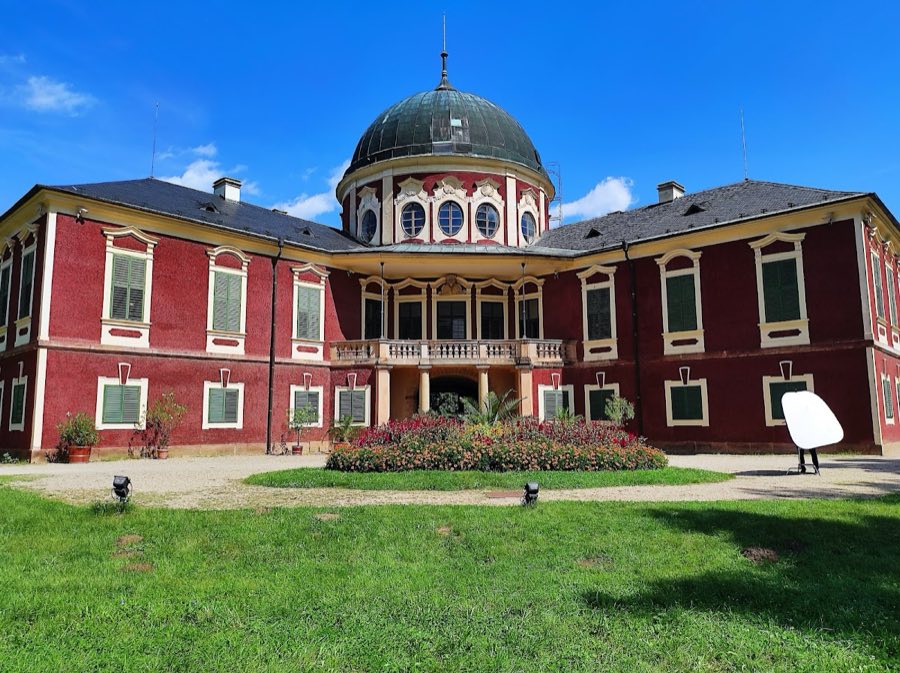
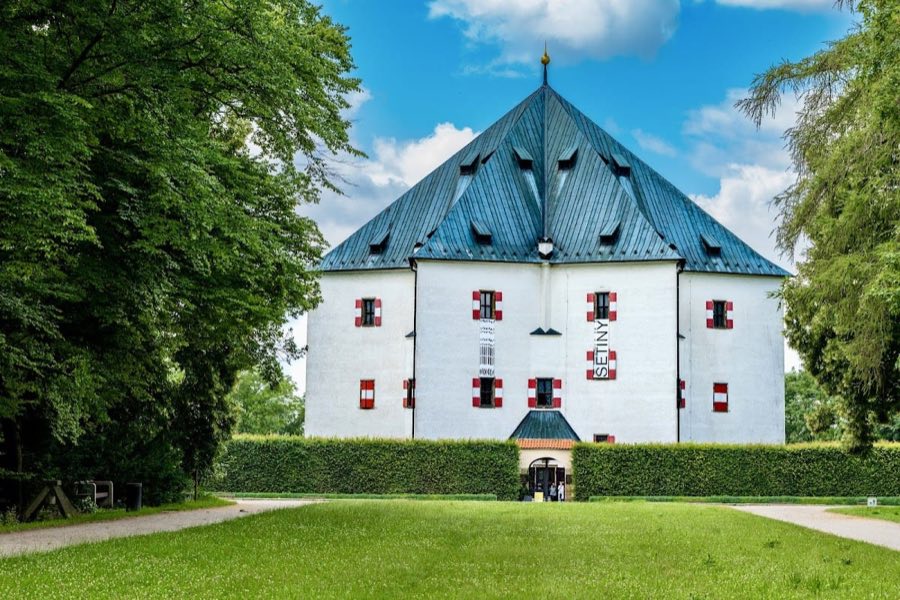
Veltrusy Mansion
Czechia
CastleRestored18th century
No. 86321
Château · Czechia
No. 86321 · 50.261 N, 14.301 E
Quick summary
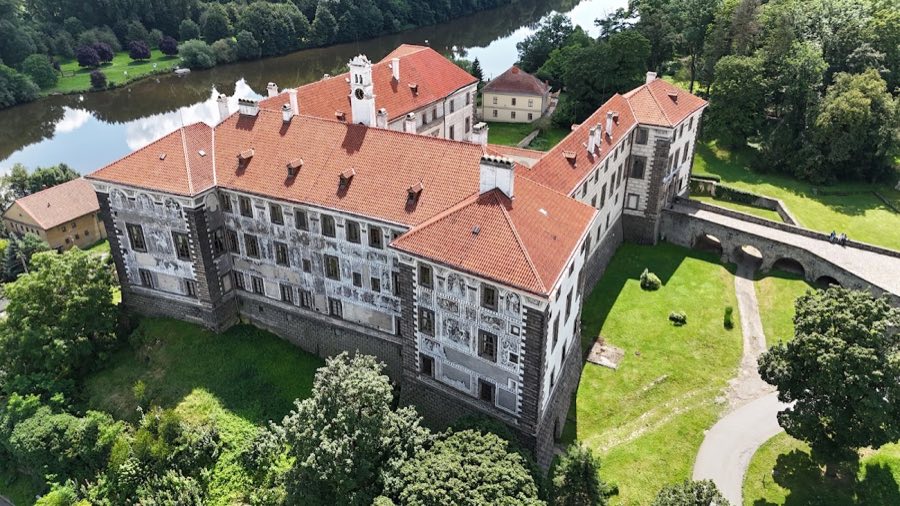
Nelahozeves Chateau is a château in Czechia with origins associated with the 16th century.
See all castles in CzechiaNelahozeves Chateau, Nelahozeves, Czechia, is a 16th-century late‑Renaissance estate begun by the Bohemian noble Florian Griespek von Griespach, who served as an adviser to King Ferdinand I. Built on a rocky promontory above the Vltava River about 25 kilometres north of Prague, the house ranks among Bohemia’s leading late‑Renaissance buildings and was founded in part because of its proximity to the royal residence in Prague.
Work on the three‑winged complex began in 1553 after Florian Griespek had acquired the village and surrounding lands in 1544. Construction paused when Florian died in 1588; his son Blasius took charge of building activity and carried the project forward until about 1614.
In 1623 a niece of the founding family sold the estate to Polyxena of Lobkowicz, and the property thereafter belonged to the Lobkowicz family for most of the following centuries. During the Thirty Years’ War the château suffered repeated attacks by marauding troops and was heavily damaged; after the conflict Polyxena’s son, Prince Wenzel Eusebius of Lobkowicz, set in hand a programme of rebuilding to repair the wartime destruction.
Repairs of a modest character were carried out in the 1860s, and a late‑19th‑century proposal to remodel the building in a Neo‑Renaissance fashion was drawn up in 1876 but never realised. The state expropriated the château and its contents in 1950. In 1993 the estates and collections were returned to the princely House of Lobkowicz; as of 2006 the owner listed for the property was William of Lobkowicz. From 1997 the château began to display items from the family’s private holdings in a permanent exhibition inaugurated by Václav Havel.
The Lobkowicz Library at the château grew from the book collection of Bohuslav Felix of Lobkowicz and Hassenstein and is one of the major private libraries of historic Bohemia, containing roughly 65,000 volumes. Its most prized single manuscript is a likely South‑English Gospel book from the tenth century. The library also preserves a music archive of about 4,000 items, including manuscripts by Wolfgang Amadeus Mozart and Ludwig van Beethoven; Joseph Franz Maximilian, the seventh Prince Lobkowicz, was an important patron of Beethoven, who dedicated parts of his work to the family. The picture holdings form the most valuable segment of the collection and include paintings by Lucas Cranach the Elder; Pieter Brueghel the Elder (The Hay Harvest, 1565) and Pieter Brueghel the Younger; Paolo Veronese; Peter Paul Rubens (The Goddess Hygieia, 1615); Diego Velázquez (Portrait of the Infanta Margaret, 1653); and Bernardo Bellotto, together with late 16th‑ to early 17th‑century Spanish portraits and portraiture of Habsburg nobles.
The château has a three‑winged plan dating to the mid‑16th century and displays an overall Renaissance character. The building occupies a rocky outcrop above the Vltava River and commands a raised site roughly 25 kilometres north of Prague. The main exterior face preserves figural sgraffito (scratched plaster decoration) across its elevations, a decorative technique applied during the Renaissance phase and still visible today. Several interior rooms survive with historical fittings and finishes, giving direct evidence of the château’s sixteenth‑ and seventeenth‑century appearance.
The complex bears marks of its violent early modern history and of subsequent repair. Its fabric was repeatedly damaged during the Thirty Years’ War by marauding troops and was rebuilt after the war under the patronage of Prince Wenzel Eusebius of Lobkowicz. Small‑scale conservation work was undertaken in the 1860s, and a late‑19th‑century Neo‑Renaissance redesign was planned in 1876 but not carried out. Today the façade remains largely in its original Renaissance form and some interior spaces are preserved in their historic state, while the building as a whole reflects successive phases of damage and restoration.
The site also contains extensive movable heritage assembled by the Lobkowicz family. The library occupies rooms within the château and holds about 65,000 volumes, including a tenth‑century South‑English Gospel and a music archive of roughly 4,000 items with manuscripts by Mozart and Beethoven. The picture collection, kept in the house, includes important works by Cranach, Brueghel the Elder and Younger, Veronese, Rubens, Velázquez and Bellotto, alongside Spanish portraiture and images of Habsburg family members. These collections were removed in the mid‑20th century and later returned to the château, where they remain part of the site’s historic ensemble.
No. 85185
No. 60931
No. 74478
No. 70141
Comments
Comments for Nelahozeves Chateau will require a verified account before posting.
We'll send a verification link before your first comment is published.