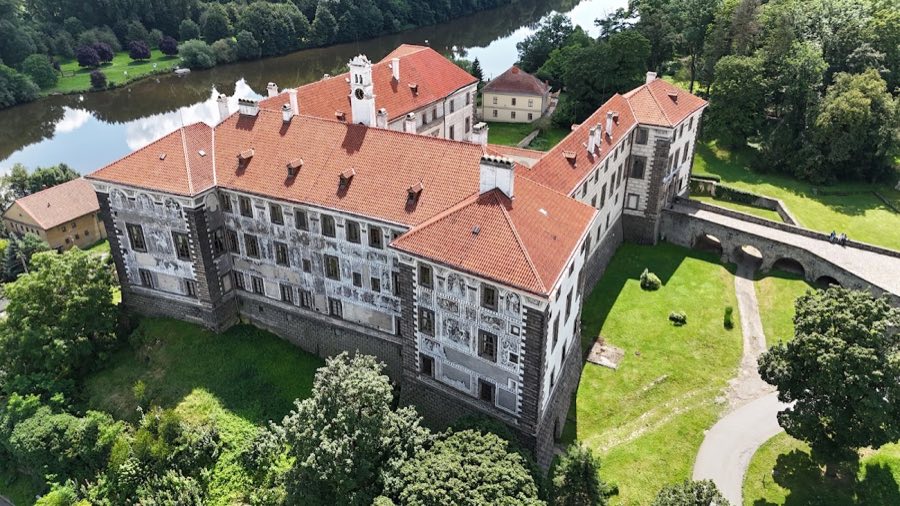
No. 86321
Nelahozeves Chateau
Czechia
ChâteauRestored16th century
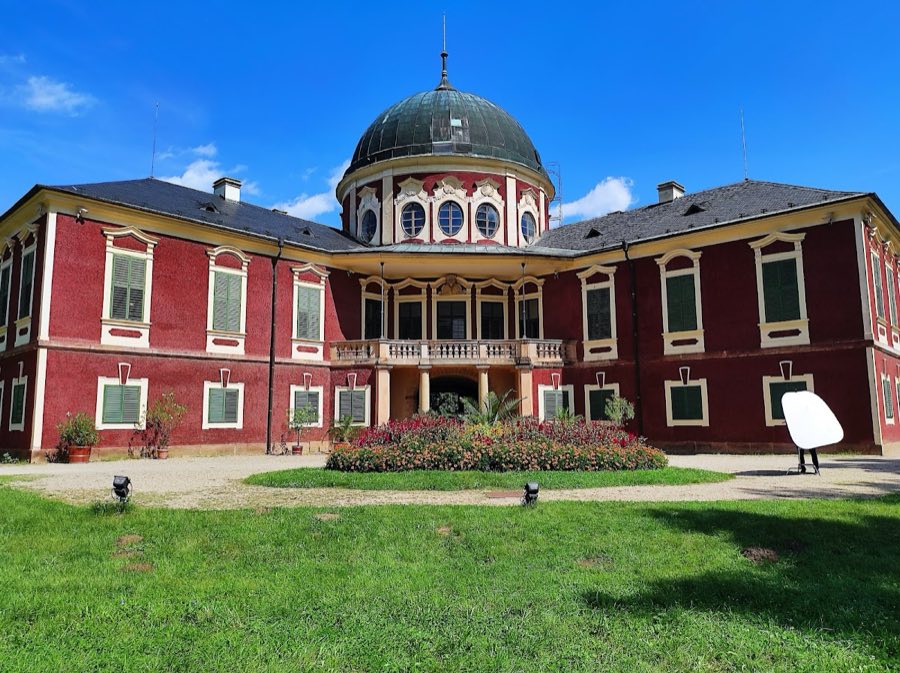
No. 85185
Castle · Czechia
No. 85185 · 50.278 N, 14.330 E
Quick summary
Veltrusy Mansion is a castle in Czechia with origins associated with the 18th century.
See all castles in CzechiaVeltrusy Mansion, Veltrusy, Czechia, is an 18th-century Baroque country house built by the Bohemian noble Chotek family. Construction began in the mid-1700s and the estate became a prominent regional seat for social functions, hunting, and the display of aristocratic taste. Its grounds and interiors were repeatedly altered over the next two centuries, and the house later served as the core of a larger landed and industrial estate that produced income for its owners.
Building work began under Count Václav Antonín Chotek in the first half of the 18th century. The design of the original project has been attributed to different architects in various accounts, and the early palace was completed in the Baroque manner typical of that period. A later construction phase was directed by Count Rudolf Chotek, who from 1749 held the senior post overseeing imperial finances and used those resources to expand and improve the family property. During this period the house entertained high-ranking guests, including the imperial visitor Maria Theresa.
Interior decoration advanced alongside the structural work. Mid-18th-century redesign introduced rococo and chinoiserie schemes, creating rooms known as the Chinese Room and the Chinese Cabinet. In 1765 a large ceiling painting titled Allegory of Morning, Noon, Evening, Night was executed by Josef Pichler. Over the following decades some halls were redecorated in the restrained Empire taste of the early 19th century.
The formal Baroque garden was swept away by a flood in 1764, after which the estate enlarged its green areas and converted them into an English-style landscape park centered on a broad lawn beside the Vltava River. The park took its present character by the 1830s, when a number of bridges and park structures were erected. In the 1800s the estate also took on industrial and agricultural functions: a brewery, sheepfolds, limestone quarries, a winery, and mills were built around the park, forming a combined cultural and productive complex.
The mansion and grounds suffered repeated flood damage across its history, including a damaging event in 2002 that required repair work. In 2002 the site was recognized with National Cultural Monument status. The house has housed a private collection belonging to the Lobkowicz family, which includes paintings by Veronese, Canaletto, Rubens, and Velázquez, manuscripts and books, and is reported to contain Pieter Bruegel the Elder’s The Hay Harvest. The composer Antonín Dvořák was born in the vicinity of the estate.
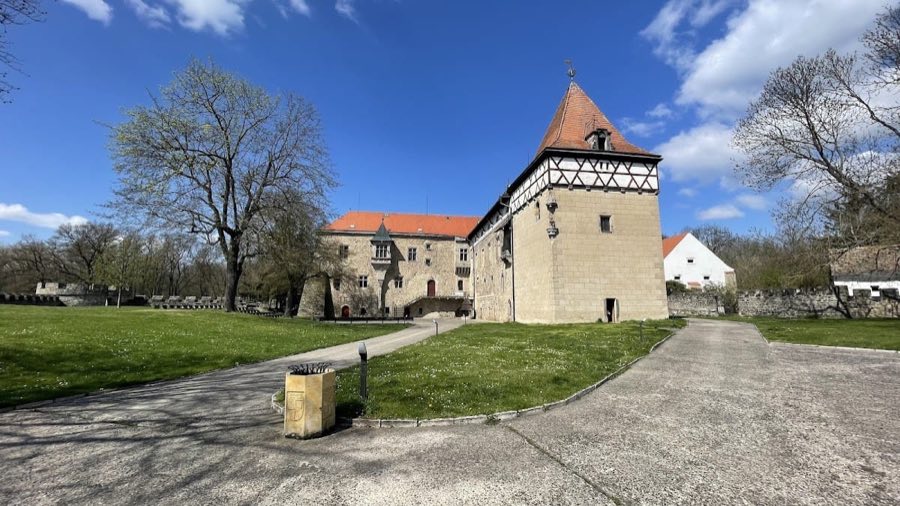
The plan centers on a prominent tower around which the living wings are arranged in an X-shaped layout. The building rises to two main floors and originally presented a more complex and taller composition than comparative country palaces. The tower once carried a roof with a change in slope and was topped by a spire, forming the visual focus of the house.
Each arm of the mansion originally featured roofs with a change in slope and Baroque chimneys, giving the ensemble a richly articulated skyline. In a later rebuilding phase the roofs were simplified and the overall silhouette moved closer to early classicist appearance, while the Baroque ground plan was retained. At the same time additional lateral wings and the group of service buildings were added alongside the main residence.
The principal ceremonial staircase is richly adorned with Baroque sculptures that portray the twelve months and allegories of the four seasons, works attributed to the sculptor Matyáš Bernard Braun. Interior ornament survives in rooms with mid-18th-century rococo and chinoiserie decoration, including the spaces called the Chinese Room and the Chinese Cabinet. A large plafond painted in 1765 by Josef Pichler, Allegory of Morning, Noon, Evening, Night, crowns one of the major halls, and several rooms display Empire-style finishes applied in the early 19th century.
The surrounding grounds were reshaped after the 1764 flood into a landscape park in the English fashion, with a broad central lawn bordered on one side by rows of trees and on the other by the Vltava River. The park reached its final form in the 1830s, and a number of 19th-century park buildings and bridges from that period remain. Industrial and agricultural installations built around the park in the 19th century — a brewery, sheepfolds, limestone quarries, a winery, and mills — form part of the estate’s built ensemble. The property has endured periodic flooding, most recently in 2002, and underwent repairs following that event; the site now holds protection as a National Cultural Monument.
No. 86321
No. 60931
No. 74478
No. 56496
Comments
Comments for Veltrusy Mansion will require a verified account before posting.
We'll send a verification link before your first comment is published.