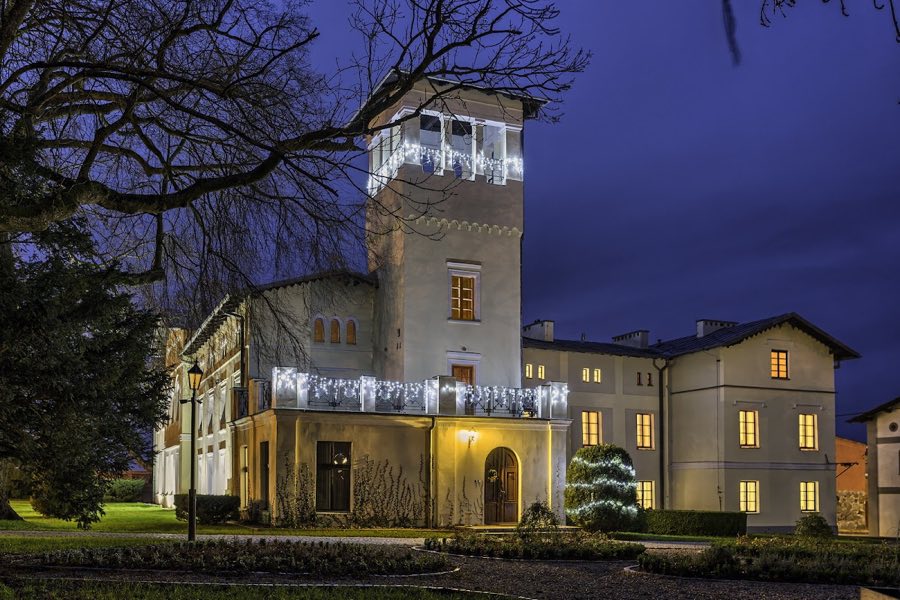
No. 75227
Kłanino Palace
Poland
Manor houseRestoredFor rent17th century
No. 85796
Castle · Poland
No. 85796 · 54.753 N, 17.589 E
For rent
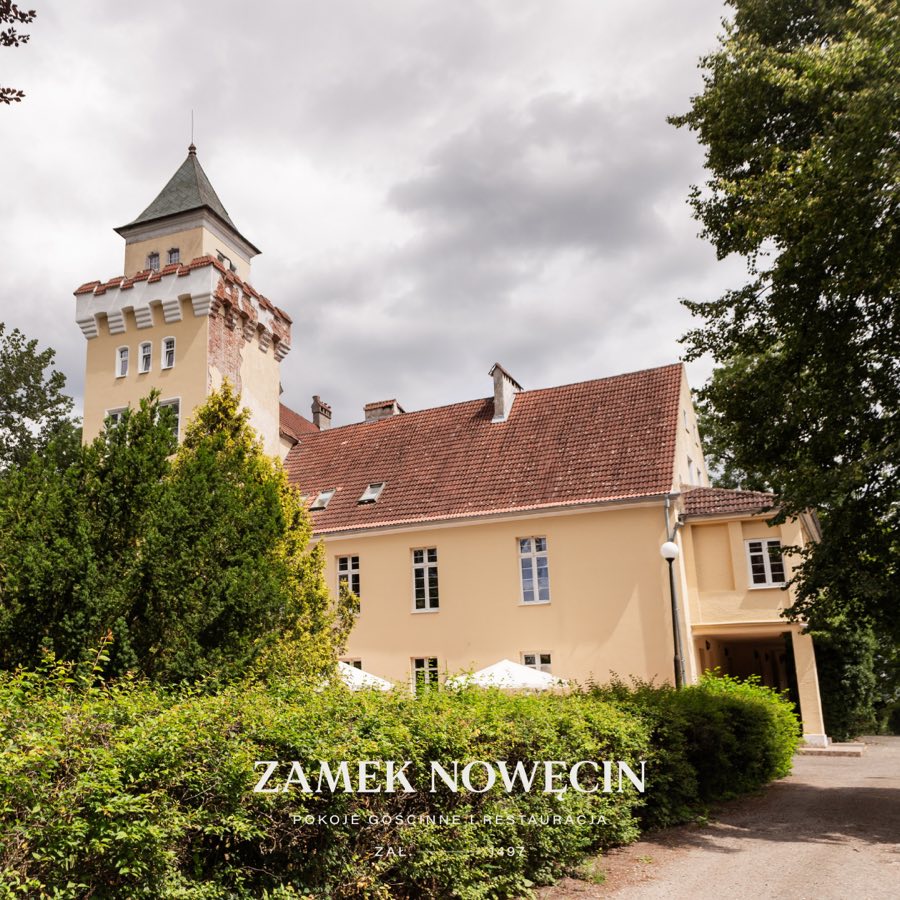
Nowęcin Palace, Łeba is marked for bookable castle accommodation. Nightly pricing, sleeps count, stay rules, and amenities are displayed only when public operator data is available.
Rental type: Hotel / bookable stay, Short-stay rental
Short-term availability: Bookable accommodation signal
Quick summary
Nowęcin Palace, Łeba is a castle in Łeba, Poland with origins associated with the 16th century.
See all castles in PolandThe Palace in Nowęcin in Łeba, Poland, is a historic noble residence that developed for the von Wejher (von Weiher) family within the territory controlled by the Teutonic Order, and its fabric reflects a main building phase in the mid‑16th century when Renaissance forms were introduced. The site became important as the rural seat of a local noble lineage, its chapel preserving a dated votive plaque tied to a military campaign, and the whole complex is recognised as a protected monument.
The estate’s documented story begins in 1372, when Grand Master Winrich von Kniprode granted the locality of Łeba to Dietrich von Weiher. Following a violent storm surge on 15 September 1497 that destroyed the family’s earlier seat in Łeba, Claus von Wejher established a new fortified residence about three kilometres east‑southeast of the town, calling it Neuer Hof, a name that later gave rise to the German designation Schloss Neuhof.
In the mid‑1500s Ernst von Wejher carried out a substantial rebuilding in the Renaissance manner and added an eastern wing to the chapel dedicated to Jerusalem. A votive tablet set into the chapel bears the inscription GWMUITG – 1567 – EWAUM and is associated with Ernst von Wejher, who returned gravely wounded from the Livonian War in 1567.
From 1781 the palatial property passed into the hands of the von Somnitz family of Charbrow and thereafter changed owners several times. Around 1909 the complex was enlarged by its then proprietor, who added a west wing, erected a six‑storey tower capped by a tent roof, and built an arcade extension in front of the chapel. After the Second World War the estate became property of the State Agricultural Farm in Charbrow, which carried out a series of repairs, the most extensive in the 1960s. Through the later decades of the 20th century the buildings served visitors, agricultural staff, and from the 1980s guests of a leisure‑training centre. In the 1990s a private owner undertook a general renovation. The ensemble is registered as a palace complex (registration no. A‑1172, 2 July 1987).
The site stands on the shore of Lake Sarbsko and comprises several freestanding buildings of different sizes rather than a single unified mansion. The layout presents a small cluster of structures arranged around internal circulation, approached by two principal entrances, and includes wings and later additions that mark distinct phases of construction from the 16th century through the early 20th century.
The surviving fabric is predominantly brick for both external and partition walls, while the exterior faces are layer‑finished with plaster. Roofs are covered with overlapping ceramic pantiles (Polish: karpiówka), a traditional curved tile. The complex displays clear evidence of accretions: an eastern chapel wing belongs to the mid‑16th century rebuilding, whereas a west wing and a vertical tower were added at the beginning of the 20th century. The tower, rising six storeys and finished with a tent roof, forms the most conspicuous vertical element above the ensemble.
The former Jerusalem chapel now serves as the palace’s principal representative hall and retains a barrel vault with lunettes. In a niche within this space stands a votive plaque bearing the inscription GWMUITG – 1567 – EWAUM, linked to the mid‑16th century phase and to Ernst von Wejher’s return from the Livonian War. Decorative wood panelling dated to the turn of 1909–1910 remains in the hall. Later additions include an arcade built before the chapel at about 1909, showing how the building was adapted for new, non‑defensive uses. Internal rooms currently accommodate hotel accommodation and administrative offices, and the first floor contains a café, reflecting the complex’s continued reuse.
No. 75227
No. 34479
No. 17509
No. 71594
Comments
Comments for Nowęcin Palace, Łeba will require a verified account before posting.
We'll send a verification link before your first comment is published.