No. 17509
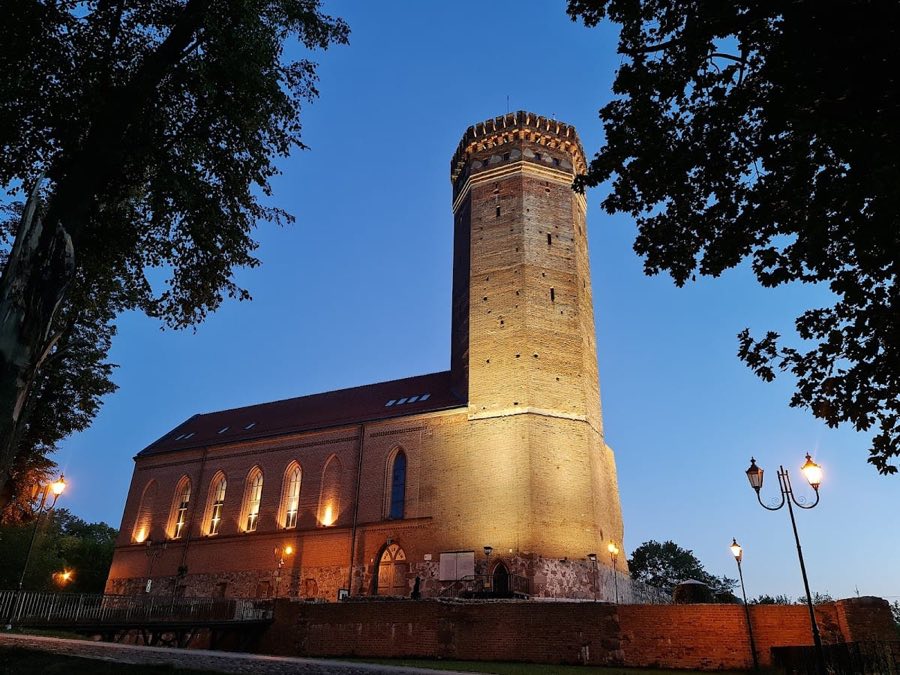
Człuchów Castle
Poland
CastleRuin14th century
No. 34479
Manor house · Poland
No. 34479 · 54.219 N, 16.853 E
Quick summary
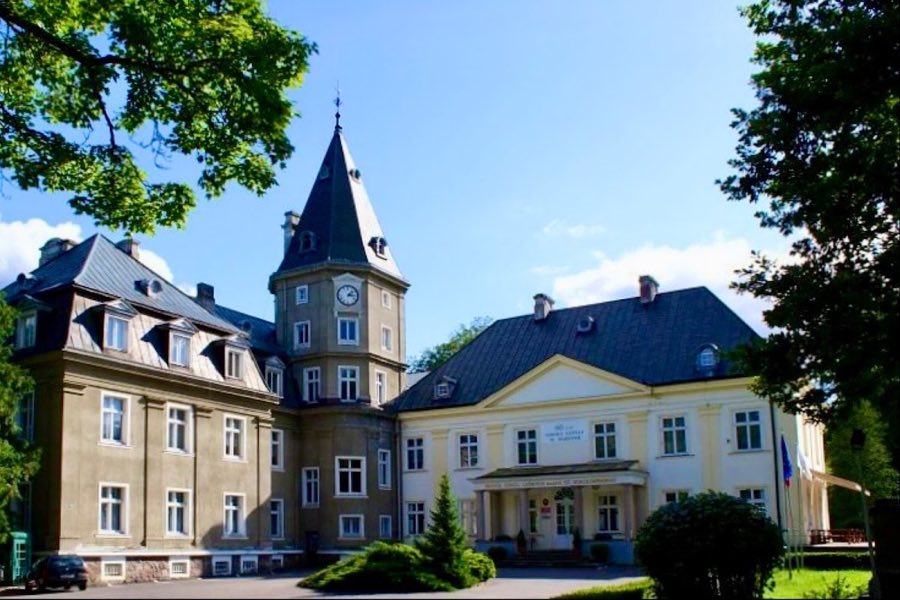
Warcino Palace is a manor house in Poland with origins associated with the 17th century.
See all castles in PolandWarcino Palace in Warcino, Poland, is a historic country palace whose core dates to the Baroque period. The estate appears in records as a noble fief in 1485 and, over centuries, passed between prominent local families, becoming a notable seat of regional landowners and later a Bismarck family estate. Its long sequence of ownership and its ties to major Pomeranian households underlie the palace’s local historical importance.
From the late medieval era into the early modern period the property belonged to the von Zitzewitz family. After the Thirty Years’ War, the estate was partly sold to the Massow family; the Thirty Years’ War was a large 17th-century conflict that reshaped many Central European estates. During the 1700s the estate moved into the hands of the von Podewils family.
At the start of the nineteenth century the palace passed by marriage into the von Blumenthal family when Auguste Countess Podewils-Varzin married Werner Count von Blumenthal in 1805. Financial difficulties in the nineteenth century forced Adalbert von Blumenthal to sell the property in 1867 due to heavy debts.
Ownership then transferred into the circle of the Bismarck family through Otto von Bismarck, whose wife had grown up on a neighboring estate. Otto took a personal interest in the park and surrounding woods, using them for rest and recreation, and his wife Johanna von Puttkamer was interred at Varzin. Later family members carried out further alterations to the house and grounds.
In the early twentieth century Werner, often named Klaus or Nikolaus Count von Bismarck (1896–1940), was a locally known politician and major landholder. Around 1914 the main Varzin estate measured roughly 565 hectares, with Nikolaus Count von Bismarck listed as owner and an estate manager in place, and some modern agricultural technology in use. By 1939 the holdings associated with Varzin had expanded to include several large tracts and outlying manors, with the estate itself and multiple forests and manors recorded in hectares and managed by tenants and inspectors.
The palace remained in Bismarck ownership until the Red Army occupied Pomerania in 1945. During the Soviet advance the last resident, Countess Sybille von Bismarck, chose not to leave and took her own life in March 1945 at age eighty-one; she was buried in the family mausoleum on the grounds. The official heir was Count Rule von Bismarck (1920–1991), who later served as a reserve officer and lived as an agronomist in Chile. After the war the building was put to institutional use: from 1946 it functioned as a training center and in 1951 a forestry school was established at the site. The family mausoleum on the property was destroyed in 1957.
The palace complex centers on a Baroque-era main block around which later wings and attachments were built. The original manor core retains its Baroque character while successive owners enlarged the house in distinct phases. In the eighteenth century side wings were added to either side of the central block, and later a square annex with a flat roof was attached. A Neo-Baroque addition was built in a subsequent phase, creating an irregular but coherent ensemble that reflects the estate’s changing needs over time.
Inside the palace visitors can find rooms linked to the nineteenth-century Bismarck period. One notable interior feature is Otto von Bismarck’s study, preserved with its original furnishings, and a large tiled stove made in Silesia remains in place in that suite. These fittings illustrate the building’s use as a family residence and the survival of selected household fixtures.
Outbuildings and the designed landscape form an important part of the site. Opposite the main house stands the former carriage house, which has been converted to serve as an educational and training building. The grounds contain a large landscape park that historically included Johanna von Bismarck’s rose garden. The estate also once held a family mausoleum and the burial places of the family’s dogs; the mausoleum was demolished in 1957. The overall condition of the principal elements ranges from preserved interiors and reused service buildings to landscape areas that reflect earlier garden arrangements.
No. 17509
No. 85796

No. 28307
No. 75459
Comments
Comments for Warcino Palace will require a verified account before posting.
We'll send a verification link before your first comment is published.