No. 20496
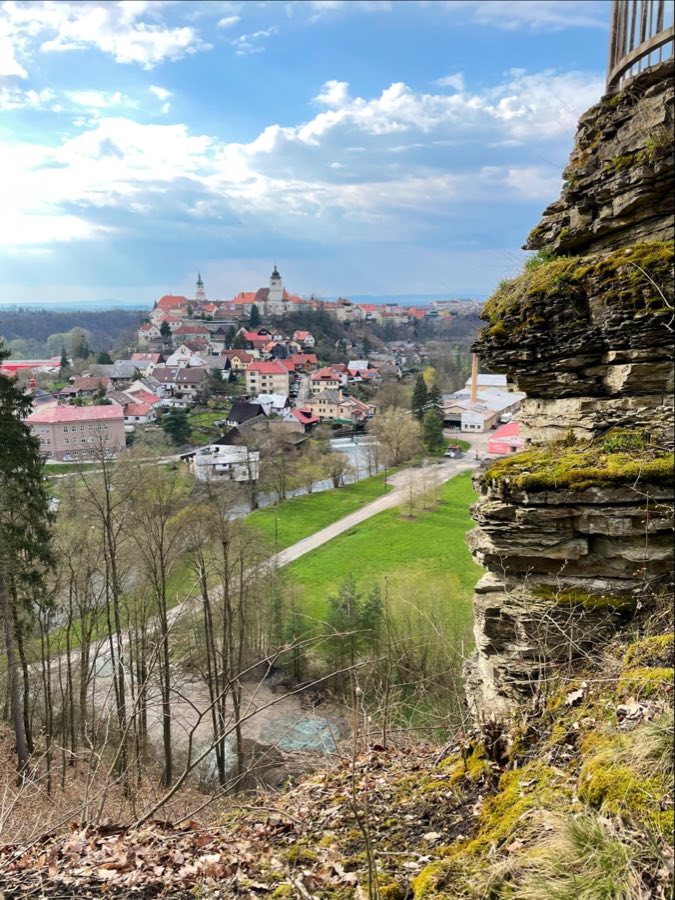
Výrov Castle
Czechia
CastleRuin14th century
No. 45883
Château · Czechia
No. 45883 · 50.265 N, 16.116 E
Quick summary
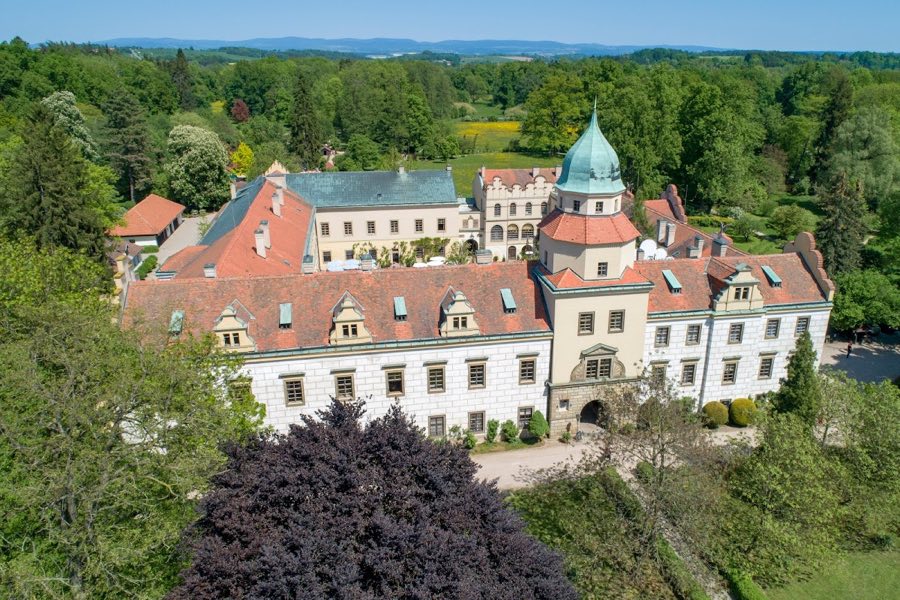
Opočno Castle is a château in Czechia with origins associated with the 16th century.
See all castles in CzechiaOpočno Castle is situated in the town of Opočno, within the modern Czech Republic. Its origins trace back to a fortified settlement established by early inhabitants of the region, serving as a defensive stronghold on the Czech side of an important route connecting Bohemia to Kłodzko in present-day Poland.
The earliest known reference to the site comes from 1068, when Cosmas of Prague mentioned a fortress at this location. Archaeological investigations have confirmed occupation dating as far back as the late Stone and Bronze Ages, revealing the site’s long-standing strategic significance. During the medieval period, around the year 1330, the Drslavic noble family erected a Gothic castle on the site, replacing earlier fortifications. This structure included a chapel dedicated to St. Andrew and functioned as an important defensive position along the trade and military route.
In 1495, ownership passed to the Trčka of Lípa family, who initiated a substantial transformation during the mid-16th century. Vilém Trčka, inspired by Renaissance architecture seen during his travels in Italy, reshaped the fortress into a Renaissance-style chateau between 1560 and 1567. This Renaissance phase included the rebuilding of the chapel of St. Andrew into a larger Church of the Holy Trinity, intended as the family’s burial place. Jan Rudolf Trčka later contributed to the estate by founding an elegant Renaissance garden and a summer pavilion in 1602.
The Trčka family’s male line ended tragically in 1634 when Adam Erdman Trčka was murdered, leading Emperor Ferdinand II to confiscate the property. Shortly thereafter, in 1635, the castle was acquired by the Colloredo family as a reward for their loyalty during the Thirty Years’ War. The Colloredos undertook significant renovations following a devastating fire in the 1690s, transforming the castle with Baroque stylistic elements under the guidance of architect Giovanni Battista Alliprandi. Among the additions was a chapel devoted to St. Anne, enhancing the castle’s religious and cultural prominence.
Throughout the following centuries, the castle remained in the hands of the Colloredo-Mansfeld family. It gained historical importance during the Napoleonic Wars, notably hosting secret political talks in June 1813 attended by key figures such as Russian Tsar Alexander I, Austrian Chancellor Metternich, and Prussian King Frederick William III. The family maintained ownership until 1942, when Nazi authorities confiscated the estate due to the family’s opposition to the occupation.
After World War II, the Czechoslovak government took possession of Opočno Castle under the Beneš decrees, which governed post-war property redistribution. In the 1990s and onward, descendants of the Colloredo-Mansfeld family pursued restitution claims, resulting in complex legal disputes and intermittent restoration of ownership rights. As of the early 2020s, the castle remains under state control, with parts of the castle’s movable collections partially returned to the family.
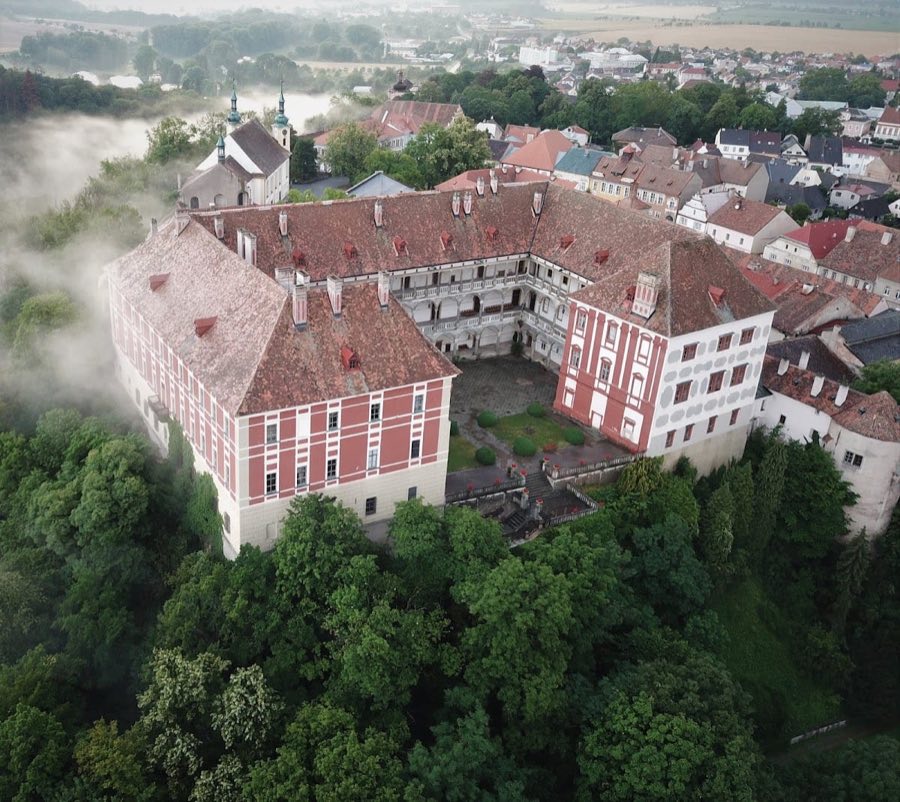
Opočno Castle is arranged as a three-winged, two-story complex enclosing an inner courtyard. A fourth wing, originally part of the rectangular formation, has been replaced by a terrace offering views of the adjacent English park and distant mountains, reflecting later adaptations of the grounds.
The oldest preserved element of the original medieval fortress is a distinctive round tower known as the Well Tower. This structure features an oriel, a projecting window supported by brackets, and underwent significant Renaissance modifications that altered its original design. While once thought solely to provide water, the tower’s exact original role—whether primarily defensive or utilitarian—remains uncertain. Its sturdy construction and prominent placement highlight its importance within the castle’s fortifications.
During the Renaissance rebuilding phase in the 1560s, arcades were added along the northern and western sides of the courtyard. These open corridors are adorned with sgraffito decorations, a technique where layers of plaster in contrasting colors are etched to create ornamental patterns, showcasing Italian Renaissance influence. The castle chapel of St. Andrew was transformed into the Church of the Holy Trinity in this period, designated as a burial site for the Trčka family and contributing to the complex’s spiritual functions.
In the wake of a serious fire at the end of the 17th century, the Colloredo family executed a series of Baroque style renovations. This included erecting a new southern wing, altering roofs and façades, and constructing the chapel of St. Anne in the southeastern part of the castle. These changes, directed by Giovanni Battista Alliprandi, integrated Baroque aesthetics into the existing Renaissance framework and enhanced the castle’s architectural diversity.
Beyond the main residential buildings, several ancillary structures enrich the site. A late Renaissance garden with a summer pavilion was established in the early 17th century, reflecting the era’s appreciation for orderly green spaces. A ball house dating from 1635 spans the town’s former moat, indicating recreational uses within the castle grounds. Additionally, an administrative building was constructed in the early 18th century at the northwest corner, likely serving estate management purposes.
Surrounding the castle is an extensive 22-hectare park designed in the English garden style. This landscape features rare tree species, ornamental ponds, cascading waterfalls, greenhouses, and an orangery, demonstrating the owners’ interest in natural beauty and horticulture. Close to the Church of the Virgin Mary lies a family crypt established in 1810, serving as a final resting place for members of the noble families connected to the castle.
Inside, the castle showcases richly decorated rooms with stucco work in Rococo and Baroque styles, especially evident in the representative salon and selected second-floor chambers in the western wing. A viewing terrace was created by removing a substantial eastern wall segment, offering expansive sightlines across the estate.
Opočno Castle holds diverse collections of art and cultural artifacts. Its large painting gallery contains works from the 16th to 18th centuries by Italian, Dutch, and Czech painters. The museum exhibits hunting trophies and ethnographic items from Africa and America. It also houses one of the Czech Republic’s largest collections of arms, including weaponry originating from the Orient. The castle library contains approximately 12,000 volumes, with valuable Bohemian works among them. Some books were brought from Paris, enhancing the library’s historical and cultural significance.
Restoration efforts during the late 20th century revived the castle’s arcades and façades, safeguarding its artistic heritage. The reinstated collections have allowed Opočno Castle to serve not only as a preserved historical monument but also as a site embodying the cultural legacy of its successive noble owners. The castle has further reached audiences as a setting for various film and television productions, underscoring its enduring visual appeal.
No. 20496
No. 90554
No. 47581
No. 35595
Comments
Comments for Opočno Castle will require a verified account before posting.
We'll send a verification link before your first comment is published.