No. 20335
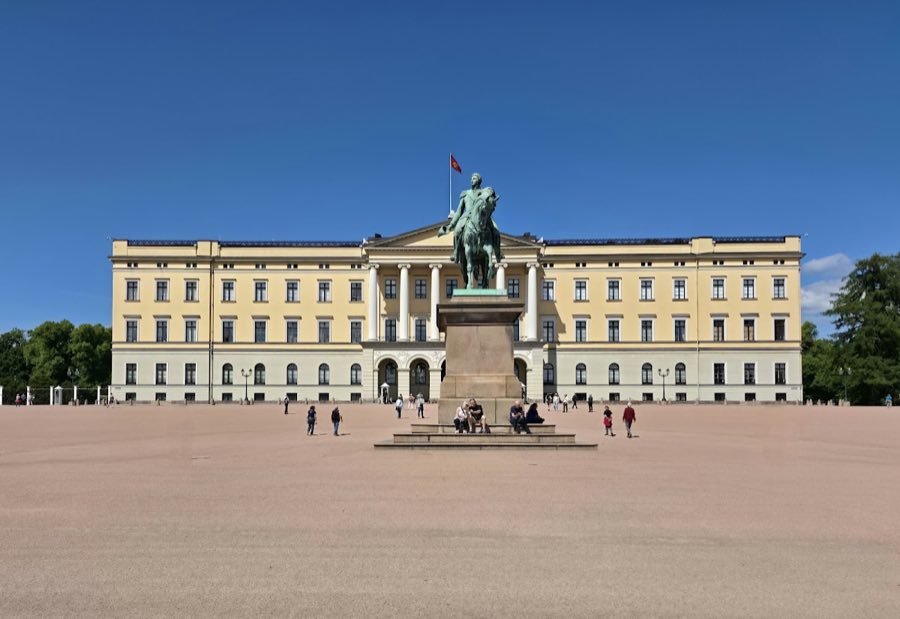
The Royal Palace, Oslo
Oslo, Norway
PalaceRestored19th century
No. 73461
Palace · Norway
No. 73461 · 59.910 N, 10.692 E
Quick summary
Oscarshall is a palace in Norway with origins associated with the 19th century.
See all castles in NorwayOscarshall in Oslo, Norway is a mid-19th-century summer palace built for the Swedish–Norwegian royal household. Erected between 1847 and 1852 in a neo‑Gothic manner with elements associated later with Norway’s National Romantic tastes, the site became an important example of that architectural current in the country and a royal cultural retreat on the Bygdøy peninsula.
Construction and early royal ownership began in the 1840s when the palace was commissioned by King Oscar I and Queen Joséphine and completed in 1852. In 1863 ownership passed from King Carl IV to the Norwegian state. The building took on a public cultural role when King Oscar II opened it as a museum in 1881. Following the First World War era, in 1929 authorities decided the palace should serve as the residence for Crown Prince Olav and Princess Märtha; the plan did not go ahead because of financial difficulties and political resistance, and the couple instead acquired the estate Skaugum from Fritz Wedel Jarlsberg.
Throughout the 20th and 21st centuries the palace remained state property and was kept available to the sovereign. A thorough restoration between 2005 and 2009 reinstated the interior colours and furnishings to their mid-19th-century appearance, after which the building was reopened for guided visits in the summer season. A gallery bearing Queen Joséphine’s name was established on the grounds in 2013, inaugurated by Queen Sonja and initially displaying graphic prints including works by the Queen herself. After a period in the 1990s when the palace was remodelled and opened to the public as a museum, the site continued to be maintained as a state-held royal property; in 2022 the summer palace was closed to visitors because of extensive construction work in the surrounding park.
Oscarshall occupies a small inlet, Frognerkilen, on the Bygdøy peninsula and sits within a park that reaches down to the fjord. The layout links the main house with several secondary buildings and a landscaped setting that includes an open pavilion in the grounds. The ensemble is regarded as a leading Norwegian example of neo‑Gothic design and an important expression of the National Romantic aesthetic introduced in the 19th century, with the overall composition showing influence from English neo‑Gothic palace models.
The ancillary structures and the pavilion form part of the estate’s working and recreational spaces and stand within the parkland that frames the main building. These outbuildings contribute to the historic composition of house and grounds and remain integral to the property’s character. The park connects directly to the shoreline and has been the focus of recent large-scale work that temporarily affected public access.
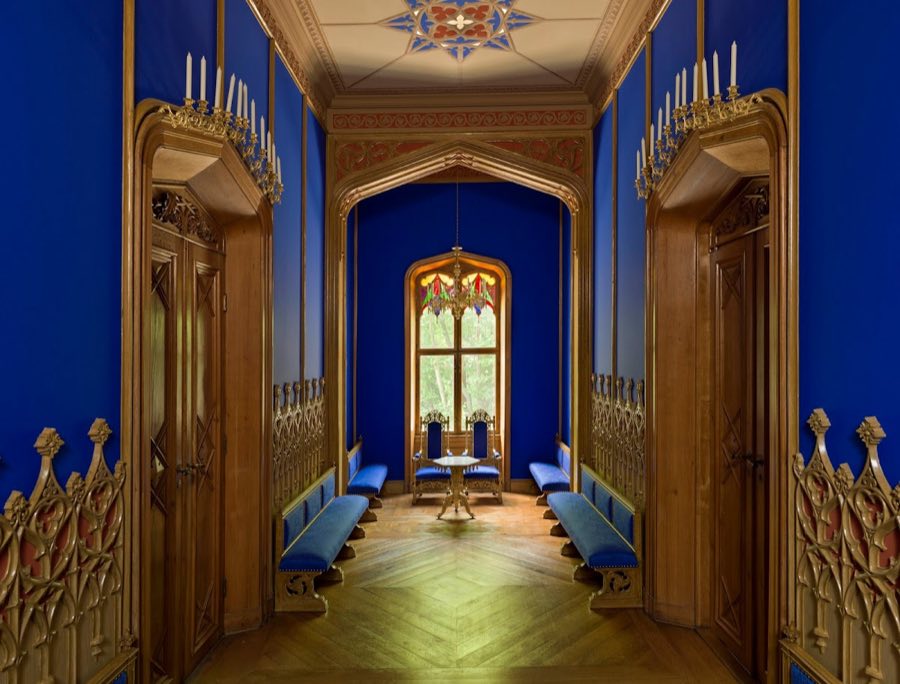
Inside, the palace interiors were executed and furnished by Norwegian artists and craftsmen. The dining hall features wall paintings by Joachim Frich, Adolph Tidemand, and Hans Gude, while the drawing room is fitted and furnished to recall the atmosphere of an old Norwegian guildhall. A comprehensive restoration completed in 2009 returned interior colours and furnishings to their appearance from about 1859, enabling the site to function as a museum with historic interiors preserved for public interpretation, subject to temporary closures for park construction.
No. 20335
No. 57268
No. 88838
No. 57521
Comments
Comments for Oscarshall will require a verified account before posting.
We'll send a verification link before your first comment is published.