No. 50497
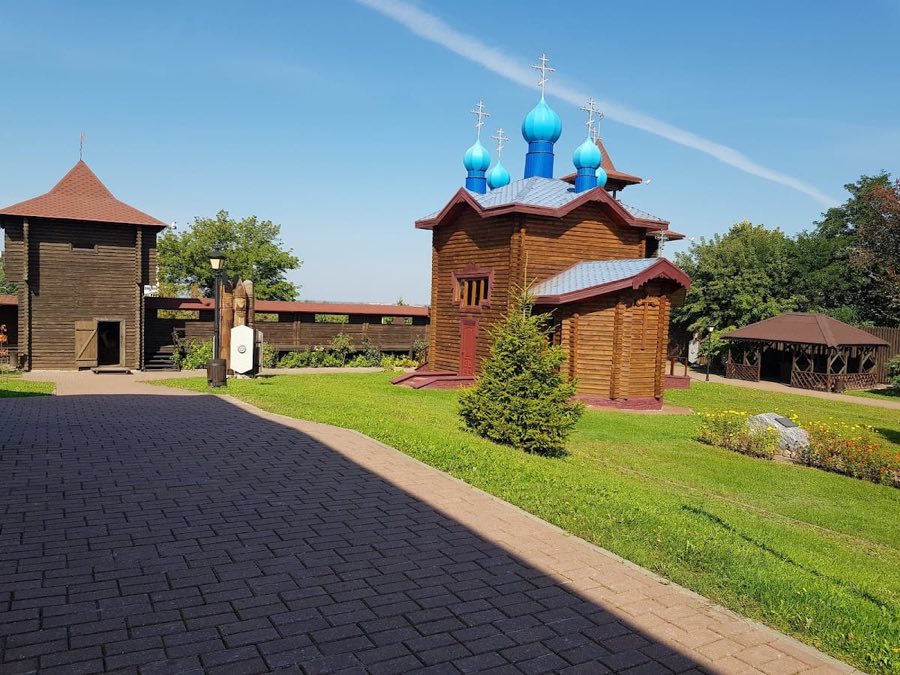
Mazyr Castle
Belarus
CastleRestored14th century
No. 20773
Castle · Ukraine
No. 20773 · 51.316 N, 28.796 E
For events
Ovruch Castle is marked as a château or castle venue lead. Capacity, indoor/outdoor spaces, catering rules, and accommodation options are published only after public verification.
Event types: Private events, Cultural gatherings, Filming and photography
Quick summary
Ovruch Castle is a castle in Ukraine with origins associated with the 10th century.
See all castles in UkraineOvruch Castle, located in the city of Ovruch in present-day Ukraine, was originally constructed by the medieval East Slavic civilization within the territory of the Ovruch principality. This fortress served as a military and administrative center for the region from the 10th century onward.
The earliest historical references to Ovruch Castle date back to the late 10th century, notably connected with the military activities of Prince Oleg Sviatoslavich in 977. Some historians propose that during this period, Ovruch took the place of the former Drevlyan capital, Iskorosten, which had been destroyed by Princess Olga in 945. Strategically positioned on a raised hill near the meeting point of the Vručaj stream and the Noryn River, the site was naturally defended by waterways and surrounding swampy terrain.
During the mid-12th century, under Prince Ryurik Rostislavich, Ovruch became the hereditary seat of the Drevlyan princes. Significant wooden fortifications were built, encompassing both the city and its castle, reinforcing its defenses. However, in 1240, the fortress was razed by the invading armies of Batu Khan. Following this destruction, it was rebuilt and served as a fortified center within the Kyiv principality, which then operated under the suzerainty of the Mongol Golden Horde.
The early 14th century saw the Putivl branch of the Olgovichi dynasty govern the Ovruch principality as vassals to the Galicia-Volhynia rulers. In the 1320s, the castle endured another assault when Gediminas, the Grand Duke of Lithuania, captured and demolished it. Soon after, in 1362, Ovruch became part of the Grand Duchy of Lithuania. The fortress was reconstructed but suffered once again in 1399 when it was devastated during a military campaign led by Edigey, a commander in Tamerlane’s forces.
By the early 16th century, the castle faced repeated Tatar incursions, with a notable raid in 1506 causing destruction. Restoration efforts culminated in 1522, leading to improved fortifications. The strongest period of the castle’s defenses emerged under starosta Yosyp Mykhailovych Khaletsky around the mid-1500s, who oversaw substantial enhancements to its military structures. A detailed description from 1552 documents the castle’s fortifications and armaments during this time.
Following the Union of Lublin in 1569, which united the Kingdom of Poland and the Grand Duchy of Lithuania into the Polish-Lithuanian Commonwealth, Ovruch and its castle gained status as a county town (starostwo), administering several nearby settlements. The castle endured further damage during the 1641 Tatar raid and the significant upheaval of the 1648 Khmelnytsky Uprising. In response to these turbulent events, King Władysław Vasa granted Ovruch Magdeburg rights, a set of town privileges providing a degree of self-governance.
In 1678, the Jesuit Collegium relocated to the castle grounds, erecting large buildings and a Roman Catholic church within the precincts. Despite this religious and educational development, the fortress was destroyed by Haidamak rebels in 1720. Although it was rebuilt around 1750, the castle never regained its earlier prominence or strength.
By the mid-18th century, the castle had fallen into disrepair, housing civil functions such as a court, storage facilities, and prison cells, reflecting its diminished military role. The Jesuit church underwent several transitions: after the suppression of the Jesuit order in 1773, it came under the Basilian monastic order, later transferred to the Orthodox Church in 1831. Renovated during 1872–1877, it became the Transfiguration Cathedral. However, the cathedral was ultimately demolished by Soviet authorities in the 1930s.
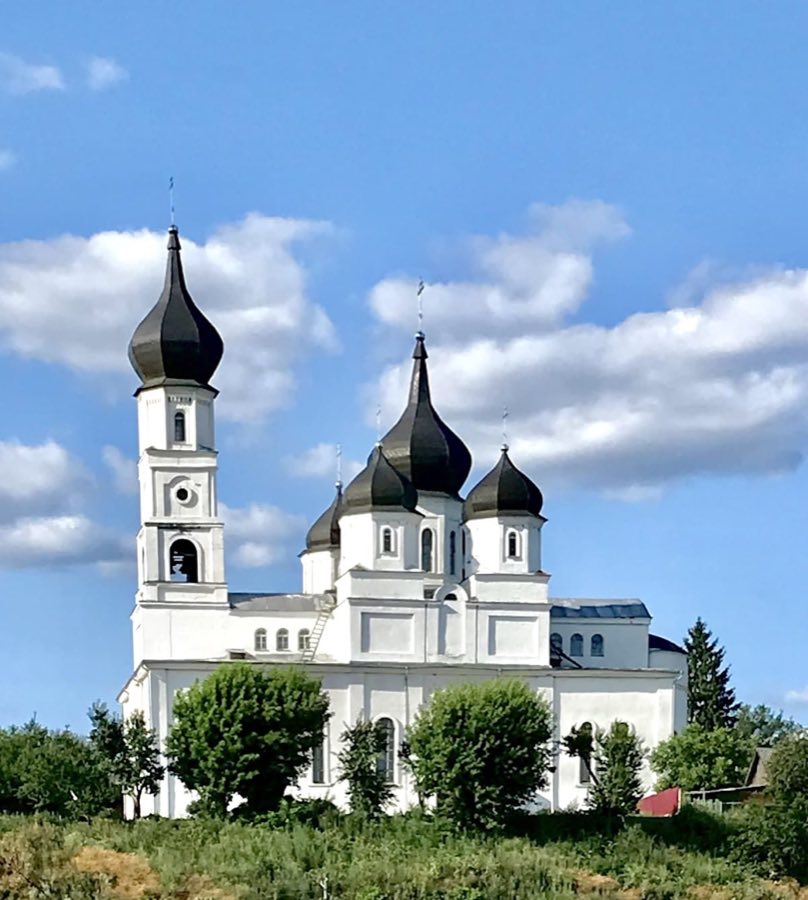
Decades later, in 1993, a new Spaso-Preobrazhensky Cathedral was constructed atop Castle Hill, occupying the historic site where Ovruch Castle once stood.
The site of Ovruch Castle was characterized by a wooden fortress with natural and artificial defenses integrated into its design. Occupying a raised area known as Castle Hill near the confluence of two waterways, the location utilized the protective qualities of the Noryn River, the Vručaj stream, and surrounding swamplands. These natural barriers were supplemented by engineered features including deep moats and earth ramparts.
The castle’s enclosure, documented in the mid-16th century, measured approximately 140 meters in length and 90 meters in width. The walls consisted predominantly of pine wood, built into a framework known as a goroden — a type of wooden fence or palisade faced with sharpened stakes. Around the fortress, earthen ramparts added elevation and defensive strength, while moats impeded direct assaults.
Within the fortress, several key structures contributed to its function. Three main towers stood guard, complemented by wooden parapets called sharpatinas and defensive openings known as hooks or gakovnitsy designed for firearms and crossbows. Records from 1552 cite the presence of 27 hooks, seven powder magazines for storing gunpowder, four handguns, and 24 iron cannonballs, attesting to the castle’s armament in the era of early artillery.
The interior contained 61 wooden enclosures that sheltered the estates of nobles and clergy, along with a church dedicated to Saints Cosmas and Damian. By the 16th century, this church was notably old and in a state of decay.
Access to the castle was controlled by a pile-supported bridge leading to the main gate, accompanied by a drawbridge and a chain mechanism that enhanced security. A secret underground passage (potaynik) connected the fortress to the Vručaj stream, providing an escape route or a concealed supply line.
The castle hill’s dimensions varied at different points, measuring about 32 meters from the front near the gate tower and similar distances along sides adjacent to the rivers. Surrounding defenses included ramparts and the moat on three sides, with the fourth side naturally protected by swamps and the river.
Nearby, a mill situated on the Noryn River played a role in the castle’s economy, while a tavern managed by the starosta regulated the brewing and sale of mead and beer within the fortress and its district.
At its peak, the castle hosted a garrison of about 20 guards stationed inside, complemented by a small field guard deployed at multiple strategic points up to 30 miles from the site.
By the late 16th and early 17th centuries, the castle featured three gates and two or three towers enclosed by a wooden palisade called an ostrog. However, later accounts from 1629 describe the fortifications as largely dilapidated: the bridge was no longer usable, gates and towers had disappeared or decayed, and the wooden fences were incomplete. Despite this decline, some artillery pieces and firearms remained within the fortress.
In the 18th century, surviving parts of the castle were adapted for civil administration, housing court chambers, storage rooms, and prison cells. The Jesuit order, after relocating in 1678, constructed large buildings and a Roman Catholic church inside the castle precincts, indicating a shift in use from purely military to religious and educational purposes.
Today, the original wooden structures have not survived. The site is marked by the modern Spaso-Preobrazhensky Cathedral, built in 1993 on Castle Hill, preserving the historical footprint of the once formidable fortress that shaped the region’s medieval history.
No. 50497
No. 15407
No. 78435
No. 92913
Comments
Comments for Ovruch Castle will require a verified account before posting.
We'll send a verification link before your first comment is published.