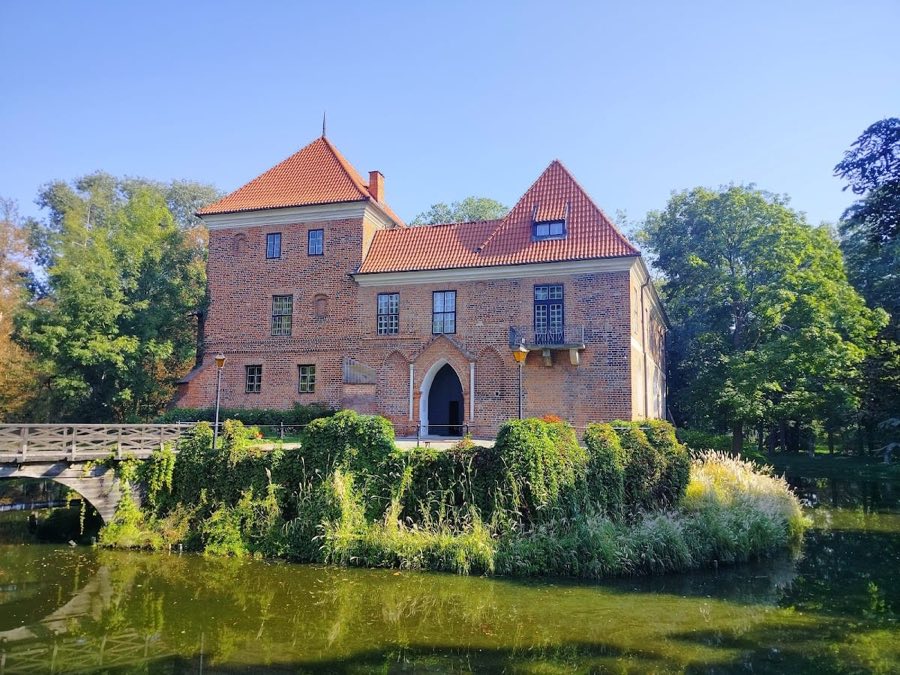
No. 64098
Oporów Castle
Poland
CastleIntact14th century
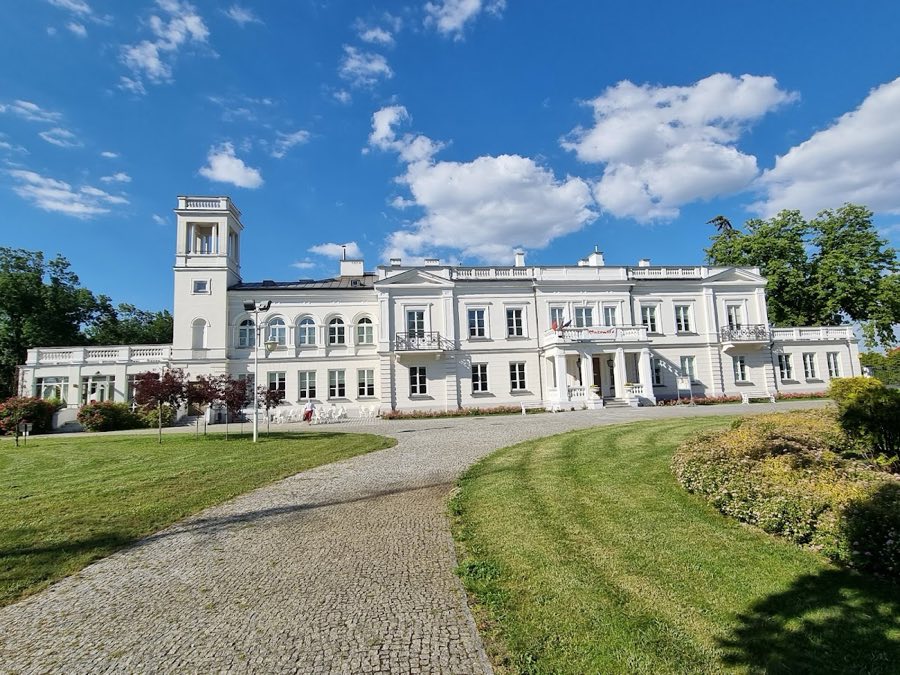
No. 84639
Manor house · Poland
No. 84639 · 52.335 N, 19.860 E
Quick summary
Palace in Sanniki is a manor house in Poland with origins associated with the 18th century.
See all castles in PolandThe Palace in Sanniki in Sanniki, Poland, is a registered town monument whose main form belongs to the late nineteenth century and which presents the character of an Italian villa. Built and altered by successive estate owners, the site gained historical note when the composer Fryderyk Chopin visited the earlier manor here in 1828. The ensemble later became an important local landmark and was preserved as part of the town’s cultural heritage.
From the late eighteenth century the Pruszak family managed the Sanniki estate, taking responsibility for its lands from 1789 and later purchasing the property outright in 1834. During the first half of the nineteenth century a manor belonging to the Pruszak family stood on this site; that house is the one Chopin is known to have visited in 1828. In 1858 Aleksander Ksawery Pruszak sold the estate together with its sugar factory to Selig Natansohn, beginning a period of ownership by the Natansohn/Natanson family.
The principal building that stands today most likely dates to the second half of the nineteenth century, probably the 1880s, a period that may be linked to the business activity around Jakub Natanson’s 1882 founding of a joint-stock company of sugar factories. Dates assigned to the palace vary; it is often given as 1880 or, more commonly, as 1910, while suggestions of an origin at the end of the eighteenth century or in the early nineteenth century are unlikely. In 1909 the estate passed by dowry into the hands of Stefan Dziewulski through his marriage to Antonina Maria née Natanson.
In the early twenty-first century the palace and its park underwent repair and adaptation between 2011 and 2013, followed by renovation and conversion to a cultural institution. With funding from regional authorities and the local commune under the Masovian Regional Operational Programme, the complex was adapted to house the European Artistic Centre dedicated to Fryderyk Chopin and was opened to the public on 20 September 2014.
The palace stands as a two-storey building arranged on an L-shaped plan, with a nine-bay main façade facing south. The front is articulated by narrow projecting sections at each outer edge and a central projection marked by a porch of four columns that supports a balcony above. On the upper floor the outer projections are finished with flat, attached columns called pilasters (flat, rectangular columns attached to the wall) and are crowned with triangular pediments.
A three-bay single-storey block attaches to the main volume on the east side. To the west a two-storey wing continues the plan and culminates in a rectangular four-storey tower that contains an opening on its highest level; together these elements produce the villa-like silhouette often associated with the building. A low roofline is hidden behind a railing called a balustrade, the small posts of which are known as balusters, and that same railing continues above the projecting sections as a low attic parapet (a wall above the roofline).
Inside, decorative paintings survive on the ceilings and walls of the first floor, with stylistic dates placed in the late eighteenth and the nineteenth centuries.
Around the palace a landscape park occupies the town centre beside the road linking Płock and Sochaczew and lies close to the parish church. The grounds were established in the first half of the nineteenth century in the landscape manner and then reshaped in 1908 by the planner Stanisław Celichowski into a more naturalistic layout while retaining earlier high-value plantings. During the restoration program carried out in 2011–2013 the complex was renovated and adapted to its present cultural use, but a terrace once supported on pillars beside the west wing and the tower was not rebuilt.
No. 64098
No. 63928
No. 99192
No. 70957
Comments
Comments for Palace in Sanniki will require a verified account before posting.
We'll send a verification link before your first comment is published.