No. 76059
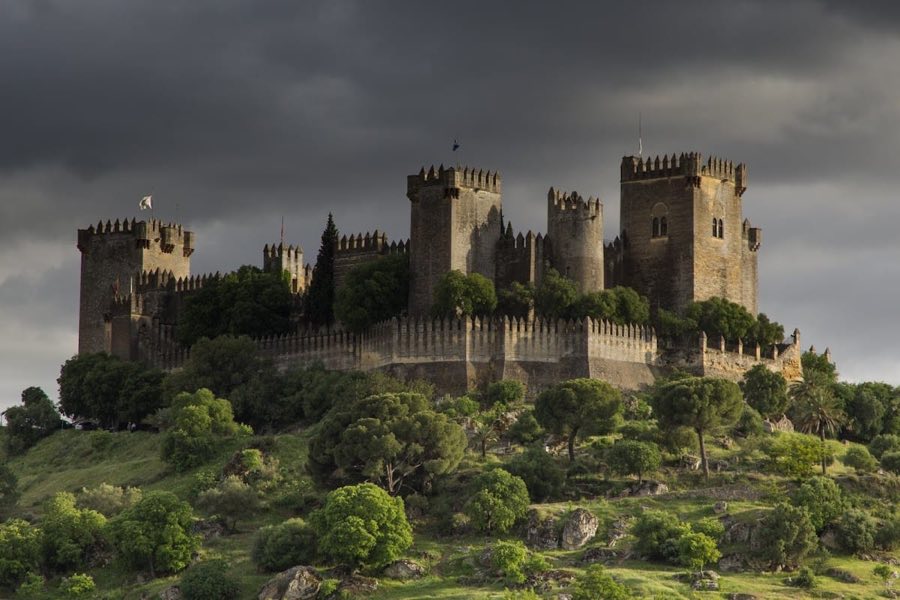
Castillo de Almodóvar del Río
Spain
CastleRuin2nd century
No. 90495
Palace · Spain
No. 90495 · 37.701 N, 5.285 W
For events
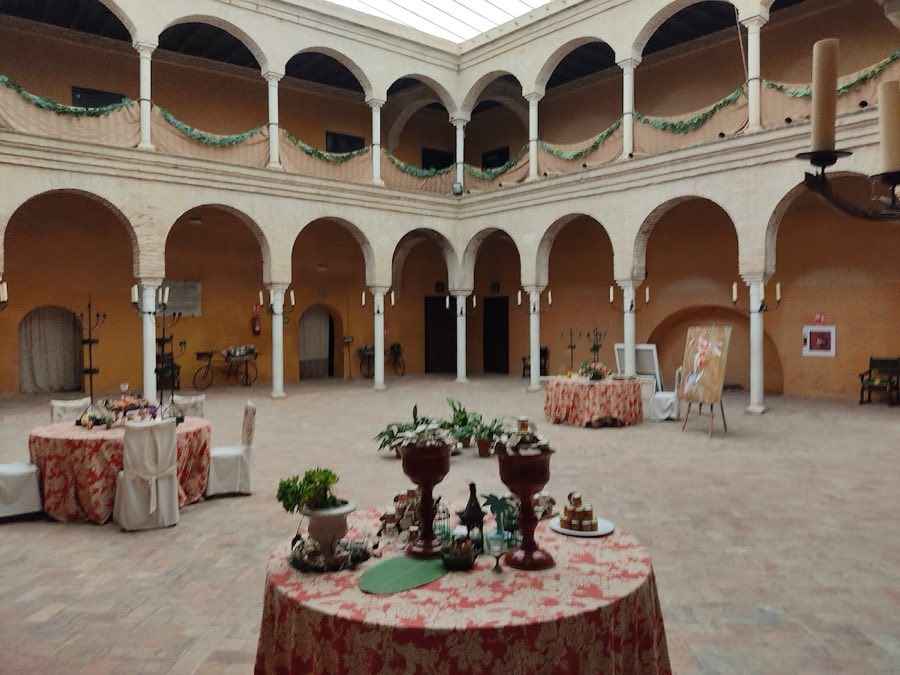
Palacio de Portocarrero, Palma del Río is marked as a château or castle venue lead. Capacity, indoor/outdoor spaces, catering rules, and accommodation options are published only after public verification.
Event types: Weddings, Private events, Cultural gatherings, Filming and photography
Ceremony spaces: Ceremony setting to verify
Quick summary
Palacio de Portocarrero, Palma del Río is a palace in Palma del Río, Spain with origins associated with the 14th century.
See all castles in SpainThe Palacio de Portocarrero, Palma del Río, Spain is a historic urban residence whose origins reach back to the Roman period, when a Roman proconsul established his dwelling on the site in 105 CE. The complex later acquired elements from Islamic rule and displays Mudejar garden arrangements alongside medieval fortifications, and it played repeated roles as a noble residence and administrative seat across the Middle Ages and early modern era.
In the early phase, the Roman proconsul Aulus Cornelius Palma made his home at this location in 105 CE and rebuilt the local settlement’s ramparts, giving the place the name by which it is still known. Those Roman actions established the site as an inhabited, defended locus within the town that would remain important in later centuries.
During the centuries of Muslim rule, an almoravid/Almohad-style alcázar was established on the plot by order of Sultan Abu Yacub in the eleventh century, and defensive walls from the Almohad period survive around the gardens and compound and are dated to the twelfth century. The site thus became a fortified domestic complex within the urban fabric.
After Christian forces reconquered the town, King Alfonso XI granted the lordship of the town and its castle to the admiral Egidio Bocanegra on 2 September 1342. The property remained in noble hands and in 1486 hosted the wedding banquet of Gonzalo Fernández de Córdoba, known as the Grand Captain. In 1505 Luis Portocarrero Bocanegra completed construction begun by earlier family generations, incorporated the residence into his family holdings, and gave the house his family name and emblems.
The palace continued to figure in elite life: in 1629 the future Cardinal Luis Fernández Portocarrero, who would later become archbishop of Toledo and major chancellor of Castile, was born within the house. The building sustained heavy damage in the 1755 Lisbon earthquake and after that event it served practical, agricultural functions as storage and as a farmhouse.
In 1868 the Moreno de la Cova family acquired the property at public auction and kept it in use as a grain store with a dwelling. The structure was largely destroyed during the Spanish Civil War and stood in ruin for decades. Restoration work began in 1989 under the direction of Cristina Ybarra Sainz de la Mata and Enrique Moreno de la Cova, and the compound was gradually repaired and returned to domestic use. The restored palace remains a private residence of the Moreno de la Cova family and has been used as a location for the films Kingdom of Heaven (2004) and Re-Emigrantes (2016).
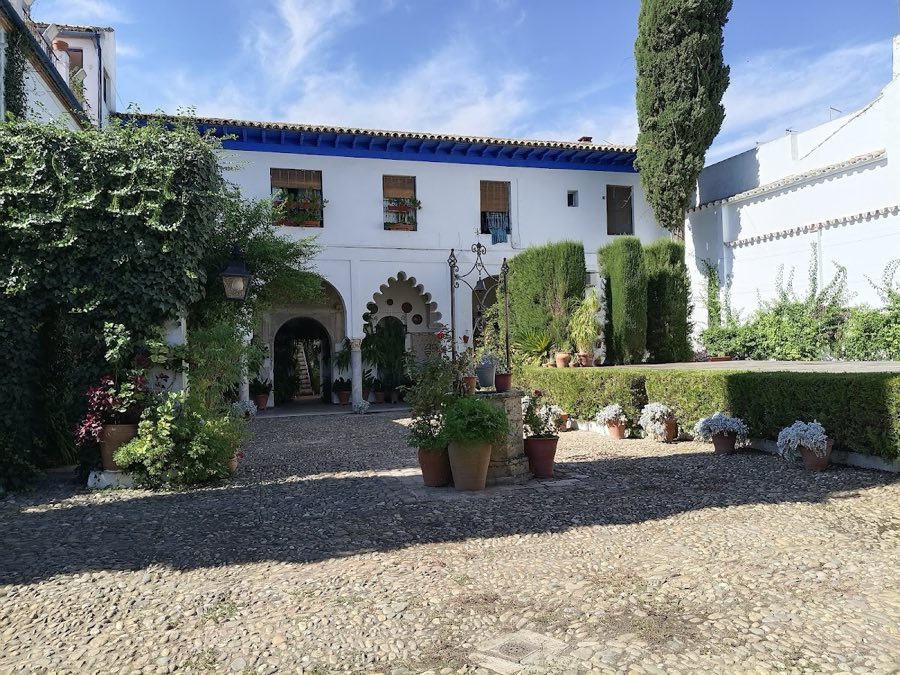
The complex occupies a plot within the town’s historic centre and combines remains from the Roman period, Islamic fortification, and later noble domestic construction. Gardens laid out in the Mudejar manner are set within an enclosure formed by medieval Almohad walls, dated to the twelfth century. These walls define the garden perimeter and frame the palace compound as a single, layered historic ensemble.
Archaeological and architectural traces record the early Roman phase: the residence established in 105 CE by Aulus Cornelius Palma stood adjacent to the later palace area, and the town walls he reconstructed were built using a notably robust mortar. These Roman-built defensive elements underpinned subsequent urban development and were incorporated into later fortification schemes.
Elements attributed to the Islamic period include the alcázar raised by order of Abu Yacub in the eleventh century. The surviving Almohad walls around the gardens date to the following century and show the compound’s medieval military and domestic functions. Over time the palace fabric was adapted for storage and agricultural use after the 1755 earthquake, was largely destroyed during the Spanish Civil War, and was subject to extensive repair beginning in 1989. Today the restored buildings and the enclosed Mudejar gardens stand in use as a family residence, with the restored condition reflecting the long program of conservation and rebuilding undertaken in the late twentieth century.
No. 76059
No. 22534
No. 87943
No. 17970
Comments
Comments for Palacio de Portocarrero, Palma del Río will require a verified account before posting.
We'll send a verification link before your first comment is published.