No. 98904
Stadtpalais Liechtenstein
Austria
PalaceRestoredFor events17th century
No. 74700
Palace · Austria
No. 74700 · 48.207 N, 16.355 E
For events
Palais Auersperg is marked as a château or castle venue lead. Capacity, indoor/outdoor spaces, catering rules, and accommodation options are published only after public verification.
Event types: Private events, Cultural gatherings, Filming and photography
Quick summary
Palais Auersperg is a palace in Austria with origins associated with the 18th century.
See all castles in AustriaPalais Auersperg in Vienna, Austria, is an early 18th-century Baroque city palace erected between 1706 and 1710 for Hieronymus Capece de Rofrano. The house was conceived in the grand Baroque manner by leading architects of the period and quickly became a site of aristocratic residence and cultural activity, hosting noble households, musical life, and later political events that tied it to Vienna’s public affairs.
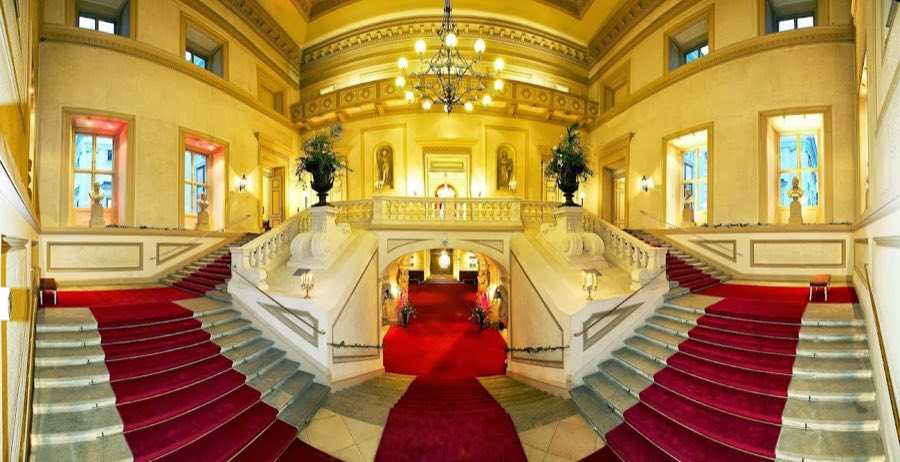
Construction and early ownership unfolded in the first decades of the 1700s. The palace rose on the grounds of the former Rottenhof and was completed around 1710. During the second decade of the century the central part of the building underwent substantial remodelling, and further alterations were made around a century later. A court stonemason from Kaisersteinbruch carried out important stonework, and a hard local limestone was used for the ceremonial stair and exterior columns.
From the mid-18th century the palace served as a winter residence for Prince Joseph of Saxe-Hildburghausen. Musical life became central to its identity: Giuseppe Bonno directed music there, weekly winter music gatherings were held in the 1750s, and from 1759 the prince engaged Christoph Willibald Gluck to lead the concert programs. In 1777 the palace passed to Johann Adam, Prince Auersperg. From 1786 the house hosted musically significant social occasions, including performances of Wolfgang Amadeus Mozart’s Idomeneo and Joseph Haydn’s Seven Last Words of the Saviour on the Cross.
The Auersperg family retained the palace through a series of successions and adoptions: Johann Adam adopted his nephew Carl Auersperg, who in turn and together with his wife later adopted a further heir, Prince Vincenz Karl, who succeeded in 1817. Between 1827 and 1837 Prince Gustav of Vasa, known in Austria as Prince Wasa, lived there with members of the Swedish royal household while disputes over his inheritance kept him away from his homeland.
In 1864 a ballroom was added along the garden frontage on Lerchenfelder Straße. After the death of its builder in 1872 the space was adapted for institutional rental use; it was returned to ballroom function in 1901. Nineteenth-century urban development altered the palace’s setting when a new parallel street of the Ringstraße project removed the fenced honor court and brought the roadway up to the façade.
During the twentieth century the building served varied administrative and cultural roles. Between 1923 and 1935 the federal monuments agency and a film firm were briefly housed there. In 1940 Ferdinand, Prince Auersperg, inherited the house; it passed in 1942 to his sister Christiane Croÿ, who lived in the upper rooms during the Second World War and sheltered resistance fighters, a fact commemorated by a plaque beside the main entrance. In 1944 the provisional Austrian National Committee (known as O5) was formed in the palace. In 1945 the Interallied Military Police confiscated the building and used it for headquarters.
Private ownership resumed after the war. Alfred Weiss bought the palace in 1953 and commissioned alterations in 1953–1954 that introduced a restaurant, a winter garden (orangerie), event rooms, and a large terrace; a coffeehouse seating some six hundred patrons opened there. After Weiss’s death in 1987 his heirs sold the property to a corporate owner. The palace changed hands again in the 2000s through a series of high-value sales and in 2021 was purchased by the Austrian entrepreneur Jürgen Hesz.
From the late twentieth century onward the palace has operated chiefly as a venue for formal balls and large events; the Rosenball continued there until 2014. The building’s twentieth-century nickname, Rosenkavalier, comes from Hugo von Hofmannsthal’s librettal character Octavian Rofrano in the 1911 opera Der Rosenkavalier, and for a time the opera’s title was used as an informal name for the house.
The palace presents as a Baroque urban mansion centered on a richly appointed main floor and a formal street façade. The original plan dates to the years around 1706–1710 and preserves the sequence of representative reception rooms on the principal level, while later campaigns altered the central section in the early 1720s and again about a century later. Masonry work for the house included the use of a dense local limestone from Kaisersteinbruch for the ceremonial staircase and the building’s columns, executed by a court master stonemason.
Along the garden side a large ballroom erected in 1864 survives only in its history: it was adapted for institutional use after 1872, restored to dancing use in 1901, and suffered heavy destruction in the Second World War so that the ballroom structure was subsequently removed. The palace once stood behind a fenced honor court, an outer ceremonial courtyard; nineteenth-century remodelling of the Ringstraße brought the new parallel roadway directly to the building, and the fenced court was lost.
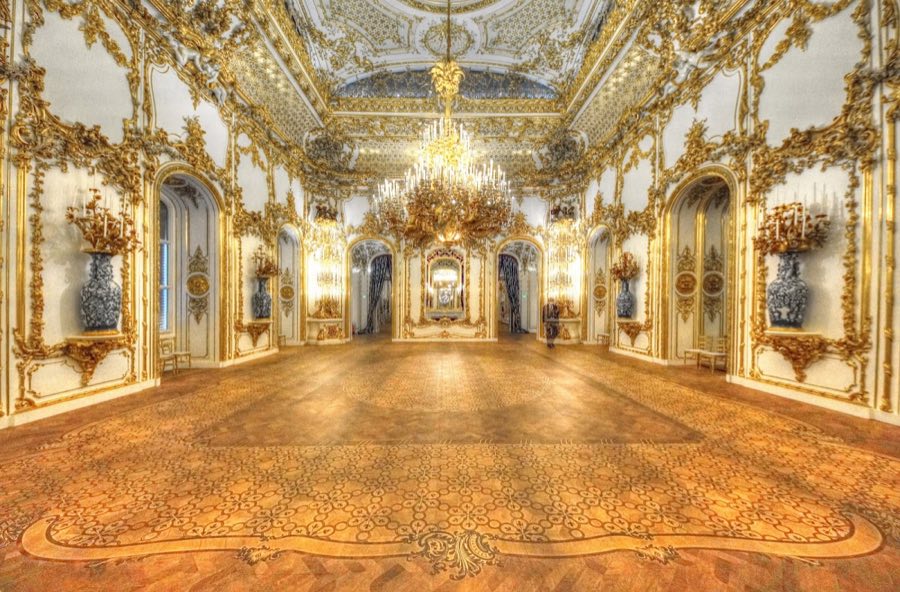
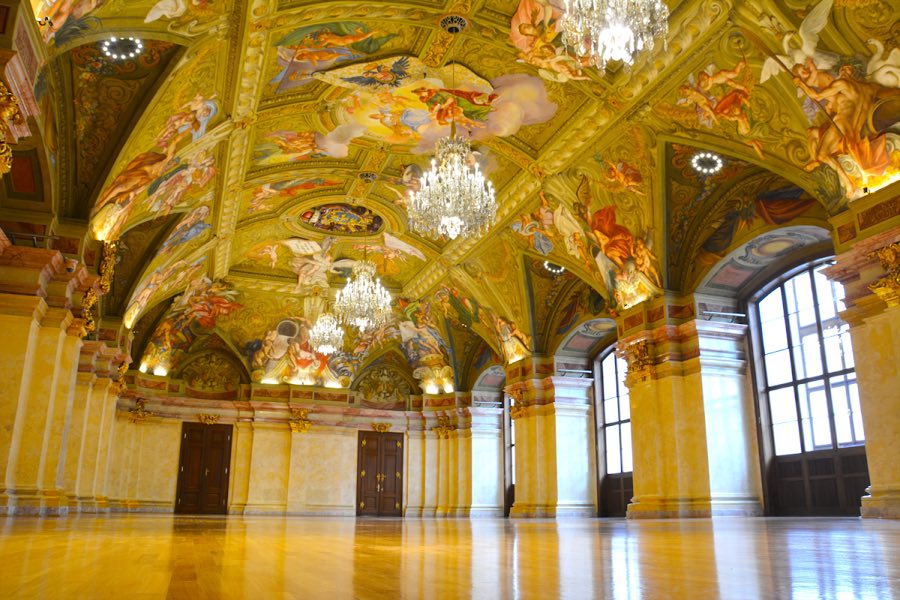
Mid-century additions from 1953–1954 introduced a winter garden (orangerie), a restaurant, auxiliary event rooms, and a wide terrace before the orangerie, and a large coffeehouse seating roughly six hundred was established in those rooms. The main reception level, the beletage, contains eleven named halls, including the Maria Theresia Hall, the Rosenkavalier Hall, the Blue Salon, the Crown Prince Rudolf Hall, the Music Salon, a Loggia, the Library, the Gluck Gallery, the Emperor’s Hall, the Idomeneo Hall, and an Old Restaurant space, together forming a suite capable of holding up to one thousand people. The representative state rooms on the principal floor have been preserved; parts of the upper floor were converted to office use while the beletage underwent restoration work in the 2010s.
A plaque at the main entrance commemorates the sheltering of resistance fighters during the Second World War.
No. 98904
No. 69057
No. 40528
No. 99382
Comments
Comments for Palais Auersperg will require a verified account before posting.
We'll send a verification link before your first comment is published.