No. 63286
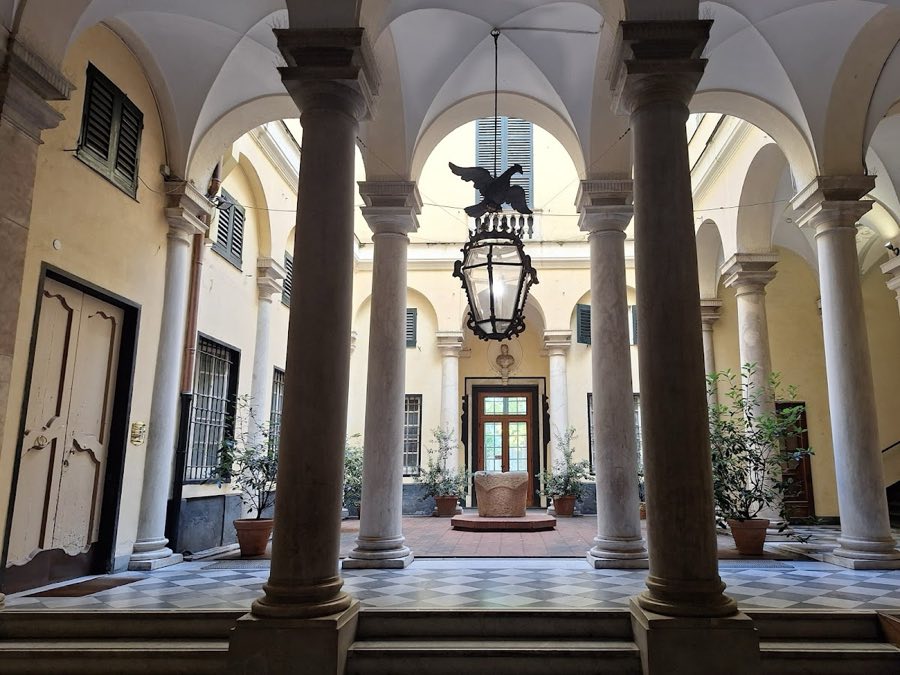
Palazzo Gio Battista Spinola
Italy
PalaceIntact16th century
No. 92780
Palace · Italy
No. 92780 · 44.408 N, 8.935 E
Quick summary
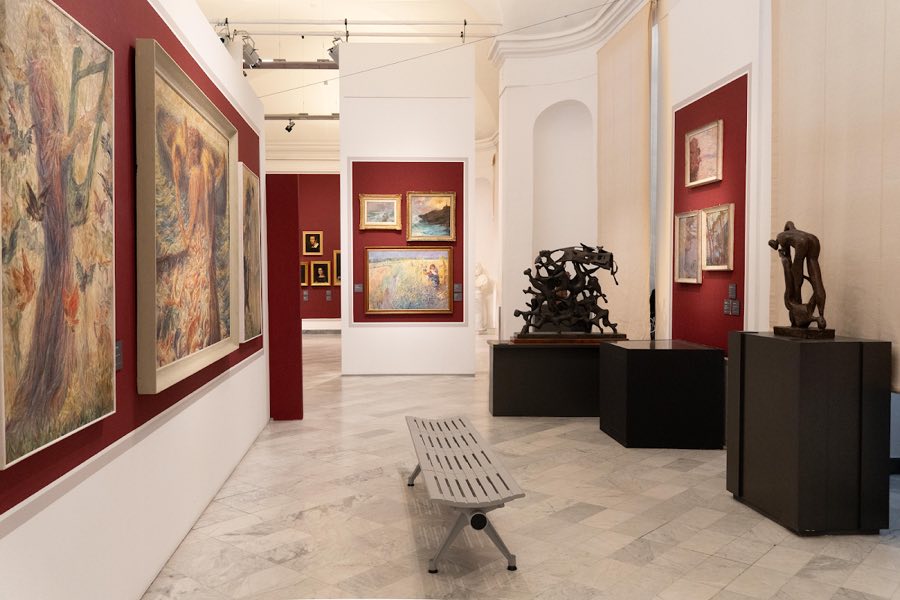
Palazzo dell'Accademia Ligustica is a palace in Italy with origins associated with the 19th century.
See all castles in ItalyPalazzo dell’Accademia ligustica di belle arti in Genoa, Italy, is a 19th-century neoclassical palace built in the early 1800s on the site of a former Dominican convent and church. Erected in the Ligurian neoclassical manner, the building replaced medieval religious structures and became part of a wider remaking of the city centre, giving it civic and cultural significance in the modern era.
Work on the new palace began in the late 1820s and concluded in the early 1830s, carried out at the same time as the demolition of the old church and convent of Saint Dominic. The first parts completed were the porticoes on the north and west sides; these covered walks were conceived with a military use in mind and the original urban plan envisaged a single portico wrapping the whole square.
After construction, the site acquired an important public role. When the adjacent area was redeveloped to host the Carlo Felice Theatre on the former church plot, the palace housed both the municipal Berio Library and the Ligustica Academy from the 1830s through most of the twentieth century. The building’s east face originally rose directly against the hillside and contained the Santo Varni hall; around 1900 the opening of new streets, including Via XX Settembre and Via Ettore Vernazza, allowed extension of the portico toward the east and the removal of the Varni hall to accommodate the changed street line.
During the Second World War the palace suffered several structural hits from aerial bombardments on Genoa and required major repair. In the postwar decades the damaged structure was repaired under a dedicated reconstruction project. From 1980 onward the building has also served as the home of the Academy’s museum, continuing its long association with art education and the city’s cultural institutions.
The palace presents a formal 19th-century Ligurian neoclassical layout, with a regular façade and covered walkways along multiple sides. The north and west porticoes, part of the original construction, shelter the ground-level walkways; the east portico was added around 1900 when new streets were opened. Much of the exterior retains the nineteenth-century design vocabulary adapted to the reconfigured urban setting.
An octagonal entrance atrium (the main entrance hall) sits immediately inside the principal doorway and displays four marble statues set into wall niches. Two represent Luca Cambiaso and Filippo Parodi, carved by Luigi Orengo in 1935, and two portray Bernardo Strozzi and Bernardo Schiaffino, executed by Guido Galletti in 1939. From the atrium a grand staircase rises, formed of cantilevered ramps that sweep around a central well and make prominent use of multicoloured marbles. The staircase remains the main internal route linking floors and retains its polychrome finishes.
Near the first landing stands a statue of Saint Catherine of Alexandria, probably attributed to Guglielmo della Porta and the workshop of his father Giovanni Giacomo; this figure was transferred from the sixteenth-century Acquasola gate when that gate was taken down in 1837. At the top of the stair flights two sixteenth-century statues, representing Saints James and Philip and rescued from a church of the same name, occupy prominent positions. Opposite one balustrade sits a late nineteenth-century bust of the painter Nicolò Barabino by Antonio Allegretti, dated 1894.
On the second floor a covered gallery (loggia, a covered gallery) is supported by large monumental columns reclaimed from the demolished San Domenico church. The gallery walls contain four niche-mounted busts: a bust of the palace’s original designer (sculpted by Giovanni Battista Cevasco, 1844), and later nineteenth-century commemorative busts of Ernesto Rayper (by Giulio Monteverde, 1874), Pietro Resasco (by Agostino Allegro, 1874) and Raffaele Granara (by Vittorio Lavezzari, 1885). Throughout the interior and on stair landings are numerous other marble works and architectural fragments that were moved into the palace from earlier structures, and these reused pieces remain in place following the postwar repairs.
No. 63286
No. 45344
No. 79162
No. 86094
Comments
Comments for Palazzo dell'Accademia Ligustica will require a verified account before posting.
We'll send a verification link before your first comment is published.