No. 90829
Palazzo Marchi
Italy
PalaceIntact18th century
No. 68984
Palace · Italy
No. 68984 · 45.000 N, 10.490 E
Quick summary
Palazzo Ducale (Sabbioneta) is a palace in Italy with origins associated with the 16th century.
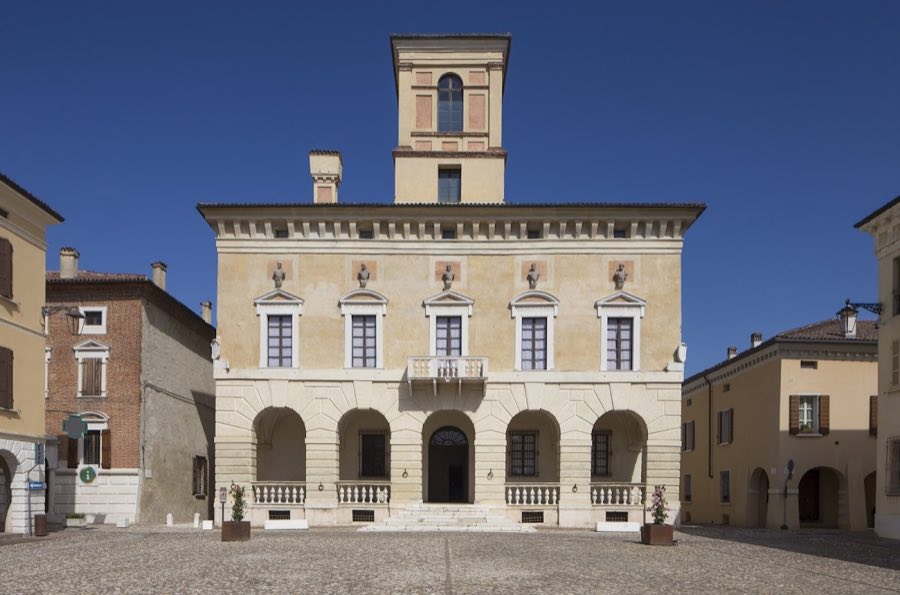
See all castles in ItalyPalazzo Ducale (Sabbioneta), Sabbioneta, Italy, is a Renaissance ducal residence built in the mid‑16th century by the Gonzaga ruling family. Commissioned as the first major building for Duke Vespasiano Gonzaga’s planned “ideal city,” the palace marked the physical and political center of his small, self‑governing state and served as the capital’s principal seat of government and court life.
Construction and use under Vespasiano Gonzaga centered on providing a house for the ducal family and a setting for administration and ceremonial government. Vespasiano, son of Rodomonte and Isabella Colonna and educated under the patronage of his aunt Giulia Gonzaga, established the palace as the residence of his court and the organizational core for his duchy. The duke died within the palace on 26 February 1591.
On Vespasiano’s death the building, the remaining real estate holdings, and his small state passed to his daughter Isabella Gonzaga, born 1565 and deceased 1637, who was married to Luigi Carafa della Stadera. Vespasiano had been awarded the collar of the Order of the Golden Fleece by King Philip II of Spain; that collar is shown around the ducal coat of arms on a ceiling within the palace, and the original collar was later recovered from his sarcophagus in the nearby church of the Blessed Virgin Crowned. The Ducal Palace now houses the Civic Museum of Palazzo Ducale.
The building presents a compact two‑storey plan with a marble‑faced portico at ground level and a small central tower that fronts onto the town’s main square. The portico gives direct access to the lower floor, while the tower marks the palace’s orientation toward Ducal Square. The structure dates to the sixteenth century and retains construction elements typical of that period, including extensive use of dressed marble at the entrance.
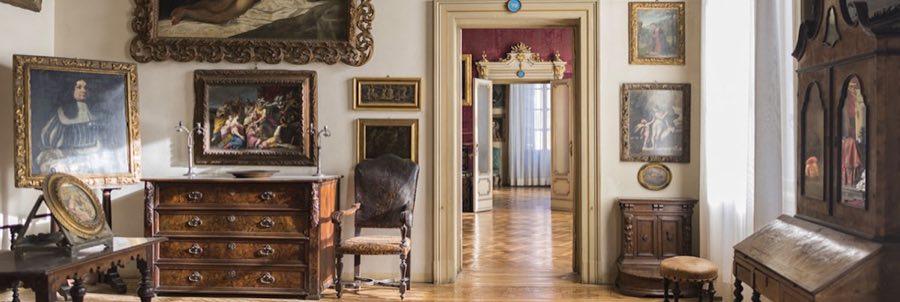
The main or noble floor contains a sequence of richly decorated state rooms known as the “golden halls,” each covered by painted and gilded wooden vaulting. In the small Darts Room the ceiling places the duke’s coat of arms at its centre, encircled by the collar of the Order of the Golden Fleece. On the second floor a room preserves a painted genealogical tree of the Gonzaga family in which each member is shown alongside his or her spouse.
Several named chambers preserve distinctive fittings and decoration. The Hall of the Duke of Alba contains a large fireplace executed in pink marble. The Hall of the Eagles displayed a group of wooden equestrian statues, once numbering ten, which included likenesses of Vespasiano, his father Luigi Gonzaga called “Rodomonte,” the great‑grandfather Gianfrancesco, and Ludovico. The Gallery of Ancestors is decorated with grotesque motifs and a series of Gonzaga effigies reaching down to Vespasiano, his second wife Anna d’Aragona, and his only son Luigi (1566–1580). Other interiors include the Hall of the Elephants and the Hall of the Lions, where the ducal coat of arms is held by two heraldic felines; the Hall of the Cities and the Angel, which is roofed by a cedar ceiling; and the Hall of the Octagons and of the Clusters, which housed Vespasiano’s extensive library. Wall and vault painting in these rooms work by artists such as Fornaretto Mantovano, Bernardino Campi, Alberto Cavalli, Giulio Rubone, and Pietro Martire Pesenti.
No. 90829
No. 38690
No. 44405
No. 30747
Comments
Comments for Palazzo Ducale (Sabbioneta) will require a verified account before posting.
We'll send a verification link before your first comment is published.