No. 42191
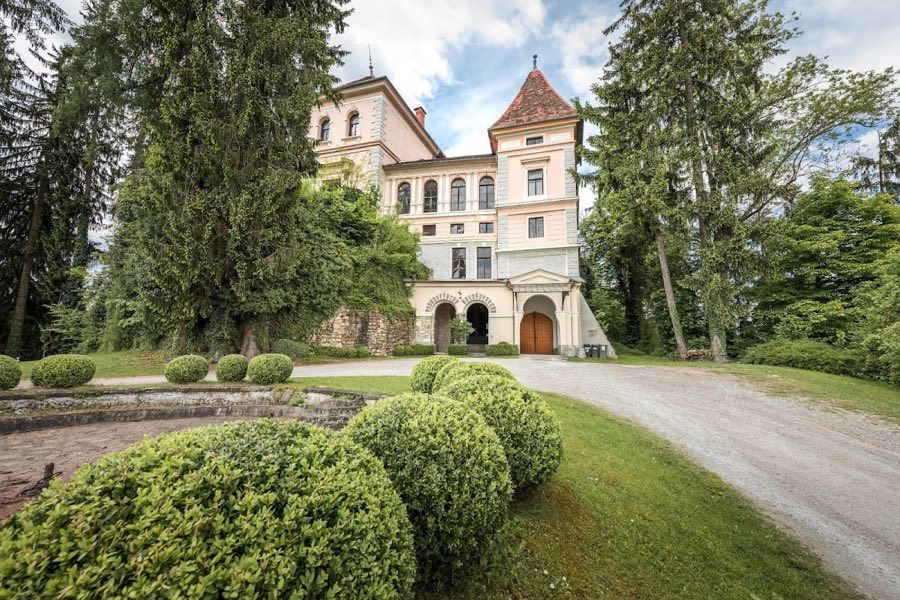
Schloss Greißenegg
Austria
CastleIntact13th century
No. 70607
Castle · Austria
No. 70607 · 47.080 N, 15.101 E
Quick summary
Piber Castle is a castle in Austria with origins associated with the 11th century.
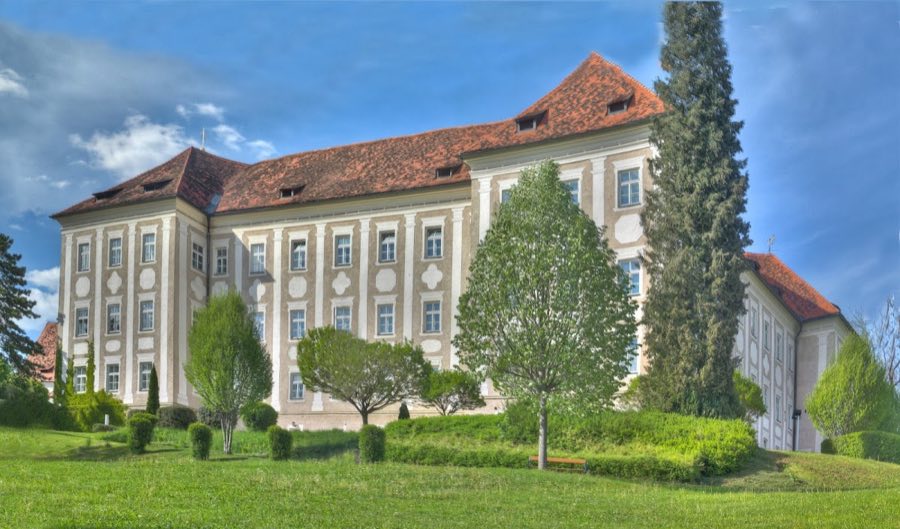
See all castles in AustriaPiber Castle in Köflach, Austria, developed from an early medieval holding established under Margrave Adalbero of Eppenstein within the Holy Roman Empire and has origins in the early 11th century; the building that stands today is a Baroque three‑storey palace completed in the early 18th century. The site mattered to regional religious and secular authorities for centuries: it served the Abbey of St. Lambrecht as an estate and later as a summer refuge for abbots and monks, functioned as the abbey’s administrative centre for West Styria, and in the 20th century became the headquarters for the federal Lipizzaner stud.
Settlement and ecclesiastical control began around the year 1000, when the land passed to the margrave and colonization began. By about 1020 a fortified farm stood here, consisting of a defended house enclosed by a wall and a ditch. In 1103 Duke Henry III gave the farm and its lands to the newly founded Abbey of St. Lambrecht, and the estate was managed by servitors who took the name of the place; an Otto of Piber is recorded in 1145.
Control of Piber shifted over the following centuries. In 1219 Archbishop Eberhard of Regensburg transferred the estate and parish to the Diocese of Seckau, setting off long disputes with St. Lambrecht that were resolved in 1414 when Duke Ernest the Iron and the Pope ruled in the abbey’s favour. The former archbishop Ulrich of Seckau spent his final decade at Piber, dying there in 1268. From the late 1200s into the 1300s various nobles held Piber as a valuable benefice; one, Konrad von Wallsee, was killed by angry peasants after a record of cruelty.
After the 1414 settlement the abbey established a provost’s court at Piber to house its West Styrian administration, and the Bishop of Seckau formally renounced claims to the place in 1492. A separate dispute with the Hollenegger family continued until the 1600s. During the 1500s the lordship repeatedly passed into the hands of secular nobles, many of them Protestants, producing violent conflict. In 1586 the castle was besieged by Wolf von Saurau, Georg Bernhard von Herberstein and Christof Georg von Khollenburg, an action that included destruction of the surrounding fields. In 1596 the abbey resumed direct management and appointed Hans Stübich as administrator.
Between 1696 and 1728 the present Baroque residence was erected as a summer retreat for the abbey’s leadership; a chronogram over the main gate records the rebuilding’s completion in 1728 and names the abbots Franz von Kaltenhausen and Anton Stroz as the patrons. The abbey was dissolved in 1786 and the estate passed to the state religious fund; ownership changed again in 1792. A stud for military horses had been set up at the castle in 1789 and the estate entered the imperial‑royal Ministry of Agriculture in 1867.
In 1919 Lipizzaner breeding was transferred from Lipica to Piber. During the Second World War the horses were moved to Hostouň and they returned in 1952, after which the federal stud administration was based in the castle. The building underwent general restoration in 1967 and several interior halls, notably in the south wing, received careful restoration between 1970 and 1972. In 2003 the castle took part in the regional exhibition “Myth of the Horse.” Today the castle continues to house the administration of the federal stud and to serve as a cultural exhibition and concert venue.
The castle stands as a three‑storey Baroque building composed of four regular wings set on an approximately square plan, enclosing a large central courtyard. The courtyard is lined with pillar arcades across every floor, the arcades being rows of arches supported on columns that create covered walkways on each storey. The four wings are punctuated at each corner by projecting corner sections divided into three vertical window groups, giving a balanced, rhythmic profile to the exterior.
The façade is modelled by painted pilasters running up all storeys, with windows set in painted surrounds and decorative panels placed beneath them to mark the separation between floors. The main entrance on the west side carries a date of 1726 while a side portal is dated 1728, and a chronogram above the principal gate records the completion of the rebuilding in 1728 and names the abbots Franz von Kaltenhausen and Anton Stroz as builders and patrons. Inside, little of the original movable furnishings survives, but several halls in the south wing retain 18th‑century Baroque stucco (decorative plaster) ceilings that were restored in the early 1970s, and the large festival hall displays numerous heraldic shields and coat‑of‑arms imagery.
Archaeological and structural traces link the standing palace to its medieval origins. Around 1020 the place was a fortified farm with a defended house surrounded by a wall and a ditch; on the north side some retaining walls from the former defensive circuit remain and marks of the once‑wide protective ditch survive in the landscape. The site occupies a low hill with relatively steep slopes, partly cut by human action, and lies beside the parish church of Piber approximately two kilometres northeast of Köflach, a position that reflects the estate’s longstanding relationship to the local parish and abbey administration.
No. 42191
No. 47909
No. 71315
No. 52514
Comments
Comments for Piber Castle will require a verified account before posting.
We'll send a verification link before your first comment is published.