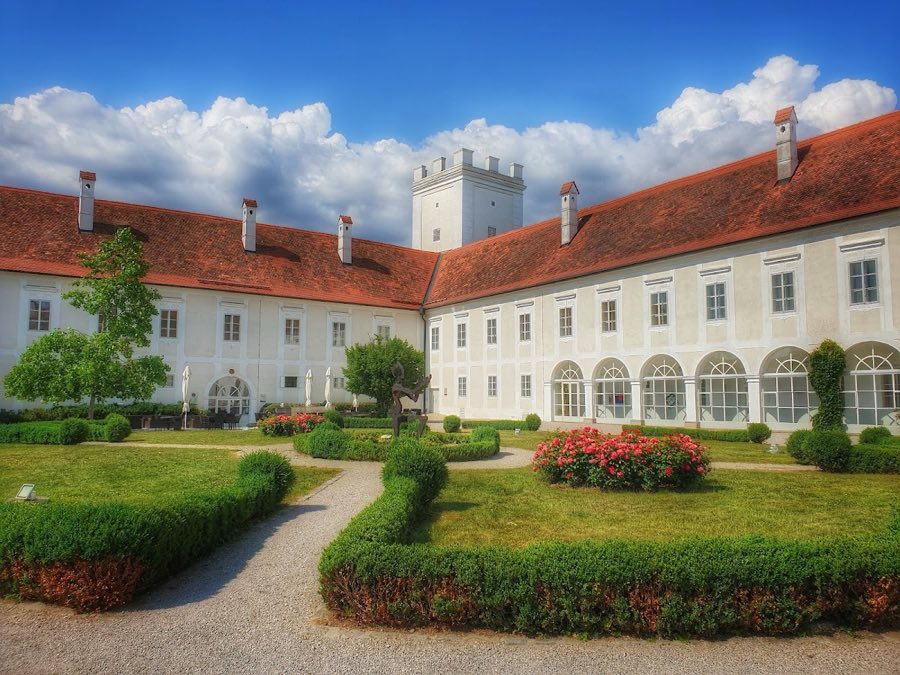
No. 77408
Schloss Ennsegg
Austria
CastleRestoredFor events16th century
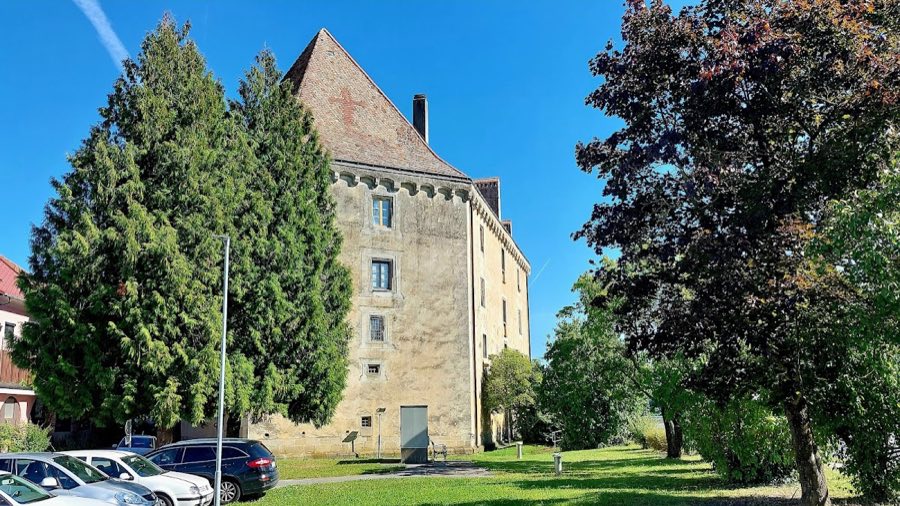
No. 64555
Castle · Austria
No. 64555 · 48.241 N, 14.516 E
Quick summary
Pragstein Castle is a castle in Austria with origins associated with the 16th century.
See all castles in AustriaPragstein Castle in Mauthausen, Austria, is a late medieval stronghold erected from 1491 to 1506 under the authority of the Holy Roman Empire by Ladislaus Prager, known locally as Laßla von Prag. Built at the turn of the 16th century as a water-secured residence, the castle later became a local landmark and appears on the Mauthausen market coat of arms, reflecting its role in regional administration and identity.
Construction and early ownership centered on the Prager family, who held the lordship of Mauthausen by pledge with the permission of Emperor Frederick III. After Frederick’s death the pledge was redeemed by his successor, King Maximilian I, yet members of the Prager household continued to occupy the complex for several years. The south façade preserves the family’s coat of arms dated 1507, tying the building to its founder’s generation.
By 1530 the complex was described as dilapidated, but it was repaired and staffed with mercenaries in response to the threat from Ottoman expansion, turning the residence into a garrisoned strongpoint for a time. Ownership then passed through a sequence of pledges and vacancies, with the building again standing empty at the end of the 16th century before a program of modernization in 1603 under Georg Erasmus von Tschernembl.
In 1612 Emperor Ferdinand II granted the castle to the imperial salt officer Veit Spindler; it changed hands in 1633 to Leonhard Helfried von Meggau and transferred in 1644 to the Cavriani family, who renewed windows, doors and floors. Emperor Leopold I lodged at Pragstein briefly in 1680, indicating the fabric was in sound condition at that moment. During the Austro-Bavarian War of Succession the castle was occupied by a detachment of 66 French soldiers, who were taken prisoner on 5 January 1742.
The lordship was bought in 1770 by Josef Gundaker, Count of Thürheim. In 1894 Mauthausen’s mayor, Leopold Heindl, acquired the property and sold it to the market municipality in 1901. From 1910 the local history museum occupied the premises. Major conservation and conversion work took place at the end of the 20th century, after which the building accommodated the regional music school, the civil registry office, multiple event rooms and the Mauthausen local history museum, which houses a Hans-Gerstmayr steelcut display and a hunting-trophy collection. An apothecary museum was established there in 2007, largely from the holdings of local apothecary Norbert Aichberger. In the mid-19th century the Danube channel that had isolated the castle was filled in, and since the 1960s the Danube road B3 runs between the former island and the river. A related estate, Schloss Pragtal in Windhaag bei Perg, was built in 1564 by Andreas Prager and dismantled in 1680 for materials used at Windhaag monastery.
Pragstein Castle occupies a rock promontory off the Danube and originally functioned as a water castle reached only by a bridge. The plan is a five-sided, flat-iron form that covers roughly 19 by 35 metres and rises four storeys, giving the building a compact, vertical silhouette. The castle’s position on the rock was a primary part of its defensive design and determined how later repairs and alterations were carried out.
The west, pointed façade was intended to reduce the force of floods and ice, allowing water to slide past the masonry rather than strike a blunt face. The central corridor contains the main staircase, organizing movement between floors. The structure once featured small sentry or watch turrets at its corners; these corner features are recorded as part of earlier external arrangements that have since been altered.
Two gates face the river, one to the north and one to the south, and high-water marks remain visible at the northern entrance, testifying to periodic flooding. The south-facing wall displays the Laßla von Prag coat of arms dated 1507, preserved in situ as an early 16th‑century inscription of ownership and identity. Repairs and modernization campaigns in the 17th century included replacement of windows, doors and floors, and later restorations at the close of the 20th century adapted interior spaces for civic and cultural functions.
The change in riverine topography altered the castle’s setting: the Danube arm that separated the rock island from the mainland was filled in during the mid-19th century, and since the 1960s a major road runs between the building and the river. Today the fabric stands repaired and in active use, housing a regional music school, a civil registry office, event rooms and museum displays including the local history exhibition, a steelcut collection, hunting trophies and an apothecary collection established from Norbert Aichberger’s holdings.
No. 77408
No. 72997
No. 90748
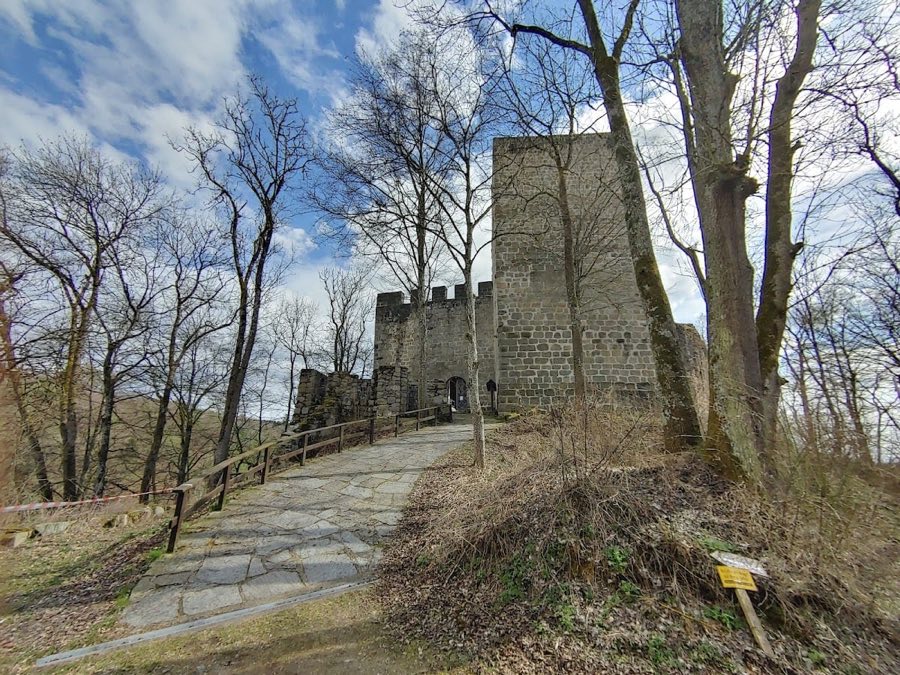
No. 25839
Comments
Comments for Pragstein Castle will require a verified account before posting.
We'll send a verification link before your first comment is published.