No. 72997
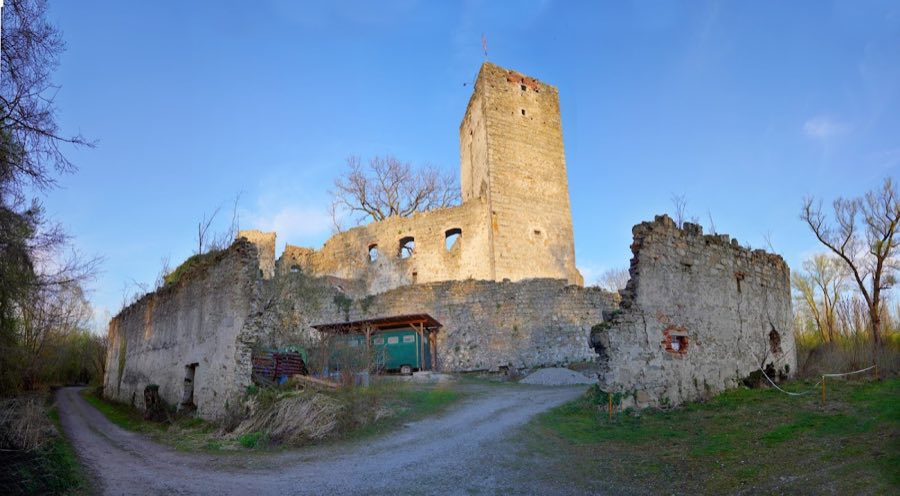
Neue Ennsburg, Enns
Enns, Austria
CastleRuin9th century
No. 77408
Castle · Austria
No. 77408 · 48.216 N, 14.481 E
For events
Schloss Ennsegg is marked as a château or castle venue lead. Capacity, indoor/outdoor spaces, catering rules, and accommodation options are published only after public verification.
Event types: Weddings, Private events, Cultural gatherings, Filming and photography
Ceremony spaces: Ceremony setting to verify
Quick summary
Schloss Ennsegg is a castle in Austria with origins associated with the 16th century.
See all castles in AustriaSchloss Ennsegg in Enns, Austria, is a princely castle on the Georgenberg rebuilt under Habsburg imperial authority in the mid-16th century, a product of the early modern period that became the center of a small noble lordship. Its emergence on a defended ridge above the town tied the site to municipal and imperial power, and over the centuries the building served as a noble residence, a military billet, and a regional administrative and cultural center.
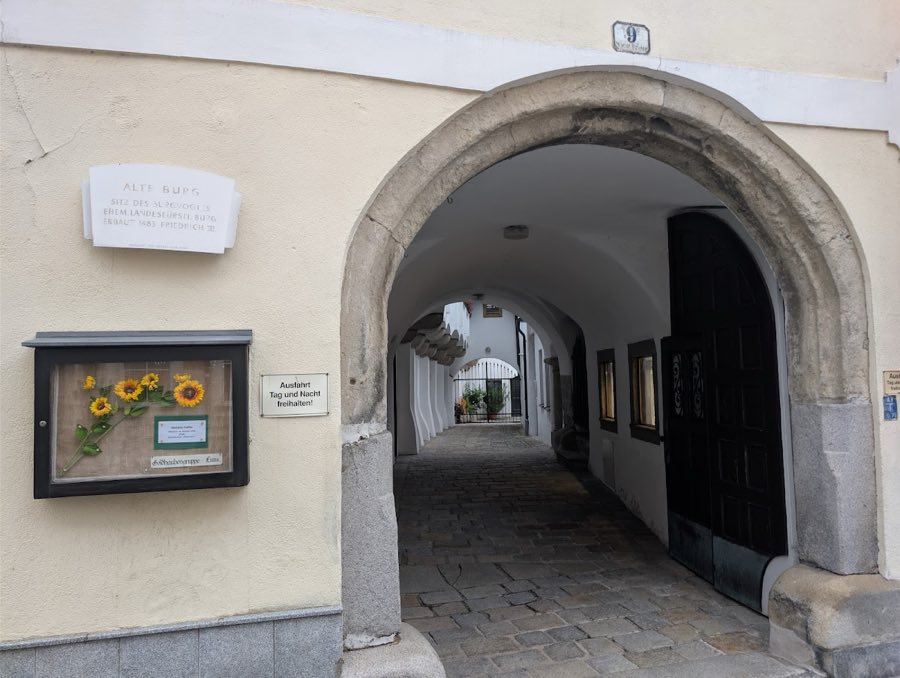
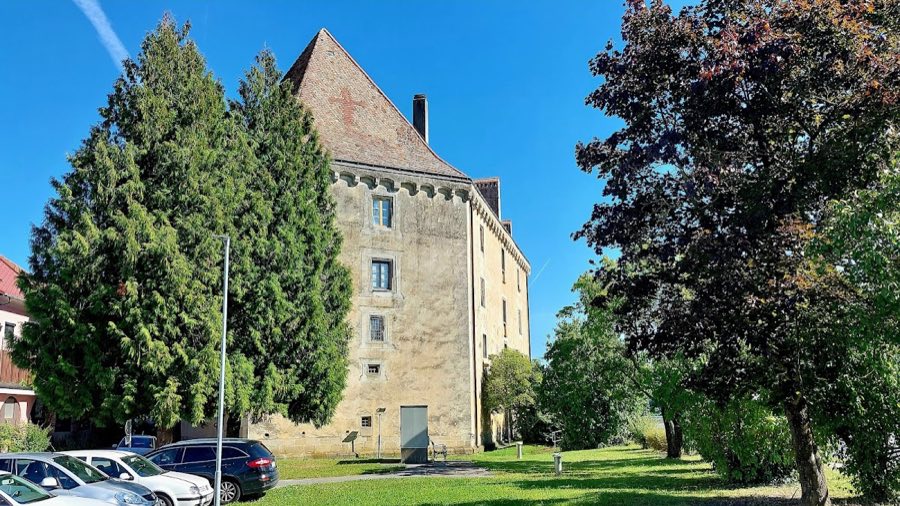
A medieval predecessor stood on the Georgenberg but by the late 1400s that older Ennsburg had fallen into decay. In 1483 the emperor ordered local civic authorities to replace the failing stronghold; four houses were removed on the ridge to make way for a new princely castle, sometimes called the New Ennsburg, which the town constructed to maintain a fortified presence above Enns.
By the mid-16th century the town’s castle again required major work. In 1565 Emperor Maximilian II granted the old Georgenberg site to Imperial Vice-Chancellor Georg Gienger on condition that he restore the long-collapsed structure. Gienger rebuilt the castle between 1565 and 1570, and the noble free-seat he established there expanded into the free lordship of Enns. After Gienger’s death in 1577 the property passed through his daughter Ursula, then into the hands of David Ungnad von Weissenwolff and his family; his son ‘Lord of Ennsegg’ in 1601.
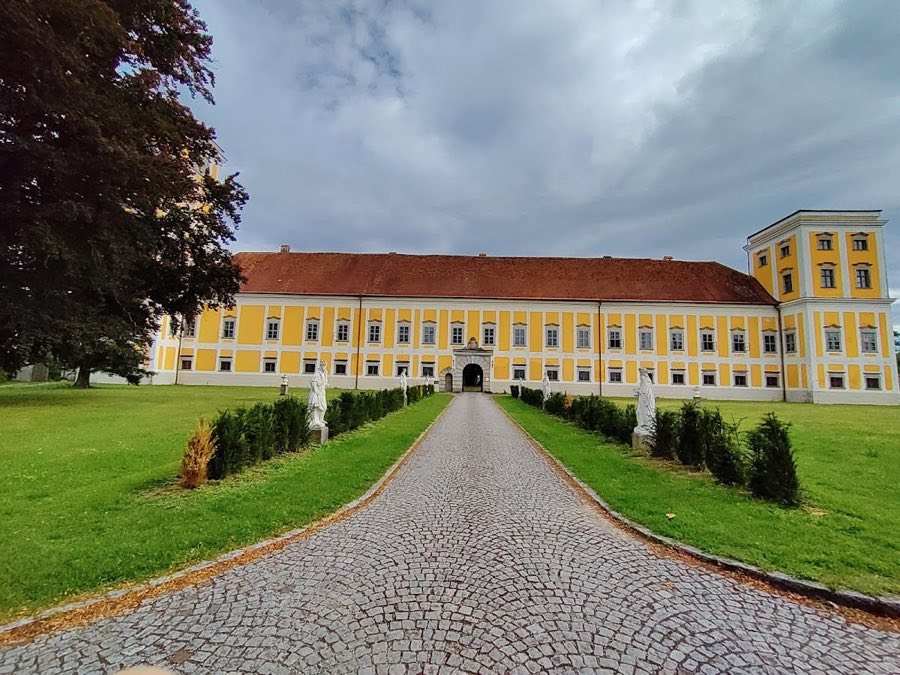
Andreas Ungnad joined the Protestant estates in their revolt against the sovereign and, following the political and religious upheavals of the early 17th century, lost the castle in 1623. That year Ennsegg was confiscated and handed to the Bavarian councillor Ott Josef von Kirchberg. Later owners in the Kirchberg line, and a widow Regina, held the property until David Ungnad, who had converted to Catholicism and been elevated to the comital rank by Emperor Ferdinand III, repurchased the site in 1656. He enlarged the complex at that time by adding two wings that now frame the large central courtyard.
Throughout the 18th and 19th centuries the estate changed hands through marriages and dowries. In 1722 it passed with a dowry to Prince Johann Wilhelm Trautson and again in 1744 to Prince Karl Josef von Auersperg. Members of the Auersperg family, including Vinzenz, shaped the grounds and interiors in the 19th century; in 1841 Vinzenz laid out an English-style park and carried out interior alterations, planning the green space for public recreation.
Schloss Ennsegg figured in several notable episodes. Emperor Francis Stephen spent a night there in spring 1764. In 1770 Marie Antoinette stayed in the town of Enns. During the Napoleonic Wars Napoleon quartered at the castle after the Battle of Ebelsberg on 3 May 1809. In 1810 Archduchess Marie Louise and Emperor Francis I lodged at the castle while traveling to her marriage to Napoleon. Caroline Augusta of Bavaria arrived at Ennsegg on 7 November 1816. Later visitors included a young Archduke Franz Ferdinand, who stayed frequently between 1884 and 1888, and Archduchess Marie Valerie with her family, who spent summers at the site from 1900 to 1902.
Ownership passed through several private hands in the late 19th and early 20th centuries. By 1888 members of the Auersperg family and, later, the Fürstenberg and Walderdorff-Fürstenberg families held the estate. In 1928 the castle was given as a gift to Marie Caroline Johanna, Countess Walderdorff-Fürstenberg. From 1940 ownership descended to her daughters and then to Franz Eugen, Count von Walderdorff.
The castle interior suffered heavy losses during the Second World War and in the years immediately after; until 1955 a demarcation line ran just below the castle to mark the start of the Soviet occupation zone. In 2000 a private real-estate firm acquired Schloss Ennsegg and initiated a program of renovation, while the town purchased the castle park. Since 2001 parts of the wing buildings have housed the Enns regional music school, and the complex now supports cultural events, civil registry functions, apartments and offices. A municipal history museum, Museum Enns 1212, opened in the castle in 2023 with a curatorium that includes Roman Sandgruber and Gottfried Kneifel.
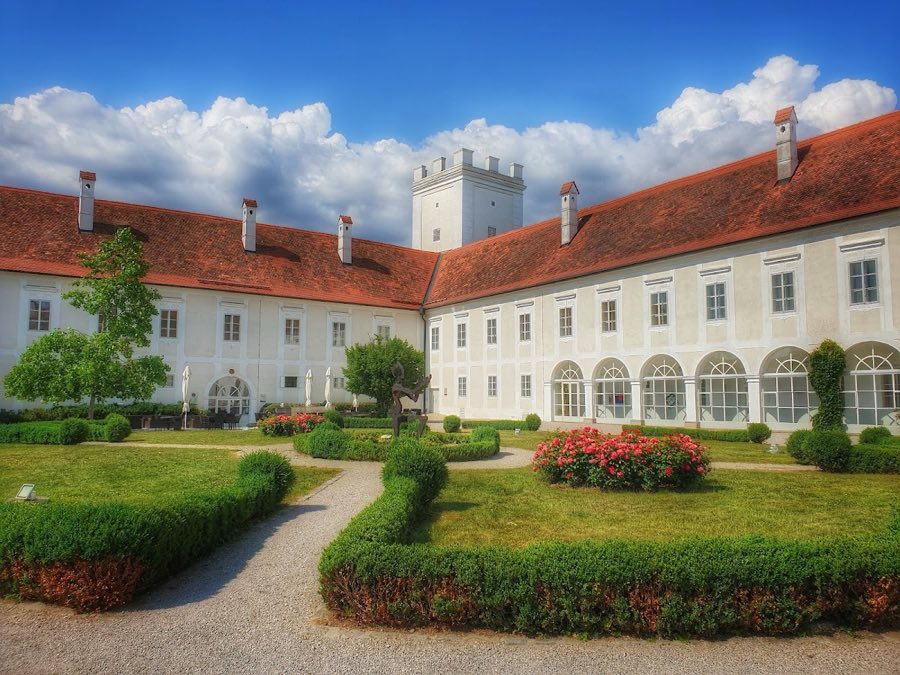
The complex occupies a defensive position integrated into Enns’s town fortifications, with its northeast wing standing atop a raised wall that faces north and east. A square tower projects at the northeast corner from that wall and serves as a flanking defensive element; the tower is finished not by a pitched roof but by a crenellated defensive platform (a parapet with alternating solid merlons and open embrasures for defence). Two enclosed courtyards lie within the building: the larger is an arcaded courtyard locally called a Lauben, meaning an arcade with covered walkways, while the smaller is also surrounded by arcades. These two courts are separated by a long internal wing, the bigger court opening toward the southwest and the smaller toward the southeast. Attached to the west side of the arcade range is a chapel tower capped by a Baroque onion dome (a bulbous rounded roof).
The castle chapel occupies an octagonal central room beneath a dome, dated to the second half of the 17th century, and was created by converting a former rear defensive tower into a sacred space. The room is richly worked in stucco and carries wall-field frescoes attributed to Carpoforo Tencalla, forming a pictorial cycle of the life of Mary that is associated with the Counter-Reformation stance of David Ungnad von Weissenwolff. Four fully modeled stucco figures in the chapel represent the Evangelists. The altar now in place was set up around 1800; its principal painted altarpiece was removed by American occupying troops in 1945.
Built and applied decorative elements survive elsewhere in the interior. Above the east and west entrances the Auersperger family arms are displayed. On the east side an elegant Rococo picture hall, now used for wedding ceremonies, retains paintings set into the wall surfaces. A Renaissance-style ceramic tiled stove, showing the Jörger coat of arms and originating from Schloss Köppach, remains in situ as an example of earlier interior fittings. Roman finds from Lauriacum (Lorch) are exhibited in the arcade passage, bringing material from the town’s Roman past into the castle’s circulation spaces.
Construction phases are visible in the plan: the two wing buildings added after 1656 form the enclosure of the larger courtyard and reflect the post-purchase enlargement carried out by the Ungnad counts. The interior fabric endured significant damage during the Second World War and the immediate postwar years, but repair and restoration work begun after 2000 have stabilized and adapted the rooms for cultural, educational, administrative and residential use. The surrounding park, laid out in the 19th century as an English-style garden, is preserved as a public green space under municipal ownership.
No. 72997
No. 64555
No. 90748
No. 15621
Comments
Comments for Schloss Ennsegg will require a verified account before posting.
We'll send a verification link before your first comment is published.