No. 45255
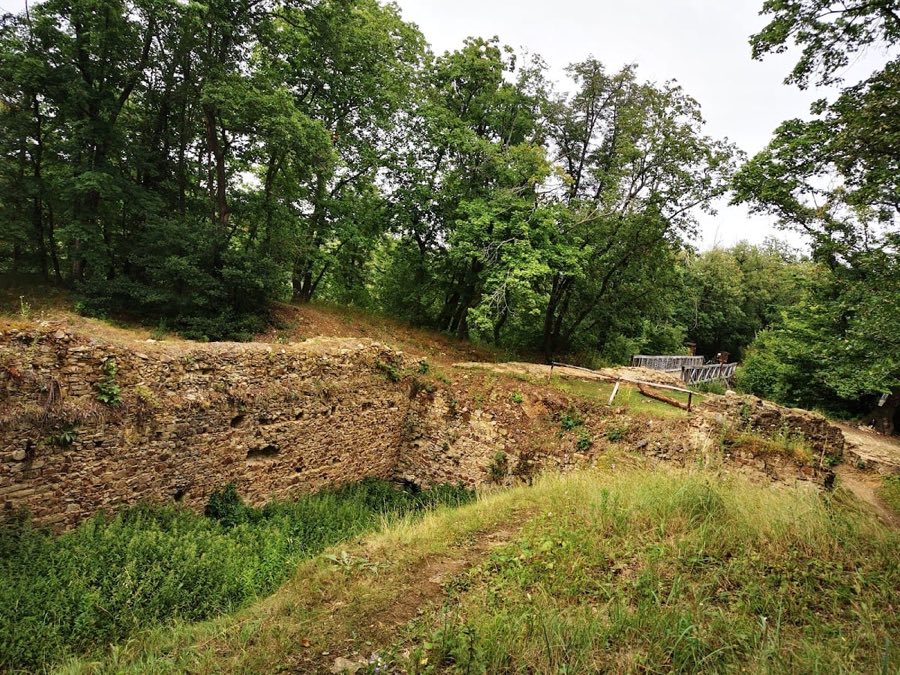
Nový hrad u Kunratic
Czechia
CastleRuin15th century
No. 70654
Castle · Czechia
No. 70654 · 50.000 N, 14.557 E
Quick summary
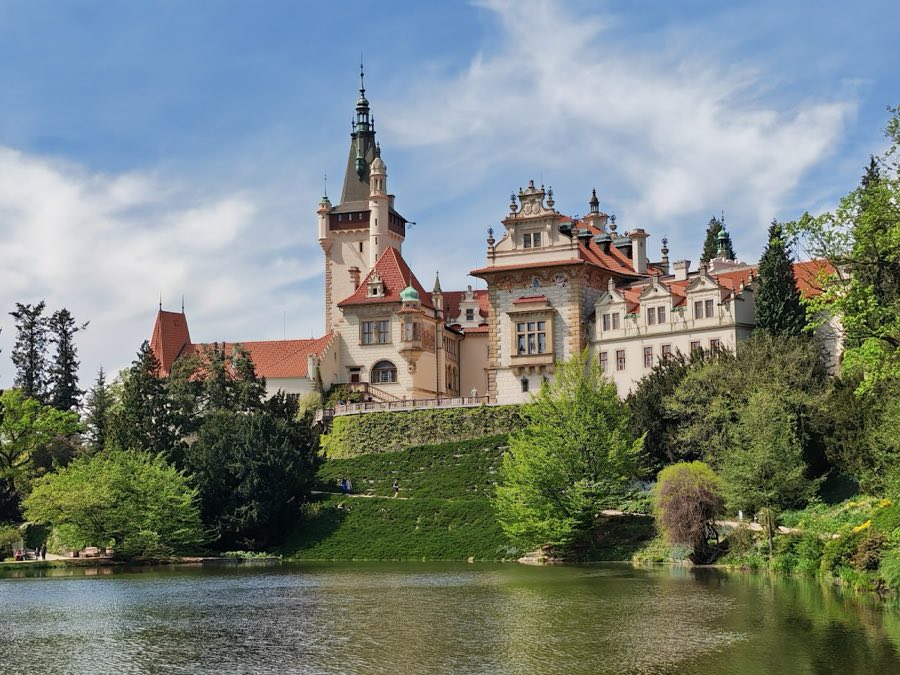
Průhonice Castle is a castle in Czechia with origins associated with the 12th century.
See all castles in CzechiaPrůhonice Castle in Průhonice, Czech Republic, began as a medieval site in the Bohemian lands, with occupation evident by the late twelfth century and a Romanesque church consecrated in 1187. The place evolved from an early fortified manorial centre into a succession of residences and landscaped grounds, passing through Gothic, Renaissance, classical and nineteenth‑century Neo‑Renaissance phases, and later becoming notable for its extensive park and scientific use. Its long sequence of rebuilding and changing ownership links it to regional politics, religious institutions and the development of botanical study in the Czech lands.
By the early fourteenth century the manor was connected with the local lords of Říčany. In 1404 the estate belonged to Jan Dubečský of Dubeč; his heirs added a defensive tower and a bastion. After 1508 the Zápští family transformed the medieval fortress into a Renaissance residence with four wings arranged around a closed courtyard.
In 1616 the property passed to Ondřej Hannewald of Eckersdorf, who served Emperor Rudolf II. The castle suffered during the Thirty Years’ War and fell into ruin; later in the seventeenth century the Jesuit order acquired the estate, carried out repairs and established a brewery beside the church during their ownership from 1669 to 1685.
A new phase of alteration began in 1802 when Count Jan Nostitz‑Rieneck purchased the estate and remodeled the buildings in a classical, Empire style. In 1885 the grounds passed by marriage to Count Arnošt Silva‑Tarouca. Silva‑Tarouca commissioned a comprehensive Neo‑Renaissance rebuilding of the palace, completed in the 1890s, and devoted the remainder of his life to enlarging and shaping the surrounding landscape into an extensive park and arboretum. Work on the planting and design continued until the years around World War I in collaboration with specialist landscapers and plant experts.
Economic pressures led Silva‑Tarouca to sell the property to the Czechoslovak state in 1927. After the Second World War the Botanical Institute of the Czechoslovak Academy of Sciences assumed responsibility for the site, and the castle has housed the Botanical Institute of the Academy of Sciences of the Czech Republic since the mid‑twentieth century, with an institutional presence recorded from 1962. In 2010 the palace and its park were declared a national cultural monument. The complex has also been used as a location for Czech fairy‑tale films.
The complex stands as two principal castle buildings linked to a medieval church, surrounded by farm structures, a guardhouse and an enclosing perimeter wall, all set within a large landscape park following the course of the Botič stream. Construction combines medieval masonry, later stone and brick work, rusticated stucco finishes and high gabled roofs, creating a layered ensemble that preserves elements from Romanesque through nineteenth‑century refurbishments.
The older palace, here called the Old Castle, sits on a promontory and retains the footprint of a medieval fortified palace. Its plan grew into three irregular wings by the late nineteenth century, opening southward toward the park. A dominant six‑storey rectangular tower with a high decorated roof and internal spiral stair projects from the west wing. Surviving medieval wall masonry of an earlier fortress core is visible in the fabric, while outer facades show rusticated plaster and decorative corner treatments. Courtyard wings contain ground‑floor arcades and painted wall decorations executed in the late nineteenth century, including a painted Saint George and the dragon.
The New Castle occupies the former brewery site and links the east side of the older building to the church. It is primarily a long, mostly single‑storey brick wing divided into three unequal sections by gable walls. Facades are enlivened by graffito panels, sandstone detailing and a raised central attic, and the western section bears an arabesque frieze beneath the eaves. Roofs are steep and gabled, reflecting the nineteenth‑century rebuilding that adapted earlier service buildings for residential and institutional use.
The Church of the Nativity of the Virgin Mary preserves a Romanesque core, with the western portion and bell tower dating to the late twelfth century. The nave is single‑aisled with a rectangular presbytery added after 1300. Church walls of unplastered sandstone blocks remain visible on the nave and tower. The interior carries a broad cycle of fourteenth‑century murals depicting scenes such as the Annunciation, the enthroned Madonna and Child, the Death of the Virgin, the Man of Sorrows and Saint Christopher. Later Gothic, Baroque and nineteenth‑century modifications include an added west portico and a sacristy.
Defensive elements around the castle include preserved lengths of perimeter wall and traces of moats that once encircled the site, with one moat running from near the church northward and another separating an outer enclosure from the castle centre. A central southward palace that stood within the complex was altered and partly removed during the large nineteenth‑century reconstruction, but the pattern of outer works and gate positions still conveys the former fortified arrangement.
The park is a carefully arranged English‑style landscape expanded into a large arboretum around the Botič valley, with ponds, streams, islands and cascades forming the main axis of movement. Water features bear names such as Bořín and Lobeška and are linked by small brooks. The planting includes extensive collections of woody plants and perennials, a three‑hectare alpine garden and a rosarium, many rhododendron groupings and specialized beds that exploit slopes and microclimates. Romantic garden buildings from the turn of the twentieth century, including a Neo‑Romanesque chapel with a recessed apse and bell gable at the entrance, punctuate the landscape and survive as part of the designed ensemble.
No. 45255

No. 41883
No. 47091
No. 71414
Comments
Comments for Průhonice Castle will require a verified account before posting.
We'll send a verification link before your first comment is published.